India's first satellite-tagged Ganges Softshell Turtle released in Kaziranga
Synopsis
For the first time in India's conservation history, a Ganges Softshell Turtle has been fitted with a satellite transmitter and released into the Brahmaputra — not just a symbolic gesture on Endangered Species Day, but a data-gathering mission that could reshape how India protects its most overlooked riverine species. Kaziranga, famous for rhinos and tigers, is now on the frontline of freshwater conservation too.
Key Takeaways
India achieved its first-ever satellite tagging of the Ganges Softshell Turtle on 15 May 2025 at Kaziranga National Park and Tiger Reserve , Assam.
The tagged turtle was released along the north bank of the Brahmaputra River under veterinary supervision.
Assam is home to 21 turtle species , with 5 of India's 8 softshell turtle species found in Kaziranga alone.
The Ganges Softshell Turtle is listed under Schedule I of the Wildlife (Protection) Act and classified as Endangered on the IUCN Red List .
The initiative was led by Dr Abhijit Das of the Wildlife Institute of India , with funding from the National Geographic Society .
Satellite data will map the species' movement, home range, and nesting sites in the Brahmaputra river basin to guide active conservation management.
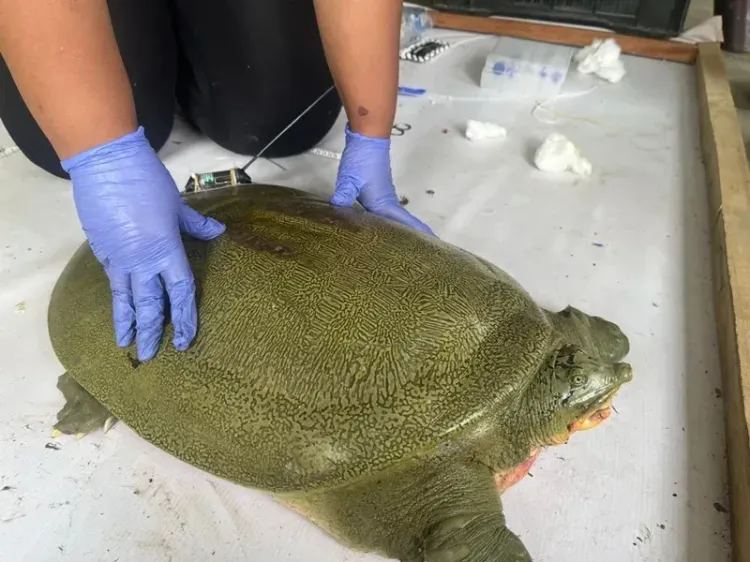
India marked a landmark moment in freshwater wildlife conservation on 15 May 2025 — Endangered Species Day — with the country's first-ever satellite tagging of the Ganges Softshell Turtle (Nilssonia gangetica) at Kaziranga National Park and Tiger Reserve (KNPTR) in Assam. A healthy adult turtle was fitted with a satellite transmitter under veterinary supervision and released into the Brahmaputra River, opening a new chapter in India's effort to protect one of its most imperilled riverine species.
Historic Milestone on Endangered Species Day
Assam Chief Minister Himanta Biswa Sarma announced the achievement on social media, calling it 'a first for India at Kaziranga.' He described the satellite tagging as 'a major step for wildlife conservation' and added: 'A proud moment for Assam as we continue to protect every species that calls our forests home.'
The initiative was led by a research team headed by Dr Abhijit Das, Senior Scientist at the Wildlife Institute of India (WII), in collaboration with Kaziranga park authorities and the Assam Forest Department. National Geographic Society provided financial support, and the exercise was carried out under the implementation framework of the Union Ministry of Environment, Forest and Climate Change.
Why Kaziranga and Why This Turtle
KNPTR Director Sonali Ghosh explained that Assam ranks among the world's top-priority regions for freshwater turtle conservation, home to 21 turtle species — making it one of Asia's richest turtle habitats. Of the eight softshell turtle species reported across India, five are found in Kaziranga alone.
The Ganges Softshell Turtle is listed under Schedule I of the Wildlife (Protection) Act — the highest domestic protection category — and is classified as Endangered on the IUCN Red List. Ghosh noted that the species can be identified by 'distinct arrowhead-shaped markings on the top of its head' and inhabits large rivers, lakes, and reservoirs across the subcontinent. Despite its broad distribution, populations have declined sharply due to habitat degradation, sand mining, and incidental capture in fishing nets.
Notably, these turtles serve a dual ecological function: as apex predators in river ecosystems and as natural scavengers that consume dead and decaying animal matter, effectively cleaning river systems and maintaining ecological balance.
What the Satellite Data Will Reveal
According to Dr Das, the tagging will help researchers map the species' seasonal movement patterns, home range, and critical habitats — including nesting and breeding sites — within the Brahmaputra river basin. 'Understanding seasonal movement patterns, home range and identifying critical habitats such as nesting and breeding sites will help in the active management and conservation of softshell turtles in the Brahmaputra river basin,' Das said.
This data is expected to directly inform habitat protection decisions and anti-poaching strategies, moving conservation from reactive to evidence-driven management. Wildlife researchers and forest officials closely monitored the capture, tagging, and release process.
Kaziranga: More Than the Big Five
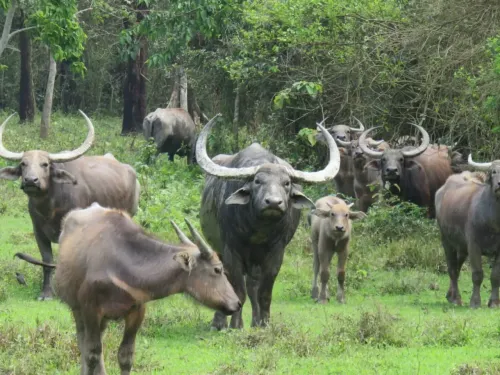
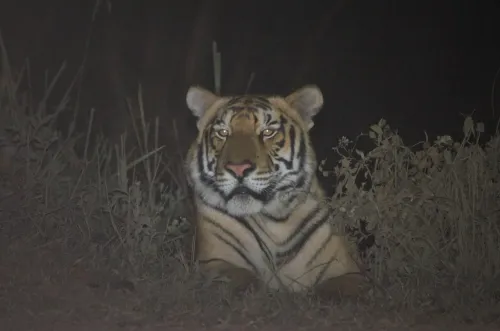
Kaziranga National Park and Tiger Reserve, India's seventh UNESCO World Heritage Site, is globally celebrated for its 'Big Five' — the greater one-horned rhinoceros, Bengal tiger, Asian elephant, wild buffalo, and eastern swamp deer. The park spans the districts of Golaghat, Nagaon, Sonitpur, and Biswanath, and is administered across three forest divisions.
The satellite-tagging initiative signals a deliberate effort to extend Kaziranga's conservation mandate beyond its flagship megafauna to its fragile riverine ecosystem — a shift that conservationists say is long overdue. With real-time movement data now being collected, India's first satellite-tracked Ganges Softshell Turtle could become the anchor of a wider freshwater conservation programme across the Brahmaputra basin.
Point of View
But one satellite transmitter on one turtle does not a programme make. The real test is whether this pilot scales into a systematic monitoring network across the Brahmaputra and Ganga basins, backed by sustained funding beyond a single National Geographic grant. Sand mining and fishing pressure — the primary threats to softshell turtles — remain largely unaddressed. Data without enforcement is just data.
NationPress
28 Sept 2026
Frequently Asked Questions
What is the Ganges Softshell Turtle and why is it endangered?
The Ganges Softshell Turtle (Nilssonia gangetica) is a large freshwater turtle found in rivers, lakes, and reservoirs across the Indian subcontinent. It is classified as Endangered on the IUCN Red List and listed under Schedule I of India's Wildlife (Protection) Act due to population decline driven by habitat loss, sand mining, and accidental capture in fishing nets.
What is the significance of India's first satellite tagging of the Ganges Softshell Turtle?
The satellite tagging, conducted at Kaziranga National Park on 15 May 2025, is the first of its kind in India for this species. It will allow researchers to track the turtle's seasonal movements, home range, and critical nesting and breeding sites within the Brahmaputra river basin, enabling evidence-based conservation management.
Who led the satellite-tagging initiative at Kaziranga?
The initiative was led by Dr Abhijit Das, Senior Scientist at the Wildlife Institute of India, in collaboration with Kaziranga National Park authorities and the Assam Forest Department. It was carried out under the Union Ministry of Environment, Forest and Climate Change's framework, with financial support from the National Geographic Society.
Why is Assam considered a global priority for freshwater turtle conservation?
Assam is home to 21 turtle species, making it one of Asia's richest turtle habitats. Of the eight softshell turtle species recorded in India, five are found in Kaziranga alone. This extraordinary diversity places Assam among the world's top-priority regions for freshwater turtle conservation, according to KNPTR Director Sonali Ghosh.
What role does the Ganges Softshell Turtle play in river ecosystems?
The Ganges Softshell Turtle functions both as an apex predator and as a scavenger, feeding on dead and decaying animal matter. This dual role makes it a key species for maintaining ecological balance and keeping river systems clean within the Brahmaputra and Ganga basins.