How Are India and the UK Collaborating on Offshore Wind Initiatives?
Synopsis
On February 18, India and the UK have united to establish the Offshore Wind Taskforce, spearheaded by Pralhad Joshi and David Lammy. This initiative aims to significantly enhance both nations' capabilities in offshore wind energy, focusing on collaboration, infrastructure, and innovation. The strategic partnership promises to reshape the clean energy landscape for both countries.
Key Takeaways
India–UK Offshore Wind Taskforce launched Focus on strategic leadership and coordination Collaboration on infrastructure and supply chains Green hydrogen synergy highlighted Significant funding for early projects
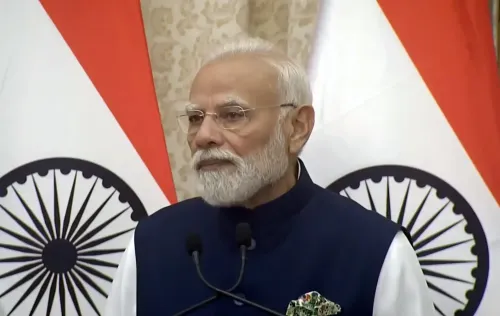
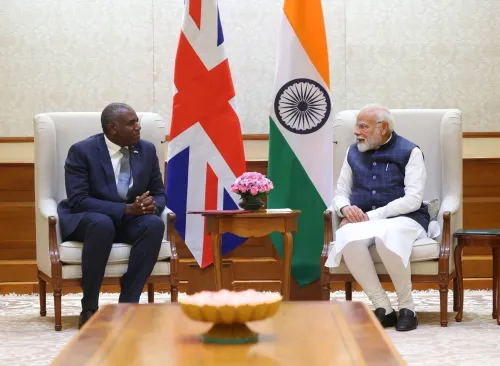
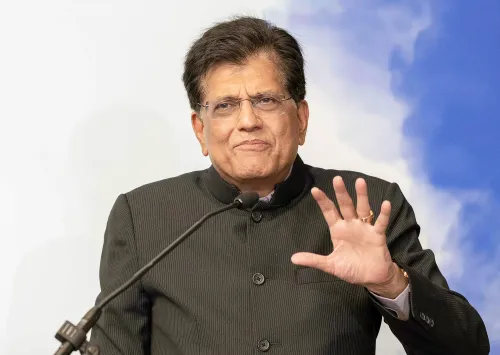
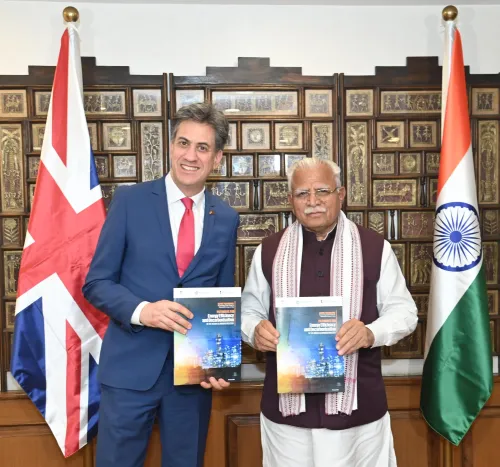
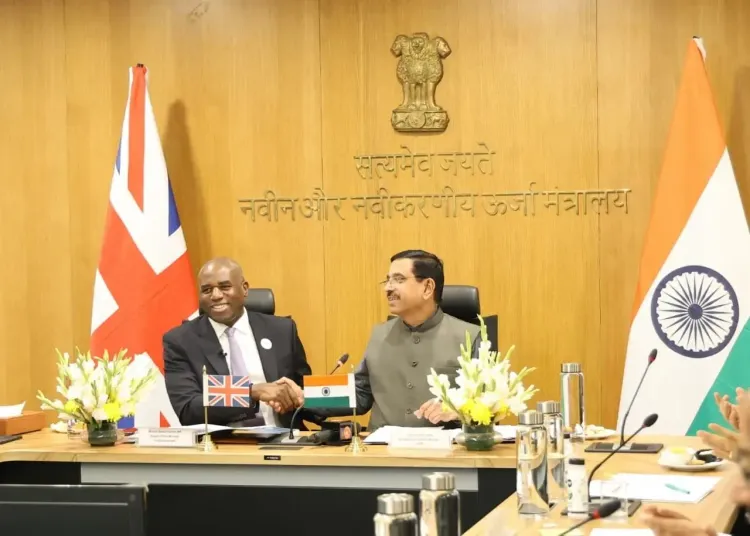
New Delhi, Feb 18 (NationPress) The Minister of New and Renewable Energy, Pralhad Joshi, alongside David Lammy, the Deputy Prime Minister of the UK, officially inaugurated the India–UK Offshore Wind Taskforce on Monday. The event also welcomed Lindy Cameron, the British High Commissioner to India.
Joshi characterized the India–UK Offshore Wind Taskforce as a functional entity rather than just a ceremonial platform, emphasizing its establishment under Vision 2035 and the Fourth Energy Dialogue. Its purpose is to deliver strategic leadership and coordination for India’s offshore wind ecosystem.
While the UK has exhibited global leadership in enhancing offshore wind capabilities and establishing mature supply chains, India contributes its scale, sustained demand, and a rapidly growing clean energy landscape, he noted.
Referring to the Taskforce as a “trustforce”, Joshi expressed that it embodies the mutual confidence between India and the UK to tackle genuine execution challenges. He called for the platform to yield time-sensitive workstreams, measurable objectives, and evident advancements, transforming global insights into solutions customized for Indian contexts.
He identified three foundational pillars for collaboration: ecosystem planning and market design, which entails refined seabed leasing frameworks and reliable revenue-certainty mechanisms; infrastructure and supply chains, involving port modernization, local manufacturing, and specialized vessels; and financing alongside risk mitigation through blended finance structures and the mobilization of long-term institutional capital.
The minister highlighted that the next phase of India’s transition must enhance reliability, grid stability, industrial depth, and energy security, with offshore wind playing a significant role in this progression. Promising offshore wind zones have been identified off the coasts of Gujarat and Tamil Nadu, and necessary grid planning, studies, and surveys for initial projects have been conducted by the National Institute of Wind Energy.
To encourage early projects, the government has initiated a Viability Gap Funding scheme, allocating a total of Rs 7,453 crore (about 710 million pounds). Joshi pointed out that offshore wind represents one of the most intricate segments of the global energy transition, necessitating specialized port infrastructure, marine logistics, robust seabed leasing frameworks, clear risk allocation, and viable commercial structures.
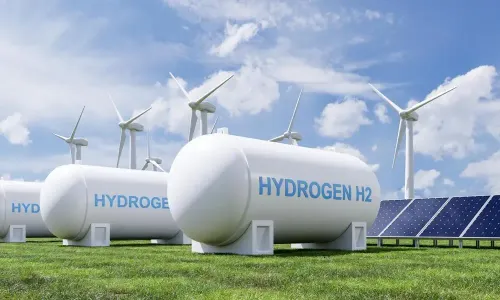
He further underscored the synergy between offshore wind and India’s ambitions for green hydrogen. He noted that India is spearheading the Hydrogen Breakthrough Goal as part of the international Breakthrough Agenda and has reached globally competitive benchmarks under the National Green Hydrogen Mission. Green hydrogen prices have plummeted to a historic low of Rs 279 per kg (approximately 2.65 pounds per kg), while green ammonia prices stand at Rs 49.75 per kg (approximately 0.47 pounds per kg).
Offshore wind, he indicated, has the potential to deliver high-quality renewable energy to emerging coastal industrial and green hydrogen clusters, thereby bolstering energy security and industrial competitiveness.
Joshi asserted that India’s clean energy transition is characterized by large-scale execution. He reported that India's installed non-fossil fuel capacity has exceeded 272 GW, comprised of over 141 GW of solar and 55 GW of wind energy. In the current financial year alone, more than 35 GW of solar and 4.61 GW of wind capacity have been added.
With a clear purpose and a shared commitment, offshore wind can develop into a robust pillar of India’s clean, dependable, and self-reliant energy future, serving as a flagship of India–UK collaboration under Vision 2035, the minister concluded.
Point of View
The formation of the India–UK Offshore Wind Taskforce signifies a pivotal step towards enhancing renewable energy cooperation between two significant global players. This initiative not only reflects the shared commitment to combat climate change but also underscores the importance of strategic partnerships in achieving energy security and sustainability. It is a forward-thinking approach that positions both nations as leaders in the global clean energy transition.
NationPress
26 Sept 2026
Frequently Asked Questions
What is the purpose of the India-UK Offshore Wind Taskforce?
The taskforce aims to provide strategic leadership and coordination for India's offshore wind ecosystem, facilitating collaboration and addressing execution challenges.
What are the expected benefits of this collaboration?
The collaboration is expected to enhance offshore wind capabilities, improve infrastructure, and foster innovation in renewable energy, benefiting both countries.
How will the taskforce contribute to India's energy transition?
The taskforce will focus on strengthening reliability, grid stability, and energy security through offshore wind, which is crucial for India's clean energy transition.
What is the significance of green hydrogen in this initiative?
Green hydrogen is seen as a complementary element to offshore wind, promoting energy security and supporting the development of coastal industrial clusters.
What funding has been allocated for early offshore wind projects?
The Indian government has introduced a Viability Gap Funding scheme with a total allocation of Rs 7,453 crore (approximately 710 million pounds) to support early projects.