Are Sensex and Nifty Facing a Downturn Due to India-US Trade Tensions?

Synopsis
The Indian stock market is experiencing turbulence as fears of steep tariffs imposed by the US on Indian goods create widespread selling. This article delves into the implications for investors and the broader market sentiment amidst ongoing trade tensions.
Key Takeaways
Sensex declined by 780.18 points, closing at 84,180.96 .
Nifty fell by 263.9 points, ending at 25,876.85 .
Concerns over India–US trade tensions are impacting investor sentiment.
Broad market declines, particularly in mid- and small-cap stocks.
Sector losses were widespread, with metal and oil stocks hit hardest.
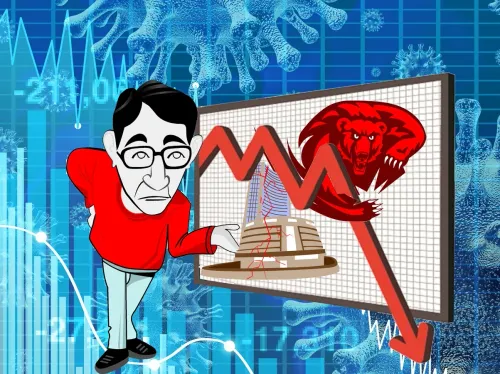
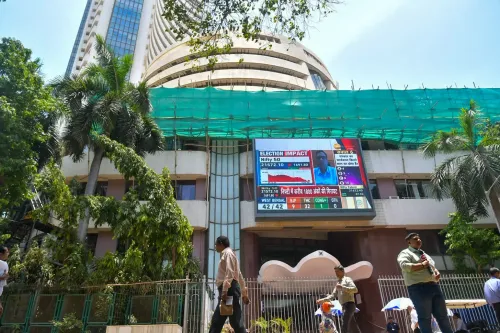
Mumbai, Jan 8 (NationPress) The Indian equity markets experienced their steepest decline in a month on Thursday, as the key indices marked their fourth consecutive day of losses, primarily driven by escalating worries surrounding India–US trade tensions.
Investor confidence waned after reports indicated that the administration of US President Donald Trump might contemplate imposing hefty tariffs—potentially as high as 500 percent—on Indian exports.
This prospect of severe trade restrictions spurred widespread selling across various sectors, resulting in a general atmosphere of risk aversion.
Ultimately, the Sensex settled at 84,180.96, dropping by 780.18 points or 0.92 percent.
Meanwhile, the Nifty also closed lower at 25,876.85, down 263.9 points or 1.01 percent.
“A sustained close below 25,900 heightens the chances of further declines towards the 25,800–25,700 range, while a rebound above 26,000 is crucial for stabilizing immediate market sentiment,” stated an analyst.
“Despite the ongoing correction, the broader weekly and monthly trends remain positive, although short-term corrective pressures may linger if key support levels do not hold,” according to the expert.
In the Sensex 30 pack, major decliners included TCS, TechM, L&T, Reliance Industries, and Tata Steel.
Conversely, Eternal, ICICI Bank, Bajaj Finance, and BEL emerged as rare gainers.
Moreover, selling pressure was particularly intense in the broader market, with mid- and small-cap stocks witnessing significant drops, as the Nifty Midcap 100 and Nifty Smallcap 100 indices declined nearly 2 percent each.
Sector-wise, losses were widespread, with all indices finishing in the red. The metal sector was hit hardest, with the Nifty Metal index plummeting over 3 percent.
Oil and gas stocks also faced headwinds, with the Nifty Oil and Gas index decreasing by approximately 2.8 percent.
Other major laggards included PSU banking and IT stocks, each down about 2 percent.
Analysts noted that the market remains cautious as investors navigate global trade uncertainties and the likely repercussions of rising tariffs on India's export-reliant sectors.
Point of View
It is crucial to approach the current market downturn with a balanced perspective. While the trade tensions between India and the US pose significant challenges, the resilience of the broader market trend should not be overlooked. Investors must navigate these uncertainties with caution but remain alert to potential recovery signals as the situation evolves.
NationPress
16 Oct 2026
Frequently Asked Questions
What are the current trends in the Indian stock market?
The Indian stock market has recently faced a downturn, primarily influenced by trade tensions with the US and concerns over potential tariffs on Indian goods.
How are trade tensions affecting investors?
Trade tensions have led to increased caution among investors, resulting in widespread selling and a decline in market indices.