Market Turmoil: Sensex and Nifty Decline Over 1% Amid IT Stock Selloff and US Tariff Fears
Synopsis
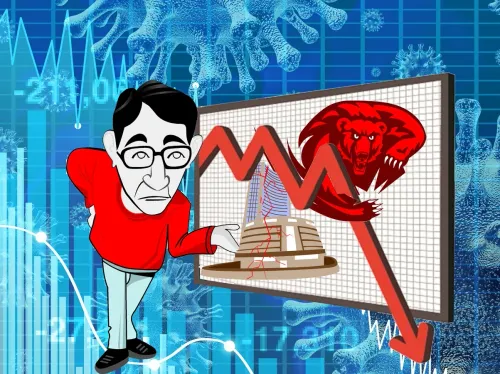
On February 24, India's benchmark indices faced their steepest fall in four days, driven by substantial selloffs in the banking, infrastructure, and IT sectors, as renewed tariff threats from the US raised concerns over trade policies.
Key Takeaways
India's benchmark indices saw significant declines on February 24.
IT stocks were hit hardest, with the Nifty IT index falling 4.74%.
Concerns over US trade policies are impacting investor confidence .
The Nifty's resistance level is crucial for future movements.
Global uncertainties are likely to keep markets volatile.
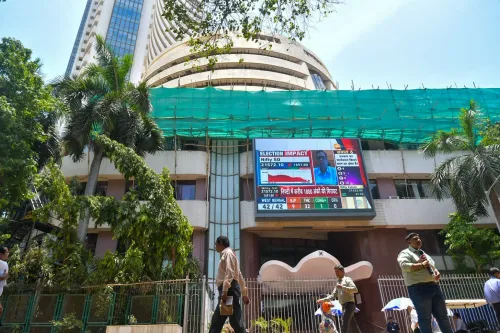
Mumbai, Feb 24 (NationPress) The Indian stock market experienced its most significant decline in four days on Tuesday, primarily due to intense selling pressure in banking, infrastructure, and IT stocks, prompted by renewed apprehensions regarding US trade policy.
The 50-share Nifty index closed down by 1.12 percent, or 288.35 points, settling at 25,424.65, while the Sensex plummeted 1.28 percent, or 1,068.74 points, to finish at 82,225.92.
Regarding the Nifty's technical outlook, analysts believe that the 25,500–25,600 level acts as a significant resistance zone; a decisive break above this could lead to short covering towards 25,700, whereas a consistent drop below 25,300 might accelerate downward momentum towards 25,200 or even lower.
Market sentiment turned bearish following US President Donald Trump's recent threats to reintroduce tariffs, escalating fears of renewed trade conflicts.
Over the past weekend, Trump declared a new set of temporary global tariffs at 15 percent and cautioned nations against withdrawing from recently established trade agreements.
This announcement came even after the US Supreme Court deemed Trump's prior tariffs unlawful. Such developments have unsettled global markets and adversely affected investor confidence in India.
Among various sectors, IT stocks suffered the most, with the Nifty IT index plunging by 4.74 percent to close at 30,053.50, after reaching a two-year low during the session.
Negative signals from international markets and worries over US technology expenditure added pressure to this sector.
The Nifty Realty index was another major loser, dropping 2.54 percent, while the Nifty Metal index managed to perform better than the overall market.
Broader market indices demonstrated some resilience compared to the benchmarks, with the Nifty MidCap index declining by 0.32 percent and the Nifty SmallCap index decreasing by 0.55 percent.
Meanwhile, Christopher Wood, who is the Global Head of Equity Strategy at Jefferies, indicated that the AI-driven trading trends that have dominated stock markets, particularly in the US, may face increased scrutiny this year.
His insights further fueled concerns that inflated valuations in AI-related stocks could come under pressure if global growth slows or trade disputes escalate.
Analysts noted that the sharp decline in major indices reflects rising global uncertainties and a cautious investor mindset, suggesting that markets are likely to remain volatile in the short term.
“Increasing global macroeconomic uncertainty—especially surrounding US trade and tariff issues—along with ongoing fears of AI-induced disruptions in the global tech sector, have dampened overall risk appetite, leading to defensive positioning across most sectors,” stated a market expert.
Point of View
The recent decline in the Indian stock market underscores the fragility of investor confidence amid global uncertainties. The interplay between US trade policies and market reactions highlights a need for vigilance and strategic positioning.
NationPress
26 Sept 2026
Frequently Asked Questions
What factors contributed to the decline in the stock market?
The decline was primarily driven by heavy selling in banking, infrastructure, and IT sectors, spurred by renewed concerns over US trade policies and tariff threats from President Trump.
How did the Nifty and Sensex perform?
The Nifty fell by 1.12% to 25,424.65, while the Sensex dropped 1.28% to 82,225.92, marking their worst performance in four days.
What does the technical outlook suggest for Nifty?
The technical outlook indicates that the 25,500–25,600 zone is a crucial resistance area; breaking above it could lead to short covering, while falling below 25,300 may accelerate declines.
How have global markets reacted to US tariff announcements?
Global markets have been unsettled by the recent tariff announcements, which have raised fears of escalating trade tensions.
What is the outlook for AI-related stocks?
There are concerns that inflated valuations in AI-related stocks may face scrutiny if global growth slows or trade tensions escalate.