How is India Addressing Tariff Challenges to Achieve 7.4% Growth?
Synopsis
India's ambition for economic growth is supported by a strategic approach to tackle tariff issues. S. Mahendra Dev of EAC-PM outlines a four-point plan focusing on industry enhancement, export diversification, trade agreements, and vital negotiations with the US. This initiative is critical for driving the nation's GDP towards a projected 7.4% growth this year.
Key Takeaways
Four-point strategy to address tariff issues.
Focus on supporting local industries .
Diversification of exports to new markets.
Negotiations for free trade agreements .
Goal of achieving a Developed India by 2047.
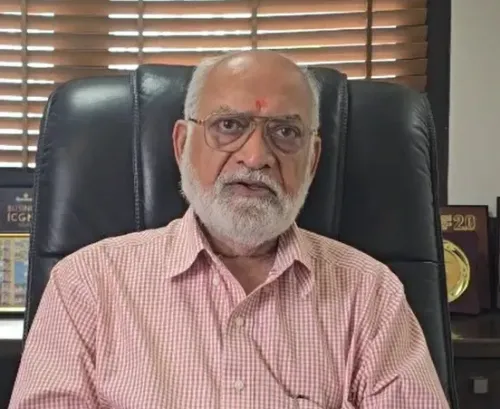
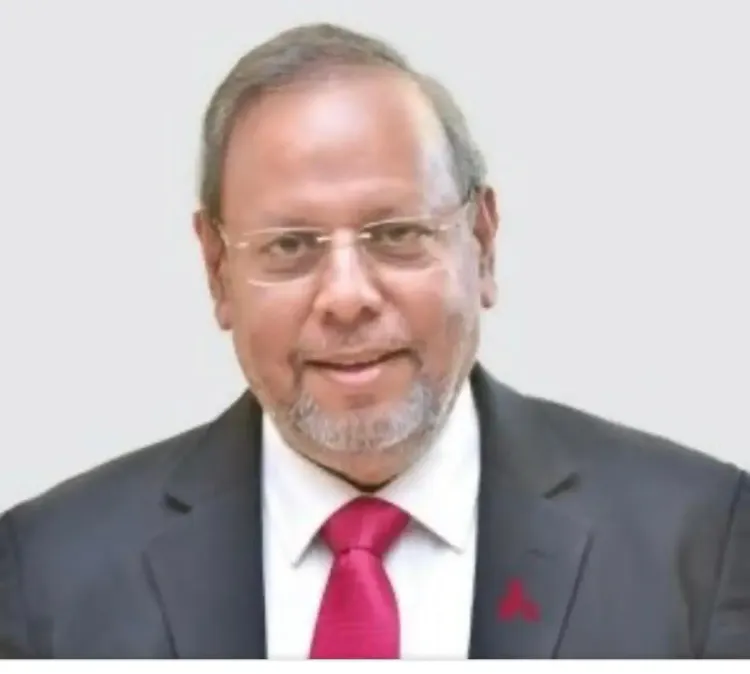
New Delhi, Jan 10 (NationPress) The Chairman of the Prime Minister’s Economic Advisory Council (EAC-PM), S. Mahendra Dev, announced on Saturday that the Indian government is implementing a four-point strategy to confront tariff challenges. This strategy emphasizes support for domestic industries, export diversification, free trade agreements, and trade negotiations with the United States.
During an interview with IANS at the SKOCH Summit, Dev elaborated that the government's strategy comprises: bolstering local industries, broadening exports to Asian, African, and Latin American markets, forming free trade agreements (FTAs) with various nations, and maintaining discussions with the US regarding a trade deal.
Addressing the ambition of achieving a ‘Viksit Bharat’ (Developed India), Dev pointed out that countries like Japan and South Korea have successfully reached this milestone.
“India possesses the appropriate policy framework, but it is crucial to maintain a growth rate of 7–8 percent,” he remarked to IANS.
“To accomplish this, the investment rate must increase to 35 percent from the current approximate 30 percent,” Dev added.
Discussing economic advancement, Dev projected India’s GDP growth to be around 7.4 percent this year, with a potential moderation to between 6.5 percent and 7 percent next year.
“In the four years following the pandemic, India’s average growth rate has been around 7.7 percent,” he pointed out.
He further mentioned that the government is actively enhancing the ease of doing business to meet the goal of a Developed India by 2047.
“As part of these reforms, the Centre has recently allowed private companies into the nuclear sector, endorsed 100 percent foreign direct investment in the insurance industry, and initiated the decriminalization and deregulation of several laws,” Dev noted.
Point of View
Which is essential for sustaining economic growth. The four-pronged strategy not only aims at bolstering domestic industries but also positions India as a competitive player in the global market. With ambitious targets set for the future, the focus on foreign investments and trade agreements will be crucial in achieving a developed status by 2047.
NationPress
5 Oct 2026
Frequently Asked Questions
What is the four-point strategy announced by EAC-PM?
The four-point strategy involves supporting domestic industries, diversifying exports to various regions, engaging in free trade agreements, and negotiating trade deals with the United States.
What is India's GDP growth projection for this year?
India's GDP growth is projected to be around 7.4% this year.
What is the goal of achieving 'Viksit Bharat'?
The goal of 'Viksit Bharat' is to transform India into a developed nation by 2047.
What initiatives are being taken to improve the ease of doing business?
Recent initiatives include opening the nuclear sector to private companies, approving 100% foreign direct investment in the insurance sector, and deregulating various laws.
What does the investment rate need to achieve for sustained growth?
The investment rate needs to rise to 35% from the current level of around 30%.