India's first 5.56 km free-space quantum key distribution link demonstrated
Synopsis
India has crossed a critical threshold in quantum security: a 5.56 km free-space QKD link — the country's first at this scale — has been demonstrated jointly by QNu Labs, BISAG-N, and IIT Gandhinagar. With a dual-layer architecture combining hardware QKD and software post-quantum cryptography, the trial directly addresses the looming threat of quantum-era code-breaking and sets the stage for satellite-based quantum networks.
Key Takeaways
QNu Labs , BISAG-N , and IIT Gandhinagar demonstrated India's first free-space Quantum Key Distribution (QKD) link over 5.56 km .
The trial achieved a Quantum Bit Error Rate below 5 per cent and generated secure keys at 230–260 bps .
Keys were integrated with BISAG-N's Vedic Kavach platform for end-to-end encryption and decryption of test messages.
The dual-layer security architecture combines hardware-based QKD device Armos and software-based post-quantum cryptography.
The demonstration is a stepping stone toward longer-distance terrestrial and satellite-based quantum communication networks in India.
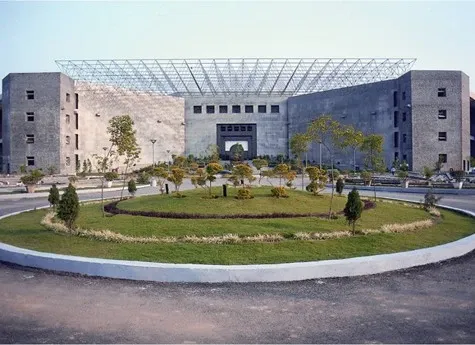
India on Saturday, 4 October 2025, announced a landmark achievement in quantum communications: QNu Labs, working alongside the Bhaskaracharya National Institute for Space Applications and Geo-informatics (BISAG-N) and IIT Gandhinagar, has successfully demonstrated the country's first free-space Quantum Key Distribution (QKD) link spanning 5.56 km. The field trial, conducted between the campuses of BISAG-N and IIT Gandhinagar, marks a defining moment in India's push for sovereign, quantum-resilient communication infrastructure.
What the Trial Achieved
Using QNu Labs' proprietary Pointing, Acquisition and Tracking (PAT) system, the trial maintained a stable Quantum Bit Error Rate (QBER) below 5 per cent — a critical threshold for secure key generation — while producing cryptographic keys at a rate of 230–260 bits per second (bps). These keys were then fed into BISAG-N's Vedic Kavach platform, a post-quantum cryptography-enabled system with integrated quantum random number generation, enabling verified end-to-end encryption and decryption of test messages.
Notably, the demonstration combined two complementary layers of quantum security: QNu Labs' hardware-based QKD device Armos, operating over free-space optical channels, and BISAG-N's software-based Vedic Kavach post-quantum cryptography suite. This dual-layer architecture is designed to remain resilient even when the physical quantum channel is temporarily unavailable — a practical advantage over purely hardware-dependent systems.
What the Institutions Said
Dr Vinay Thakur, Director General of BISAG-N, described the integration of Vedic Kavach with QNu Labs' QKD technology as 'a significant step towards practical quantum-resilient communication systems.' Sunil Gupta, Co-founder and CEO of QNu Labs, said the 5.56 km demonstration 'paves the way for longer-distance quantum-secure networks and satellite-based quantum communication.' Commodore Manish Tripathi (Retd.), who heads ISTF at IIT Gandhinagar, noted that the trial offers 'a valuable field environment for advancing practical quantum communication technologies' and demonstrates how academia, indigenous technology, and real-world experimentation can converge to address emerging security requirements.
Why This Milestone Matters
Quantum computing poses an existential threat to conventional encryption standards — a reality that has prompted governments worldwide to accelerate post-quantum security programmes. India's demonstration is significant because it is conducted over free space rather than optical fibre, making it more adaptable to last-mile and satellite deployments. This comes amid growing national urgency around data sovereignty, with MeitY — under which BISAG-N operates as an autonomous scientific society — pushing for indigenously developed cryptographic solutions.
Founded in 2016, QNu Labs is India's first company dedicated to quantum-secure digital infrastructure, with sovereign products deployed globally. The collaboration with a government-backed institution like BISAG-N and a premier academic body like IIT Gandhinagar signals a maturing ecosystem for deep-tech security in India.
What Comes Next
The trial is explicitly positioned as a foundation for scaling. Longer-distance terrestrial links and integration with satellite-based quantum communication are cited as the immediate next steps. If the architecture scales successfully, it could underpin secure communication corridors for defence, critical infrastructure, and government networks — areas where quantum threats are considered most acute.
Point of View
Let alone satellite links. The dual-layer architecture (hardware QKD plus post-quantum software) is a pragmatic hedge: if the quantum channel degrades, the software layer holds. That redundancy is smart engineering, not a workaround. What the ecosystem still lacks is a clear national programme with funding milestones, akin to China's QUESS satellite project or the EU Quantum Flagship. Without that framework, individual demonstrations — however impressive — risk remaining isolated data points rather than the foundation of a national quantum communication grid.
NationPress
3 Oct 2026
Frequently Asked Questions
What is India's first free-space Quantum Key Distribution (QKD) demonstration?
It is a field trial in which QNu Labs, BISAG-N, and IIT Gandhinagar established a secure quantum communication channel over 5.56 km of free space — the longest such demonstration in India to date. The trial generated cryptographic keys at 230–260 bps with a Quantum Bit Error Rate below 5 per cent.
What is QKD and why does it matter for security?
Quantum Key Distribution (QKD) uses principles of quantum mechanics to generate encryption keys that are theoretically impossible to intercept without detection. It matters because conventional encryption could be broken by sufficiently powerful quantum computers, making QKD a critical tool for future-proofing sensitive communications.
What is the Vedic Kavach platform used in the trial?
Vedic Kavach is BISAG-N's indigenously developed platform that combines post-quantum cryptography with quantum random number generation. In this trial, it was used to encrypt and decrypt test messages using the quantum-generated keys, demonstrating a complete end-to-end secure communication chain.
Who are the organisations behind this demonstration?
QNu Labs, founded in 2016, is India's first company focused on quantum-secure digital infrastructure. BISAG-N is an autonomous scientific society under MeitY, working on space technology applications and satellite communication. IIT Gandhinagar is a premier public technical university that provided the field environment for the trial.
What are the next steps after this 5.56 km trial?
According to the organisations involved, the demonstration is intended to pave the way for longer-distance terrestrial quantum-secure networks and eventual satellite-based quantum communication. No specific timeline or distance targets have been publicly announced for the next phase.