What is the Expected GDP Growth for India in FY26?
Synopsis
India's GDP growth is on track to hit 7.5% this fiscal year, fueled by strong domestic demand and favorable economic conditions. Experts predict a stable inflation rate and a promising outlook for investment, making this a pivotal moment for the Indian economy. Find out more about the growth prospects and potential challenges ahead.
Key Takeaways
Projected GDP growth of 7.5% for FY26.
Stable inflation rate expected at 2.1% in FY26.
Fiscal deficit to meet 4.4% target in FY26.
Revival of capital expenditure cycle is underway.
Strong FDI inflows in emerging sectors.
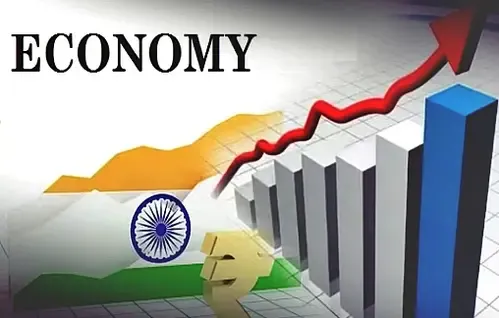
New Delhi, Dec 17 (NationPress) India’s gross domestic product (GDP) growth is anticipated to reach 7.5% in the current financial year (FY26) and 7% in FY27, driven by robust domestic demand and solid macroeconomic fundamentals, as stated in a report released on Wednesday.
Furthermore, inflation is projected to remain subdued, with an average Consumer Price Index (CPI) inflation rate expected at 2.1% in FY26, before normalizing to approximately 4% in FY27.
CareEdge Ratings estimates the current account deficit (as a percentage of GDP) to be around 1% for both FY26 and FY27.
The rating agency predicts that the central government will achieve its fiscal deficit target of 4.4% in FY26, with ongoing fiscal consolidation likely to reduce it to between 4.2% and 4.3% in FY27.
The yield on 10-year government securities is expected to range from 6.4% to 6.6% by the end of FY26, while the USD/INR exchange rate is forecasted to hover around 89-90 by the conclusion of FY27.
“The macroeconomic outlook for India remains positive as we approach FY27. Despite external uncertainties, the Indian economy is set to achieve a healthy growth rate of 7% in FY27,” stated Rajani Sinha, Chief Economist at CareEdge Ratings.
This growth momentum is bolstered by factors such as manageable inflation rates, reduced interest rates, and a lighter tax burden. Furthermore, a potential trade agreement between the US and India could provide additional momentum, Sinha noted.
India is witnessing early signs of a revival in its capital expenditure cycle, evidenced by substantial growth in the order books of capital goods companies.
“Foreign investors are increasingly recognizing India’s growth potential, as seen in a significant rise in gross Foreign Direct Investment (FDI) inflows, especially within emerging sectors such as electric vehicles, renewable energy, electronics, data centers, and AI infrastructure. Reforms in the factor market, including the new labor code, are expected to further instill confidence in both domestic and global investors,” the report highlighted.
While global economic conditions remain tough, with growth anticipated to fall below pre-pandemic averages, India's economic growth is projected to perform relatively well compared to other nations.
Point of View
I believe that India's economic trajectory presents significant opportunities for growth and development. The projected GDP growth, supported by domestic demand and favorable macroeconomic conditions, positions India favorably on the global stage. It is essential for policymakers to maintain this momentum while navigating external challenges.
NationPress
7 Oct 2026
Frequently Asked Questions
What is the projected GDP growth for India in FY26?
India's GDP growth is expected to be at 7.5% for FY26.
What factors support this GDP growth?
The growth is supported by resilient domestic demand, stable macro fundamentals, and manageable inflation.
What is the expected inflation rate in FY26?
The average CPI inflation is projected to be at 2.1% in FY26.
How will the fiscal deficit change from FY26 to FY27?
The fiscal deficit is expected to be 4.4% in FY26 and reduce to between 4.2% and 4.3% in FY27.
What are the prospects for foreign investment in India?
There has been a notable increase in gross FDI inflows, particularly in sectors like EVs, renewables, and AI infrastructure.