Is India’s Shift to Low-Carbon Green Steel a Slow Process?
Synopsis
As India embarks on its journey towards low-carbon green steel, the transition appears to be a gradual process hampered by various challenges. A recent report highlights the projected growth in green steel demand, driven by stricter ESG norms and industry decarbonisation efforts. Discover the steps Indian steelmakers are taking to reduce emissions and embrace sustainability.
Key Takeaways
India's transition to green steel is gradual due to cost and technology barriers.
Green steel demand is expected to accelerate post-2030.
Indian steelmakers have a higher carbon emission intensity than the global average.
9 GW of renewable power capacity has been announced by steel mills.
Operational efficiency and renewable energy are key to reducing emissions.
New Delhi, Jan 20 (NationPress) The shift towards low-carbon green steel in India is set to be a slow and long-term journey due to cost and technological barriers that impede swift decarbonisation, as indicated by a recent report released on Tuesday.
Looking ahead to post-2030, the demand for green steel in India is anticipated to surge, driven by stricter ESG compliance requirements, large-scale industries such as automotive, infrastructure, and capital goods seeking to decarbonise their supply chains, along with supportive policy measures.
According to rating agency ICRA, the carbon emission intensity of Indian steelmakers averages around 2.5 tonnes of carbon dioxide for every tonne of steel produced, which is approximately 12 percent higher than the global average for the blast furnace-basic oxygen furnace (BF-BOF) method.
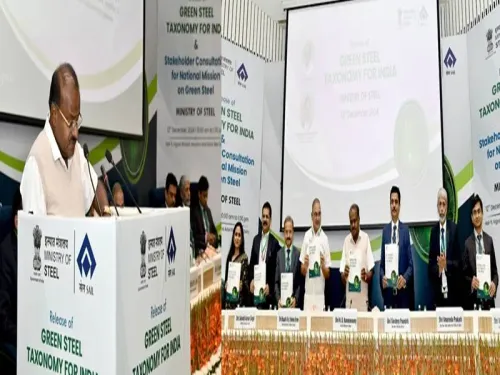
The government's recent implementation of a Green Steel Taxonomy in December 2024 (as part of the National Mission on Green Steel) is a positive development, establishing graded emission thresholds to identify what constitutes “green” steel.
Nevertheless, most primary producers in India currently exceed even the upper limit of this designated green range, highlighting a significant decarbonisation gap that must be addressed, according to the report.
In the near term, the decarbonisation of the domestic steel industry will largely depend on improvements in operational efficiency and increased adoption of renewable energy, which is expected to lead to a 19 percent reduction in emission intensity by 2029-2030, bringing the sector's average down to about 2.0 tCO₂ per tonne by the decade's end, explained Girishkumar Kadam, Senior Vice-President and Group Head at ICRA.
A significant portion of this reduction is projected to stem from the integration of renewable energy and process optimisations, he noted.
The report indicates that Indian steel mills have already announced 9 gigawatts (GW) of captive renewable power capacity, replacing fossil fuel-based electricity in their operations.
Switching to green power alone is expected to decrease emissions by 13 percent for BF-BOF based mills and up to 22 percent for DRI-based steelmaking units.
Other operational strategies, such as increasing scrap usage in furnaces, implementing energy efficiency measures like waste-heat recovery, and enhancing iron ore beneficiation, are expected to further reduce CO₂ emissions per tonne, the report added.
Point of View
The transition to low-carbon green steel represents not just an environmental imperative but also a significant economic opportunity. As India strives to align with global sustainability goals, it is essential to acknowledge the challenges and support the innovations that will drive this transformation.
NationPress
30 Sept 2026
Frequently Asked Questions
What is green steel?
Green steel refers to steel produced with minimal carbon emissions, often through the use of renewable energy sources and sustainable practices.
Why is India's transition to green steel slow?
The transition is hindered by cost and technological constraints that slow down the decarbonisation process.
What measures are Indian steelmakers taking to reduce emissions?
Indian steelmakers are focusing on operational efficiency, renewable energy adoption, and various process optimisations to lower carbon emissions.
What impact will the Green Steel Taxonomy have?
The Green Steel Taxonomy will provide clear guidelines for emission thresholds, helping to classify what qualifies as green steel.
How is the demand for green steel expected to change in the future?
Demand for green steel is projected to accelerate post-2030, driven by stricter ESG compliance and decarbonisation efforts in key industries.