H. D. Kumaraswamy Advocates for a Green Transition in India's Steel Sector
Synopsis
Union Minister H. D. Kumaraswamy emphasizes the urgent need for India's steel industry to adopt circular economy principles and green decarbonisation strategies for a sustainable future in his latest remarks at a workshop in New Delhi.
Key Takeaways
Shift to Circular Economy: The steel sector must embrace sustainable practices.
Green Decarbonisation: Reducing carbon emissions is crucial for industry growth.
Innovation and R&D: Bridging research with real-world applications is essential.
Startup Ecosystem: Supporting startups can drive technological advancements.
Global Leadership: India has the potential to lead in sustainable steel production.
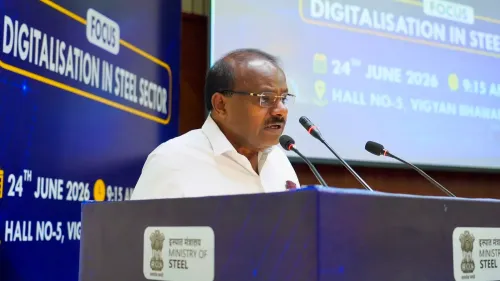
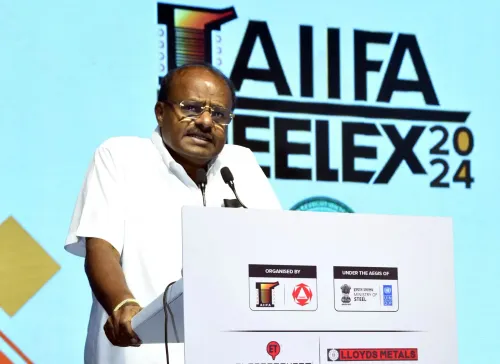
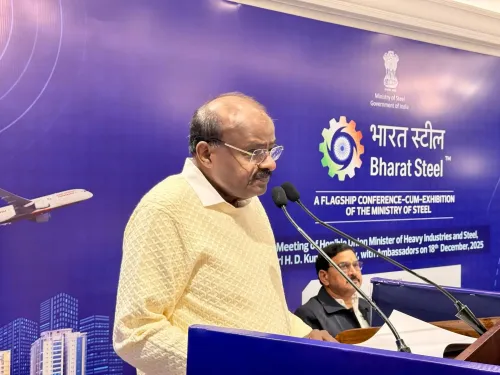
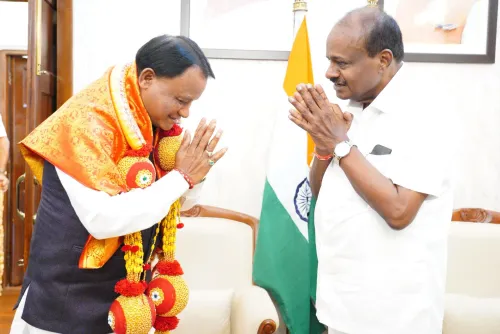
New Delhi, April 7 (NationPress) In a call for a revolutionary change in India's steel industry, Union Minister H. D. Kumaraswamy stated on Tuesday that the sector needs to move past conventional growth paradigms and adopt a future that prioritizes the principles of a circular economy and green decarbonisation to align with the vision of a Viksit Bharat.
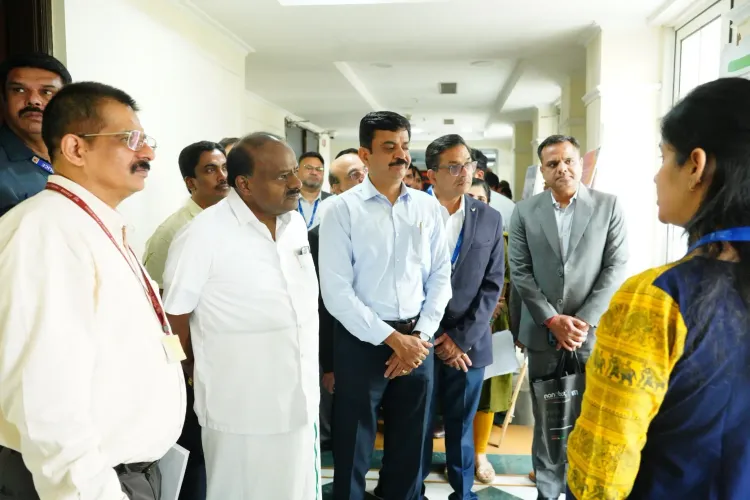
During the inauguration of the workshop named “SRTMI R&D Connect: From Ideas to Industrial Impact,” Kumaraswamy stressed the necessity for a fundamental shift within the sector, asserting that India must evolve towards a growth model that is both sustainable and driven by innovation.
He pointed out that the government's objective is to ensure that the outcomes of research are effectively applied in real-world industrial contexts.
“As we establish the foundations for a Viksit Bharat, the steel sector must evolve from traditional models to one characterized by a circular economy and green decarbonisation. Our goal is to guarantee that innovation transitions from the lab to practical applications, turning ideas into tangible results,” the minister remarked.
He further explained that fostering startups and promoting indigenous technologies will be crucial for developing a modern, self-sufficient, and globally competitive steel sector.
Steel Secretary Sandeep Poundrik, addressing the audience, underscored India's distinctive position in the global steel market.
He observed that while numerous economies are experiencing a downturn, India is witnessing significant demand growth, presenting both an opportunity and a duty to lead through innovation.
“By making bold investments in R&D today, we are securing the future of the Indian steel industry as a resilient, world-class powerhouse for the coming generations,” he stated.
SRTMI President and SAIL Director (Mines) M.R. Gupta highlighted the importance of a mission-oriented approach to research and development.
He indicated that the focus would be on accelerating technology development, validating pilot projects, and speeding up commercialisation to boost productivity, lower costs, and enhance sustainability.
The workshop included a startup pitch session that showcased innovations in process efficiency, digitalisation, waste utilization, and advanced materials.
Prominent steel companies also presented industry-focused problem statements that align with critical priorities such as resource efficiency, green steel production, and decarbonisation technologies.
Esteemed academics from leading institutions shared technical presentations on operational excellence, circular economy frameworks, and sustainability, while a poster presentation session facilitated knowledge exchange among students, researchers, startups, and industry professionals.
Point of View
The call for a transition in the steel sector towards green and circular economy principles is not just timely, but essential for sustainable development. Kumaraswamy's emphasis on innovation and indigenous technology reflects a proactive approach to global challenges, positioning India as a potential leader in sustainable industrial practices.
NationPress
10 Oct 2026
Frequently Asked Questions
What is the significance of a circular economy in the steel sector?
A circular economy in the steel sector emphasizes sustainability by reducing waste and promoting recycling, which ultimately leads to lower environmental impact and resource efficiency.
How does green decarbonisation benefit the steel industry?
Green decarbonisation helps the steel industry reduce its carbon footprint, aligning with global climate goals while enhancing competitiveness through innovative technologies.
What role do startups play in transforming the steel industry?
Startups drive innovation by introducing new technologies and solutions that can improve efficiency and sustainability in steel production and processing.
Why is India’s steel sector poised for growth despite global slowdowns?
India's steel sector is experiencing robust demand growth, presenting a unique opportunity to lead with innovation, even as other economies face downturns.
What was discussed during the SRTMI workshop?
The SRTMI workshop focused on innovation in process efficiency, digitalisation, and sustainability in the steel sector, featuring industry problem statements and academic insights.