How Will the Maritime Sector Propel India's Growth Under the Viksit Bharat 2047 Vision?
Synopsis
The maritime sector is set to play a crucial role in India's economic development and global standing as outlined in the Viksit Bharat 2047 vision. With a focus on the Blue Economy, India aims to enhance its maritime capabilities and sustainability efforts.
Key Takeaways
Maritime sector is pivotal for India's economic growth.
India conducts over 90% of its trade through sea routes.
Focus on sustainability in maritime practices is increasing.
Goal to be among the top 10 shipbuilding nations.
Support for renewable energy initiatives at major ports.
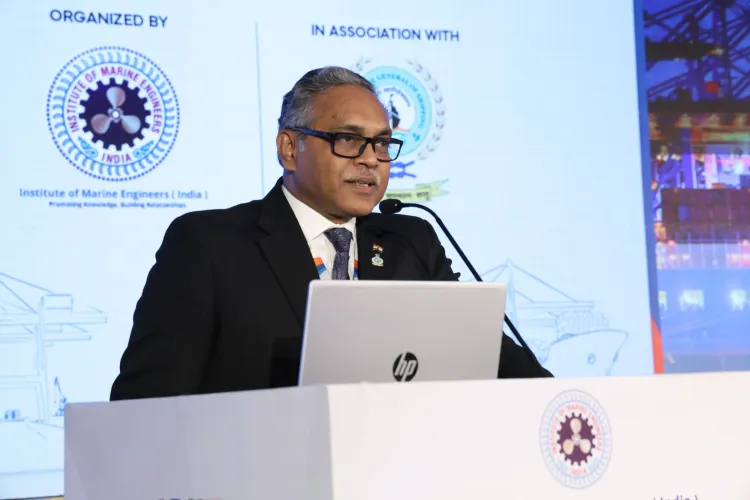
Kochi, Jan 30 (NationPress) The maritime industry is poised to be a foundational element in India's economic growth and international standing as part of the Viksit Bharat 2047 vision, stated Director General of Shipping Shyam Jagannathan on Friday. He emphasized the critical importance of the Blue Economy in fostering sustainable development.
This announcement was made on the final day of COMARSEM 2026, which provided a dynamic platform for discussion, collaboration, and knowledge sharing among prominent figures in the global maritime sector, including policymakers, industry experts, and academia.
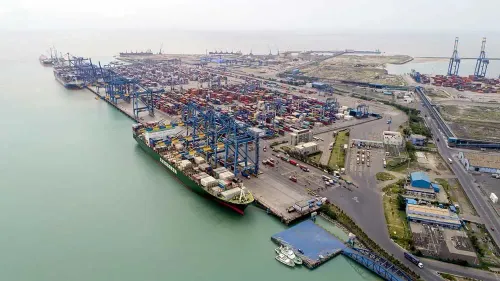
Jagannathan highlighted that more than 90 percent of India's trade by volume is conducted via sea routes, positioning the maritime sector as central to the nation's trade, logistics, and infrastructure framework.
According to him, India's maritime industry is vital to our economic narrative. With over 1,520 merchant vessels and a gross tonnage capacity exceeding 13 million, the nation is progressively enhancing its international presence in shipping and maritime services.
The DG of Shipping pointed out that India is emerging as a global hub for the Blue Economy, bolstered by strategic policy initiatives across various sectors, including ports, shipbuilding, logistics, renewable energy, and related maritime fields.
The government's goal is to position India among the top 10 nations for shipbuilding and repair by boosting capacity from 30,000 gross tonnage to over 500,000.
Sustainability is a cornerstone of the maritime strategy, with over 60 percent renewable energy usage at major ports, the establishment of green belts in at least one-third of port areas, and the promotion of circular economy practices through ship recycling as key objectives. Currently, India accounts for 30-35 percent of global ship recycling tonnage and satisfies nearly 25 percent of the domestic ferrous scrap demand.
The Alang–Sosiya cluster in Gujarat comprises 115 yards compliant with the Hong Kong Convention, supporting the Green Steel initiative and generating significant employment.
Referring to the Maritime Amrit Kaal Vision 2047, Jagannathan stated that the advanced phase aims for a top-five global standing in shipbuilding while maintaining leadership in ship recycling.
Key initiatives include the establishment of carbon-neutral ports, the development of green and alternative fuels, green bunkering infrastructure, and incentives for low-emission vessels, such as 20-30 percent financial assistance for green shipbuilding and retrofitting.
“Green shipping is not merely about compliance; it is about competitiveness in a low-carbon global economy,” Jagannathan remarked, noting that India's transition aligns with the Maritime India Vision 2030, Maritime Amrit Kaal Vision 2047, the IMO’s Net Zero 2050 roadmap, and India’s Panchamrit commitments.
He called on professional organizations, such as the Institute of Marine Engineers (India), to collaborate closely with the administration for effective implementation of these innovative initiatives.
Point of View
It is pivotal to understand how India's maritime ambitions align with global trends in sustainability and economic development. The government's commitment to enhancing maritime infrastructure and shipbuilding capacities reflects a strategic vision that prioritizes not just growth but also environmental responsibility. This approach positions India favorably on the global stage, making it a significant player in the Blue Economy.
NationPress
19 Sept 2026
Frequently Asked Questions
What role does the maritime sector play in India's economy?
The maritime sector is crucial for India's economy, with over 90% of trade by volume conducted through sea routes, making it a central part of the trade and logistics ecosystem.
How many merchant vessels does India have?
India boasts more than 1,520 merchant vessels with a gross tonnage capacity of over 13 million.
What are the sustainability goals for India's maritime sector?
Key sustainability goals include achieving over 60% renewable energy usage at major ports and promoting circular economy practices through ship recycling.
What is the Maritime Amrit Kaal Vision 2047?
The Maritime Amrit Kaal Vision 2047 aims to position India among the top five nations in shipbuilding while maintaining its leadership in ship recycling.
How does India plan to enhance its shipbuilding capacity?
The government aims to scale shipbuilding capacity from 30,000 gross tonnage to over 500,000 gross tonnage, backed by focused policy interventions.