India Intensifies Push for Flex Fuel Vehicles Amid Global Oil Market Challenges

Synopsis
In light of ongoing global oil market instability, the Indian government is ramping up efforts to promote Flex Fuel Vehicles (FFVs). This initiative aims to enhance ethanol use in transportation and reduce reliance on oil imports, a critical move for energy security.
Key Takeaways
Government's initiative to promote Flex Fuel Vehicles in response to global oil market instability.
Stakeholder meeting scheduled to outline plans for FFV adoption.
Current E20 program to advance towards FFVs capable of 85% ethanol blends.
Efforts aimed at reducing oil import dependency and enhancing energy security.
Ambitious targets for ethanol blending pushed forward to 2025-26.
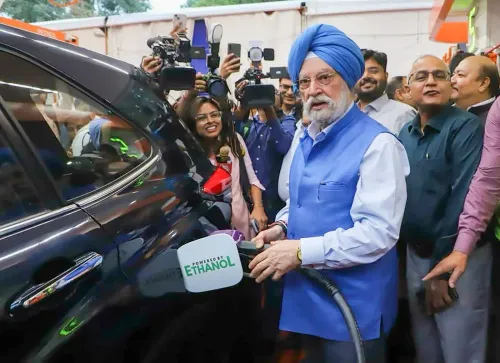
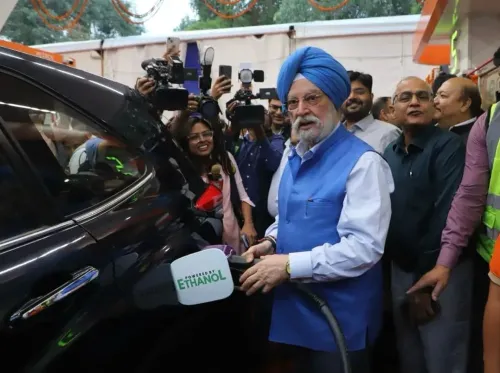
New Delhi, April 20 (NationPress) The Indian government is intensifying its initiatives to support the adoption of Flex Fuel Vehicles (FFVs) as part of a strategy to boost ethanol usage in the transportation sector. This move comes in response to ongoing disturbances in the global oil market, particularly linked to the conflict in the Middle East.
The Ministry of Petroleum and Natural Gas (MoPNG) is set to convene a crucial stakeholder meeting on Monday to outline a comprehensive plan for the integration of FFVs in India, as confirmed by reliable sources.
This meeting, which will be chaired by the Additional Secretary at MoPNG, is expected to draw participants from major Oil Marketing Companies (OMCs) such as Indian Oil, Bharat Petroleum, and Hindustan Petroleum, along with automobile manufacturers and other relevant stakeholders.
Key discussions are anticipated to revolve around the policy initiatives necessary to enhance ethanol blending in fuels beyond the existing mandates.
Currently, India implements an E20 program, wherein petrol is mixed with 20% ethanol. The government is now considering advancing towards FFVs that can operate on ethanol blends of up to 85%.
This renewed initiative is aimed at reducing India's reliance on oil imports and fortifying energy security amid the unpredictable global oil market.
As of now, India imports over 85% of its crude oil, rendering the economy susceptible to fluctuations in the global oil market. Therefore, the government is determined to diminish this dependency.
Additionally, the target for blending 20% ethanol with petrol has been moved forward from 2030 to the Ethanol Supply Year (ESY) 2025-26 due to rapid advancements in this area.
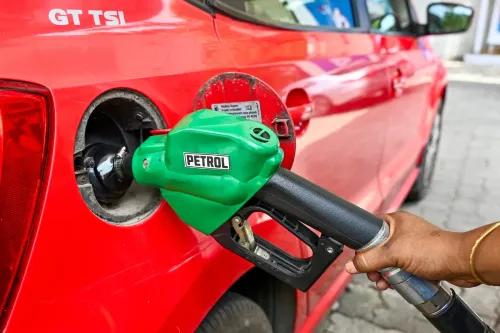
The government is actively promoting ethanol blending in petrol through the Ethanol Blended Petrol (EBP) Programme, with public sector OMCs selling ethanol-mixed petrol.
To ensure a steady supply of feedstock for ethanol production and meet the 20% blending target by the ESY 2025-26, various measures have been implemented, including the expansion of feedstock sources for ethanol production and the development of maize clusters around ethanol plants to increase maize production in the regions surrounding grain-based distilleries.
The government has also approved the allocation of 52 Lakh Metric Tonnes (LMT) of surplus rice from the Food Corporation of India (FCI) for ethanol production for both the ESY 2024-25 (from November 1, 2024, to October 31, 2025) and ESY 2025-26 until June 30, 2026. Furthermore, 40 LMT of sugar has been diverted for ethanol production for the ESY 2024-25.
In addition, to enhance ethanol production and supply in the nation, the government has established an administered price mechanism for ethanol procurement under the EBP Programme and reduced the GST rate for ethanol under this program to 5%.
Point of View
It's evident that India's strategy to promote Flex Fuel Vehicles aligns with the urgent need for energy independence. This move not only addresses current global oil market uncertainties but also positions India as a leader in sustainable transportation solutions. A proactive approach is crucial for national energy security.
NationPress
18 Sept 2026
Frequently Asked Questions
What are Flex Fuel Vehicles?
Flex Fuel Vehicles (FFVs) are designed to run on gasoline blended with varying proportions of ethanol, up to 85%.
How is the government promoting ethanol use?
The government is promoting ethanol use through the Ethanol Blended Petrol Programme and has set ambitious blending targets for the coming years.
Why is this initiative important for India?
This initiative is vital for reducing India's dependence on imported oil, thereby enhancing energy security amid volatile global oil markets.
What is the current ethanol blending target?
India aims to achieve a 20% ethanol blending with petrol by the Ethanol Supply Year 2025-26.
What measures are being taken to ensure ethanol supply?
The government is expanding feedstock sources for ethanol production and streamlining procurement processes to ensure a consistent supply.