India Aims for 5,000 Tonnes of Rare Earth Magnet Production by 2030
Synopsis
India is set to significantly increase its production of rare earth permanent magnets and lithium exploration, aiming for 5,000 tonnes by 2030. With rising demand, this initiative is crucial for the nation's clean energy transition and technological advancement.
Key Takeaways
India targets 5,000 tonnes of rare earth magnet production by 2030.
Current demand for rare earth magnets is expected to rise significantly.
A pilot project for neodymium-iron-boron magnets has been launched.
Exploration of lithium reserves is underway in Rajasthan.
The government encourages private sector participation in mineral exploration.
New Delhi, March 25 (NationPress) India is ramping up its initiatives to boost the local production of rare earth permanent magnets and to explore essential minerals like lithium. The government's target is to achieve a production capacity of 5,000 tonnes by 2030, as announced on Wednesday.
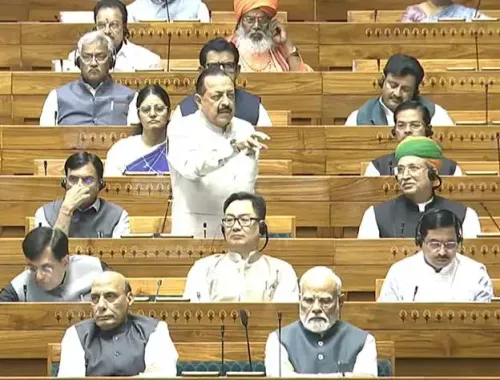
The current demand for rare earth permanent magnets, estimated at around 4,000 tonnes, is expected to surge to approximately 8,000 tonnes by 2030. This trend underscores the necessity for swift enhancement of local production capabilities, as noted by MoS for Science & Technology and Earth Sciences, Dr. Jitendra Singh, during the Lok Sabha session.
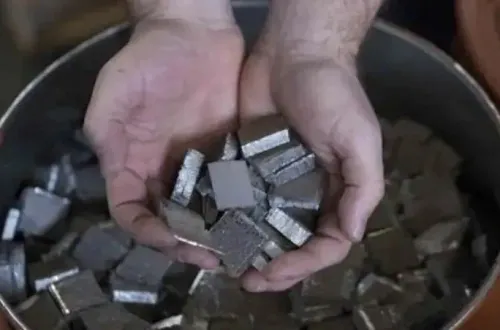
A pilot initiative focusing on neodymium-iron-boron permanent magnets has been initiated, and a samarium-cobalt magnet production facility in Visakhapatnam is now operational, starting with a capacity of 500 tonnes per year.
This capacity is set to expand to 2,000 tonnes in the next phase, ultimately reaching 5,000 tonnes by 2030, according to a statement from the Department of Atomic Energy.
Regarding lithium reserves located in Degana, Rajasthan, the minister indicated that initial survey operations are in progress, with further exploration anticipated to commence shortly. Similar endeavors are also being carried out in the Reasi district of Jammu & Kashmir.
Dr. Singh emphasized that lithium and rare earth elements are vital for various sectors, including electric vehicles, renewable energy, electronics, defense, aerospace, and applications in space technology. These elements will be crucial in facilitating the transition to clean energy and in supporting emerging technologies that depend on reliable energy systems.
The government is collaborating closely across various ministries to expedite the exploration and development of these critical minerals. Policy measures, such as amendments in the Atomic Energy framework, have opened up opportunities for private sector involvement in the exploration of several essential minerals, while ensuring safeguards for strategic resources like uranium.
Additionally, Dr. Singh mentioned the recent announcement of rare earth corridors in states such as Tamil Nadu, Odisha, Andhra Pradesh, and Kerala, aimed at bolstering the domestic ecosystem for processing and value enhancement.
Rare earth elements are found in both beach sand minerals and rock formations, and their exploration demands varied methodologies based on geological conditions. The states of Rajasthan, Gujarat, and Jharkhand possess substantial deposits of rock-based minerals, which are comparatively more complex to explore, as highlighted by the minister.
aar/pk
Point of View
The government's proactive approach towards enhancing production capabilities for rare earth elements is commendable. This move not only addresses increasing domestic demand but also aligns with global trends in clean energy and technological advancement, marking a positive step for India's economy and sustainability efforts.
NationPress
22 Sept 2026
Frequently Asked Questions
What is the target production capacity for India's rare earth magnets by 2030?
India aims to achieve a production capacity of 5,000 tonnes of rare earth permanent magnets by 2030.
Why is the production of rare earth elements important?
Rare earth elements are crucial for various high-tech sectors, including electric vehicles, renewable energy, electronics, and defense.
Where are India's lithium reserves located?
India's lithium reserves are primarily located in Degana, Rajasthan, with exploration activities currently underway.
What initiatives are being taken to enhance rare earth production in India?
India has launched pilot projects and is establishing rare earth corridors in several states to boost local production and processing capabilities.
How is the government facilitating private sector involvement in mineral exploration?
Policy measures, including provisions under the Atomic Energy Amendment framework, have opened opportunities for private sector participation in exploring critical minerals.