India's Rare Earth Reserves Exceed 8.5 Million Tonnes: Insights from Dr. Jitendra Singh
Synopsis
India's vast rare earth reserves, totaling 8.52 million tonnes, are overshadowed by its import dependency for magnets. Union Minister Dr. Jitendra Singh reveals structural challenges inhibiting domestic production while outlining government initiatives to boost manufacturing in this critical sector.
Key Takeaways
India has 8.52 million tonnes of rare earth oxide resources.
Dependence on imports is due to low-grade deposits and regulatory constraints.
Government plans include incentives of Rs 7,280 crore for domestic production.
New manufacturing capacity target of 6,000 metric tonnes per annum.
Critical for technology in electric vehicles and defense systems .
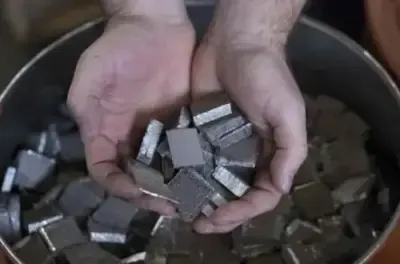
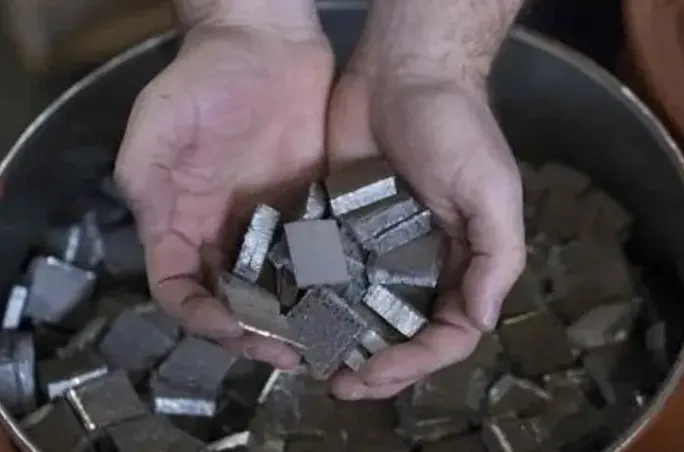
New Delhi, April 2 (NationPress) India possesses approximately 8.52 million tonnes of rare earth oxide resources, yet it remains reliant on imports for rare earth magnets and associated products. This dependency is due to the low-grade domestic deposits, regulatory challenges, and an underdeveloped processing industry, as reported to the Parliament on Thursday.
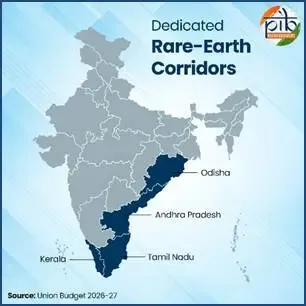
In a written response in the Rajya Sabha, Dr. Jitendra Singh, the Union Minister of State for Science and Technology, stated that the Atomic Minerals Directorate for Exploration and Research has identified 7.23 million tonnes of rare earth oxide equivalent in monazite deposits located in Andhra Pradesh, Odisha, Tamil Nadu, Kerala, West Bengal, Jharkhand, Gujarat, and Maharashtra.
Additionally, 1.29 million tonnes of rare earth resources have been found in hard rock formations in Gujarat and Rajasthan.
Despite these significant reserves, India's reliance on imported rare earth magnets continues, primarily due to three structural limitations: the domestic ore grades are considerably low at 0.056-0.058 percent and associated with radioactivity, complicating and increasing the cost of extraction; mineable reserves are restricted by coastal regulation zone regulations, forest coverage, and mangrove protection laws; and the nation lacks a midstream rare earth value chain necessary for producing metals, alloys, and magnets from refined oxides.
To bridge this gap, in November 2025, the Union Cabinet approved a scheme to foster the domestic production of sintered rare earth permanent magnets, with a financial commitment of Rs 7,280 crore.
This initiative aims to establish 6,000 metric tonnes per annum of rare earth permanent magnet production capacity in India, bolstered by sales-linked incentives worth Rs 6,450 crore over five years and a capital subsidy of Rs 730 crore, as highlighted by the minister.
Moreover, a rare earth permanent magnet facility has been set up in Andhra Pradesh with an annual output of three tonnes of samarium cobalt magnets, which are essential for defense and atomic energy applications.
“In addition to these initiatives, the Union Budget 2026-27 has introduced dedicated rare earth corridors in Odisha, Kerala, Andhra Pradesh, and Tamil Nadu,” he added.
Rare earth permanent magnets are vital components in electric vehicles, renewable energy systems, advanced electronics, aerospace technology, and defense applications.
Point of View
It's clear that while India's rare earth reserves are substantial, the country faces significant hurdles that must be addressed. The government's proactive measures indicate a commitment to reducing import reliance and fostering a domestic manufacturing ecosystem, which is essential for national security and technological advancement.
NationPress
10 Oct 2026
Frequently Asked Questions
What are rare earth metals?
Rare earth metals are a group of 17 elements essential for various applications, including electronics, renewable energy, and defense systems.
Why is India dependent on rare earth imports?
India's dependency stems from low-quality domestic deposits, regulatory issues, and a limited processing industry.
What is the government's plan for rare earth production?
The government has approved a scheme to establish a manufacturing capacity of 6,000 metric tonnes of rare earth permanent magnets annually, supported by significant financial incentives.
Where are India's rare earth resources located?
Rare earth resources are primarily located in states like Andhra Pradesh, Odisha, Tamil Nadu, and others, with both monazite and hard rock deposits.
What role do rare earth magnets play?
Rare earth magnets are critical for electric vehicles, renewable energy systems, advanced electronics, aerospace equipment, and defense technologies.