Atal Expressway to turn Kota into Rajasthan's industrial hub
Synopsis
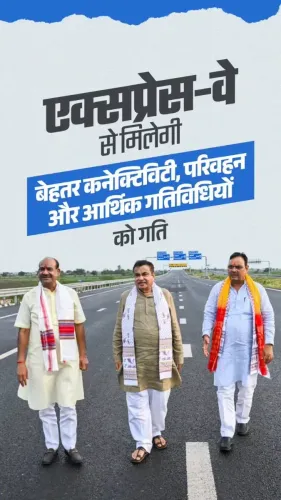
Kota's identity is shifting. A ₹15,000 crore Atal Expressway, a greenfield link to the Delhi-Mumbai Expressway, and an international-ready airport by 2027 are converging to reposition India's coaching capital as southeastern Rajasthan's industrial and logistics gateway — a transformation that could reshape employment and investment patterns across the Hadoti region.
Key Takeaways
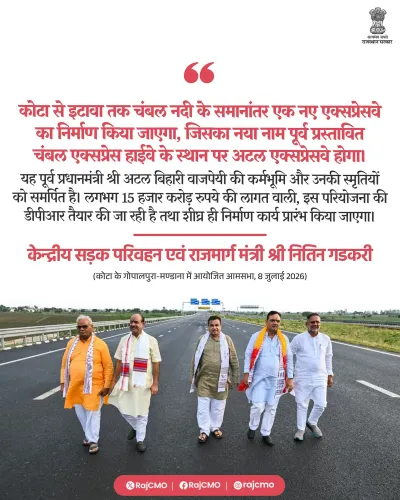
Union Minister Nitin Gadkari announced the Kota-Etawah Expressway will be renamed the Atal Expressway , at an estimated cost of ₹15,000 crore , running parallel to the Chambal River .
A 21 km four-lane greenfield road will connect Kota directly to the Delhi-Mumbai Expressway via Balpura .
A ₹550-crore link road connecting NH-52 to the Delhi-Mumbai Expressway , bypassing the Mukundra Wildlife Sanctuary , has been approved.
The Delhi-Mumbai Expressway is 75–80% complete at a total outlay of ₹1.10 lakh crore ; full Delhi-Mumbai travel expected in 12 hours within two years.
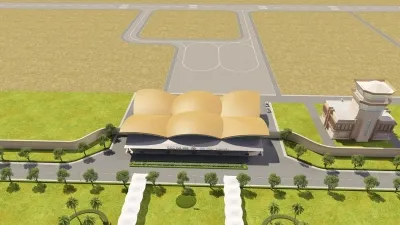
Kota airport is expected to be operational by October 2027 , with commercial services from December 2027 , handling up to 2 million passengers annually on a 3.2-km runway .
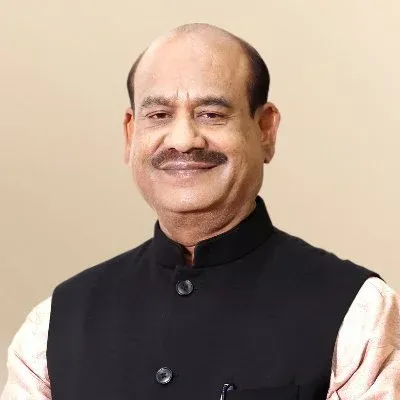
Lok Sabha Speaker Om Birla has directed that full immigration facilities be available at Kota airport to enable direct international travel.
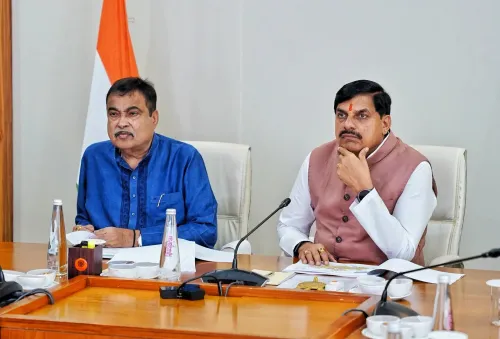
Kota, long celebrated as India's coaching capital, is now at the centre of a sweeping infrastructure push that could redefine its economic identity. Union Minister for Road Transport and Highways Nitin Gadkari on Wednesday announced a series of major road projects for the Hadoti region during his visit to the city, with the flagship proposal being the renaming of the Kota-Etawah Expressway as the Atal Expressway — in honour of former Prime Minister Atal Bihari Vajpayee. The corridor, estimated to cost nearly ₹15,000 crore, is set to become one of Rajasthan's most significant infrastructure projects.
The Atal Expressway: Scale and Scope
The proposed Atal Expressway will run parallel to the Chambal River, linking Kota with Etawah in Uttar Pradesh. The Detailed Project Report (DPR) is currently under preparation, with construction expected to commence after statutory approvals are secured. Once operational, the corridor is expected to dramatically improve connectivity between Rajasthan and Uttar Pradesh, opening new avenues for trade, tourism and industrial investment across the region.
Direct Link to Delhi-Mumbai Expressway
Beyond the Atal Expressway, Kota will gain a 21 km four-lane greenfield connector road linking the city directly to the Delhi-Mumbai Expressway via Balpura. This link is designed to give industries in the region seamless access to one of India's busiest freight and logistics corridors. Separately, a ₹550-crore link road connecting NH-52 with the eight-lane Delhi-Mumbai Expressway — bypassing the Mukundra Wildlife Sanctuary — has also been approved. Work on both projects is expected to begin within the next few months. A DPR has additionally been initiated for a new road connecting Bhawanimandi directly with the Delhi-Mumbai Expressway, further strengthening connectivity in the Jhalawar region.
Economic Multiplier Effect
Infrastructure experts describe highways as economic multipliers, and the government's vision for Kota reflects this logic. Improved connectivity is expected to attract manufacturing units, logistics parks, warehousing facilities, agro-processing industries and private investment. For farmers, faster transport means quicker access to larger markets and lower logistics costs. For businesses, it promises smoother movement of goods and reduced transportation expenses. For young people, it could translate into new local employment opportunities, reducing the need to migrate to metropolitan cities.
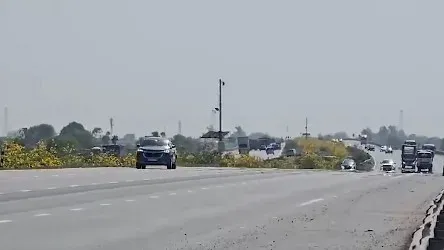
The announcements complement the ongoing Delhi-Mumbai Expressway, one of India's largest infrastructure projects. According to Gadkari, nearly 75–80 percent of the ₹1.10 lakh crore project has already been completed. Within two years, travellers are expected to cover the distance between Delhi and Mumbai in approximately 12 hours. The expressway passes through several Rajasthan districts, including Kota, Bundi, Sawai Madhopur, Dausa, Alwar and Jhalawar, creating a new economic corridor across the state.
Political Backing and State Response
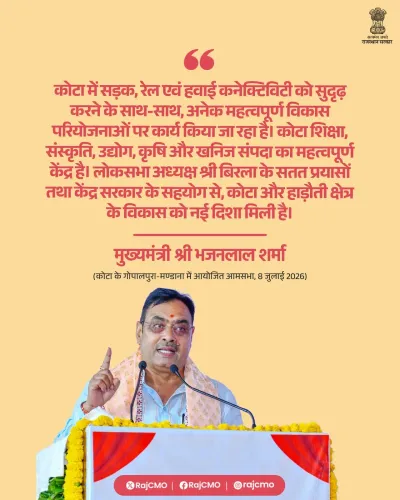
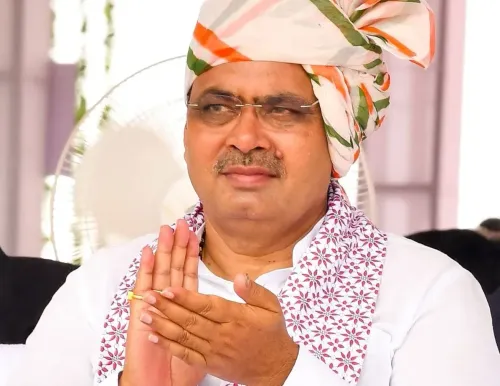
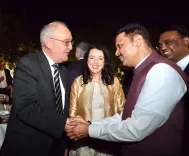
Rajasthan Chief Minister Bhajan Lal Sharma described the expressway as a milestone that will transform the state's infrastructure landscape, crediting close coordination between the state and Central governments for accelerating development. Lok Sabha Speaker Om Birla called the Delhi-Mumbai Expressway a future lifeline for the country, noting that the expanding highway network is laying the foundation for India's next phase of economic growth.
Kota Airport: International Readiness by 2027
The infrastructure transformation extends to aviation. Kota airport is reportedly expected to be ready by October 2027, with regular commercial air services likely to commence by December 2027. The facility is being developed over 1,088 acres and will feature a 3.2-km runway capable of accommodating larger aircraft, with a projected annual passenger handling capacity of around 2 million passengers. Speaker Birla has directed officials to ensure full immigration facilities are available at the airport itself, so that international passengers are not required to transit through Delhi, Mumbai, or Jaipur for clearance. For Kota, the road ahead is no longer only about reaching destinations faster — it is about reaching an entirely new economic future.
Point of View
Western and central India, and the Delhi-Mumbai Expressway has already created a gravitational pull for logistics investment along its corridor. The real test is execution: the DPR is still under preparation, statutory approvals are pending, and India's infrastructure history is littered with corridor projects that stalled between announcement and groundbreaking. The airport timeline — commercial services by December 2027 — is ambitious but achievable if land and regulatory clearances move in parallel. What is notably absent from the announcements is a concrete industrial policy framework to complement the roads; connectivity alone does not guarantee investment without matching ease-of-doing-business reforms at the state level.
NationPress
8 Oct 2026
Frequently Asked Questions
What is the Atal Expressway announced for Kota?
The Atal Expressway is the renamed Kota-Etawah Expressway, announced by Union Minister Nitin Gadkari during his visit to Kota on 9 July. Estimated to cost nearly ₹15,000 crore, it will run parallel to the Chambal River and is intended to improve connectivity between Rajasthan and Uttar Pradesh while boosting trade and industrial investment.
How will Kota connect to the Delhi-Mumbai Expressway?
A 21 km four-lane greenfield connector road will link Kota directly to the Delhi-Mumbai Expressway via Balpura. Additionally, a ₹550-crore link road connecting NH-52 to the expressway — bypassing the Mukundra Wildlife Sanctuary — has been approved, with work on both expected to begin within months.
When will Kota airport become operational?
Kota airport is reportedly expected to be ready by October 2027, with regular commercial air services likely from December 2027. The facility spans 1,088 acres, features a 3.2-km runway, and is designed to handle approximately 2 million passengers annually.
How complete is the Delhi-Mumbai Expressway?
According to Nitin Gadkari, 75–80 percent of the ₹1.10 lakh crore Delhi-Mumbai Expressway has been completed. Within two years, the full Delhi-to-Mumbai journey is expected to take approximately 12 hours. The expressway passes through six Rajasthan districts including Kota, Bundi, and Alwar.
What economic impact is expected for the Hadoti region?
The new road corridors are expected to attract manufacturing units, logistics parks, warehousing facilities, and agro-processing industries to the Hadoti region. Improved connectivity is also projected to lower logistics costs for farmers, reduce transportation expenses for businesses, and generate local employment, potentially reducing out-migration to larger cities.