Indian Oil posts ₹2,661 crore Q1 loss as West Asia crisis drives crude costs higher
Synopsis
India's largest oil refiner swung from a ₹5,689 crore profit to a ₹2,661 crore loss in a single year — not because it sold less fuel, but because it sold more of it at a loss. With revenue up 26 per cent yet the bottom line deep in the red, IOC's Q1 numbers lay bare the cost of keeping petrol and diesel prices frozen during a West Asia-driven crude spike.
Key Takeaways
Indian Oil Corporation reported a standalone net loss of ₹2,661 crore in Q1 2026-27 (April–June), against a net profit of ₹5,689 crore in Q1 2025-26 .
Revenue from operations surged 26 per cent year-on-year to ₹2,75,972 crore , driven by higher crude-linked volumes.
The company achieved its highest-ever Q1 crude throughput of 19.165 MMT at 109.4 per cent capacity utilisation.
Record quarterly sales: petrol at 4.522 MMT and diesel at 10.866 MMT ; domestic market share rose to 43.1 per cent .
Natural gas sales grew 11 per cent to 1.873 MMT ; petrochemicals posted a profit of ₹217 crore .
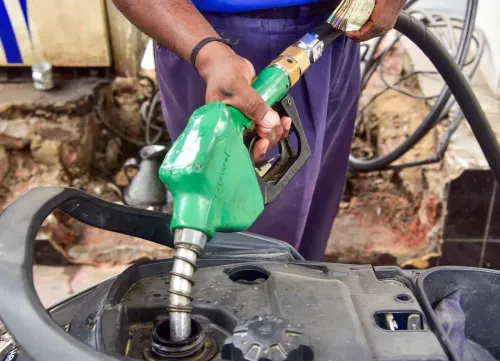
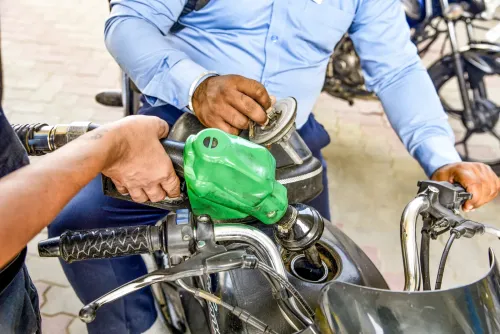
The loss was attributed to unrecovered crude cost increases caused by the West Asia conflict , not passed on to consumers.
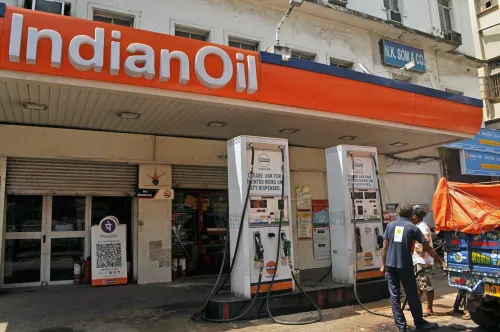
Indian Oil Corporation (IOC) recorded a standalone net loss of ₹2,661 crore in the first quarter (April–June 2026-27), a sharp reversal from a net profit of ₹5,689 crore in the same period a year earlier. The company attributed the swing squarely to surging crude oil costs triggered by the West Asia conflict — costs that were not passed on to consumers at the pump.
Revenue Grows, But Margins Collapse
Despite the bottom-line hit, IOC's revenue from operations climbed a robust 26 per cent year-on-year to ₹2,75,972 crore in Q1 2026-27, up from ₹2,18,608 crore in Q1 2025-26. The divergence between revenue growth and profit erosion underscores the classic under-recovery trap: higher crude prices inflate the top line while squeezing marketing margins when retail fuel prices are held steady.
This is not an isolated episode. IOC and other state-run oil retailers have repeatedly absorbed crude-cost shocks ahead of elections or during geopolitical flare-ups, with the government compensating — fully or partially — at a later stage. The West Asia conflict has kept Brent crude elevated, compressing refining and marketing spreads simultaneously.
Record Operational Milestones
Indian Oil achieved its highest-ever Q1 refineries crude throughput of 19.165 million metric tonnes (MMT), at a capacity utilisation of 109.4 per cent, compared with 18.683 MMT in Q1 2025-26 — a 3 per cent improvement. Cross-country pipeline throughput rose 9 per cent to 28.548 MMT from 26.256 MMT in the year-ago quarter.
The company also posted record quarterly sales of petrol at 4.522 MMT and diesel at 10.866 MMT. Total sales volume for the quarter stood at 26.211 MMT, marginally lower than 26.328 MMT in Q1 2025-26. IOC's domestic market share expanded by 1.6 percentage points to 43.1 per cent, up from 41.5 per cent a year ago.
Bright Spots: Gas, Petrochemicals, and Lubricants
Natural gas sales volume rose 11 per cent year-on-year to 1.873 MMT from 1.685 MMT, reflecting growing industrial and city-gas demand. In petrochemicals, IOC posted a profit of ₹217 crore, supported by stronger sales of LAB, BA, PTA, and butadiene.
On the product side, Indian Oil launched a new premium lubricants range under the SERVO brand — SERVO Hypersport for motorcycles, SERVO Hyperdrive for four-wheelers, and SERVO Hypertorq for commercial vehicles — signalling a push into higher-margin segments even as core fuel marketing bleeds.
What Comes Next
The trajectory of IOC's profitability in the coming quarters will hinge on two variables: whether the West Asia conflict eases enough to bring crude prices down, and whether the government authorises a retail fuel price revision to narrow the under-recovery gap. Until either happens, state oil companies are likely to continue absorbing losses — a familiar pattern that raises questions about long-term financial sustainability for India's largest downstream energy company.
Point of View
Not just a financial one. The decision to absorb crude-cost increases rather than raise retail fuel prices is a recurring government playbook — one that protects consumers and vote banks in the short run but steadily erodes the balance sheets of state oil companies. Revenue growing 26 per cent while profits collapse into negative territory is a structural contradiction that cannot be sustained indefinitely. The real question is whether the Centre will compensate IOC through budgetary support or a quiet fuel price revision — and when. Until that clarity arrives, IOC's financials will remain hostage to geopolitics it cannot control and pricing decisions it does not make.
NationPress
15 Sept 2026
Frequently Asked Questions
Why did Indian Oil report a loss in Q1 2026-27?
Indian Oil posted a ₹2,661 crore net loss in Q1 2026-27 because rising crude oil costs — driven by the West Asia conflict — were not passed on to consumers through higher retail fuel prices. This created an under-recovery situation where the company sold fuel below its cost of procurement.
How does IOC's Q1 2026-27 performance compare to last year?
IOC swung from a net profit of ₹5,689 crore in Q1 2025-26 to a net loss of ₹2,661 crore in Q1 2026-27, even as revenue from operations grew 26 per cent to ₹2,75,972 crore. The divergence reflects the impact of unabsorbed crude cost increases on marketing margins.
Did Indian Oil achieve any operational records despite the loss?
Yes. IOC achieved its highest-ever Q1 crude throughput of 19.165 MMT at 109.4 per cent capacity utilisation, along with record quarterly sales of petrol (4.522 MMT) and diesel (10.866 MMT). Its domestic market share also expanded to 43.1 per cent.
What is the outlook for Indian Oil's profitability?
IOC's near-term profitability depends on whether the West Asia conflict subsides — reducing crude prices — or whether the government permits a retail fuel price revision to close the under-recovery gap. Without either development, losses are likely to persist in subsequent quarters.
Which segments performed well for IOC in Q1 2026-27?
Petrochemicals delivered a profit of ₹217 crore, supported by LAB, BA, PTA, and butadiene sales. Natural gas sales also grew 11 per cent year-on-year to 1.873 MMT, and IOC launched a new premium SERVO lubricants range targeting motorcycles, four-wheelers, and commercial vehicles.