US Supreme Court blocks Trump mail-ballot rules for November midterms
Synopsis
The US Supreme Court has stopped Trump's sweeping mail-ballot overhaul from taking effect for the November midterms — preserving voting procedures for millions just as ballots were already being mailed. With Justices Alito and Thomas dissenting and Kavanaugh leaving the door open for future enforcement, the legal fight is far from over.
Key Takeaways
The US Supreme Court on Monday blocked the Trump administration's new US Postal Service mail-ballot rules from applying to the November 3 midterm elections .
The court said the government is 'unlikely to succeed on the merits' of its challenge to the lower court injunction.
The blocked rules would have required states to redesign ballot envelopes, obtain federal approval, and upload voter data to a Postal Service portal.
Nearly one-third of American voters used mail ballots in 2024 ; roughly 300,000 absentee ballots had already been sent in North Carolina alone.
Justices Samuel Alito and Clarence Thomas dissented; Justice Brett Kavanaugh joined the majority but signalled the rules could be valid in future elections.
The ruling does not resolve the broader constitutional question of Postal Service authority over elections, leaving the issue open for future litigation.
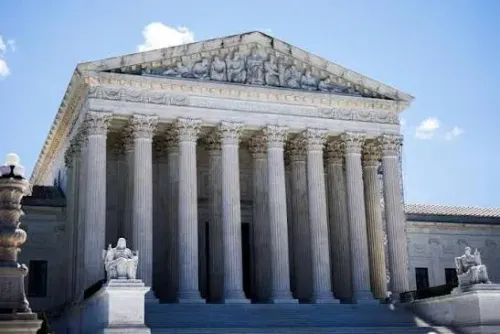
The US Supreme Court on Monday blocked the Trump administration from enforcing sweeping new postal requirements for mail ballots ahead of the November midterm elections, in a decision that effectively preserves existing voting procedures for millions of Americans. The justices rejected an emergency appeal seeking to suspend a lower court injunction against the new US Postal Service rules.
What the Court Ruled
In an unsigned order, the court stated that 'the Government is unlikely to succeed on the merits of its challenge to the District Court's preliminary injunction' and that the factors governing emergency relief did not favour lifting the injunction. The ruling does not resolve the broader constitutional question of whether the Postal Service has the legal authority to impose such requirements in future elections — it only prevents their use in the November 3 midterms, when control of both the House and the Senate will be decided.
What the Blocked Rules Would Have Required
The Postal Service adopted the contested rules in August, following an executive order signed by President Donald Trump in March. Under the rules, states would have been required to redesign ballot envelopes with election-mail logos, machine-readable features, and voter-specific barcodes. States would also have had to submit designs for federal approval and upload voter names, addresses, and barcode data to a new Postal Service portal. Mailings that failed to comply would have been returned to state election authorities undelivered.
Why Election Officials Said It Was Unworkable
Election administrators across the country argued the timeline was impossible. North Carolina and Wisconsin had already begun mailing ballots, and more than a dozen other states were preparing to dispatch ballots by the end of the week, according to reports. Roughly 300,000 absentee ballots had already been sent in North Carolina alone. North Carolina Attorney General Jeff Jackson said: 'Voting has begun. You don't change the rules in the middle of the election.' Notably, election officials from both parties — including Republican officials in Utah and Michigan — had urged the court to block the requirements for the 2026 election cycle.
The Dissent and a Notable Concurrence
Justices Samuel Alito and Clarence Thomas dissented, with Alito arguing the Postal Service holds 'broad power to regulate the delivery of mail' and that challengers had not demonstrated the agency clearly exceeded its authority. Justice Brett Kavanaugh joined the majority but signalled the policy may ultimately be lawful in future cycles, writing that 'there is at least a fair prospect that the final rule falls within the Postal Service's statutory authority' — though applying it this year 'would be arbitrary and capricious' given the time constraints facing state and local officials.
The Broader Stakes
Nearly one-third of American voters used mail ballots in 2024, according to reports from The Wall Street Journal and The Washington Post. The Trump administration maintained the rules were constitutional and intended to protect election integrity, while Democratic-led states and voting-rights organisations argued the Postal Service was encroaching on election authority that the US Constitution primarily reserves for states. The ruling leaves the legal battle unresolved and sets up a likely return to the courts ahead of future elections.
Point of View
Better-timed implementation could survive judicial scrutiny, making this a pause rather than a verdict. The bipartisan opposition from state election officials — Republicans in Utah and Michigan alongside Democratic-led states — underscores how operationally disruptive the rules were, regardless of their legal merits. The real question heading into 2027 and beyond is whether the administration refiles with a longer implementation window, and whether courts will find that sufficient.
NationPress
15 Sept 2026
Frequently Asked Questions
What did the US Supreme Court decide about Trump's mail-ballot rules?
The US Supreme Court on Monday blocked the Trump administration from enforcing new US Postal Service requirements for mail ballots in the November midterm elections. The court said the government is unlikely to succeed on the merits of its challenge to the lower court injunction that had already suspended the rules.
What would the blocked Postal Service rules have required?
States would have had to redesign ballot envelopes with election-mail logos, machine-readable features, and voter-specific barcodes, then submit those designs for federal approval. States would also have been required to upload voter names, addresses, and barcode data to a new Postal Service portal; non-compliant mailings would have been returned undelivered.
Why did election officials say the rules were unworkable?
Officials argued they could not implement the changes so close to voting, with North Carolina and Wisconsin having already begun mailing ballots and about 300,000 absentee ballots already sent in North Carolina alone. North Carolina Attorney General Jeff Jackson said: 'Voting has begun. You don't change the rules in the middle of the election.'
Who dissented and what was their argument?
Justices Samuel Alito and Clarence Thomas dissented, with Alito arguing the Postal Service has 'broad power to regulate the delivery of mail' and that challengers had not shown the agency clearly exceeded its authority. Justice Brett Kavanaugh joined the majority but noted the rules may ultimately be lawful in future elections if states are given adequate time to comply.
Does this ruling permanently block Trump's mail-ballot rules?
No. The ruling only prevents the rules from applying to the November 3 midterm elections; it does not settle whether the Postal Service has the legal authority to impose such requirements in future elections. The constitutional question remains open and is likely to return to the courts ahead of subsequent election cycles.