ISI's India playbook: Cash-driven terror in North, radicalisation in South
Synopsis
India's security agencies have uncovered a calculated two-track terror playbook: cash-driven recruitment in the North — where nearly 99 per cent of operatives were allegedly bought, not radicalised — and a patient ideological campaign in the South, with a 13-person Vijayawada module preaching IS and Al-Qaeda ideology through encrypted channels. The ISI's use of the underworld as a hiring arm, and Gulf-linked preachers as ideological conduits, signals a threat that has outgrown the conventional single-vector model.
Key Takeaways
Terror networks linked to Pakistan's ISI are running a two-pronged strategy in India — financial recruitment in the North and ideological radicalisation in the South , according to security officials.
The NIA is probing a 13-person radicalisation module in Vijayawada, Andhra Pradesh , focused on spreading Islamic State and Al-Qaeda ideology via encrypted online channels.
In northern India, nearly 99 per cent of terror recruits were allegedly lured through financial incentives , with no religious radicalisation involved, officials say.
Hufaiza Farooq Ahmed Hashmi was arrested in Bhayandar, Mumbai in a joint Maharashtra ATS and Delhi Police Special Cell operation; he allegedly recruited drug-dependent youth for targeted killings in Delhi .
ISI-backed elements reportedly exploited Gulf-state ties with Kerala and Tamil Nadu to push radicalisation through Wahhabi preachers, officials claim.
Terror networks operating in India have adopted a sharply divided two-pronged strategy — deploying financial incentives to recruit operatives in the North while pursuing ideological radicalisation in the South, according to security officials. The pattern, which has emerged from multiple ongoing investigations, points to a calculated exploitation of regional vulnerabilities by elements linked to Pakistan's Inter-Services Intelligence (ISI).
The Regional Divide
Security officials say the operational logic behind the split is deliberate. In northern India, the primary objective has been the execution of targeted terror attacks, with the ISI deploying underworld networks to assemble teams for hire. In the southern states, by contrast, the emphasis has been on long-term ideological conditioning — radicalisation and recruitment — with no major terror strikes recorded in the region so far, according to an Intelligence Bureau (IB) official.
'The youth are more susceptible to radicalisation and are more interested in changing the mindset of society rather than carrying out attacks. The focus has been more on the implementation of Sharia law and preaching violent Islam so that this mindset can be imbibed in society,' the official said.
South India: Gulf Links and Online Channels
Officials claim that ISI-backed elements have leveraged the longstanding cultural and economic ties between several southern states and Gulf nations to advance their radicalisation agenda. Scores of Wahhabi preachers reportedly visited states including Kerala and Tamil Nadu over the years, attempting to push extremist ideology, according to security officials.
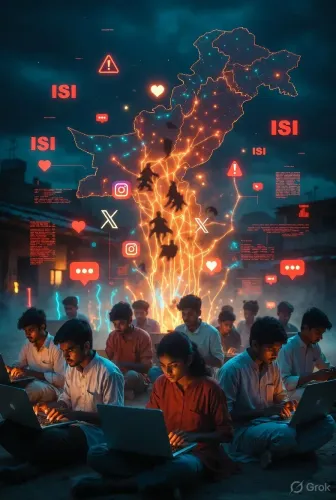
Central security agencies are currently probing a significant radicalisation case involving 13 individuals based in Vijayawada, Andhra Pradesh. Notably, none of the accused are directly affiliated with any designated terror group. The National Investigation Agency (NIA) has determined that the module was exclusively focused on radicalisation — all 13 named persons were reportedly recruited via social media after being radicalised online, and were subsequently tasked with spreading the ideologies of both the Islamic State and Al-Qaeda through encrypted digital channels, with a primary focus on South India.
North India: Money Over Ideology
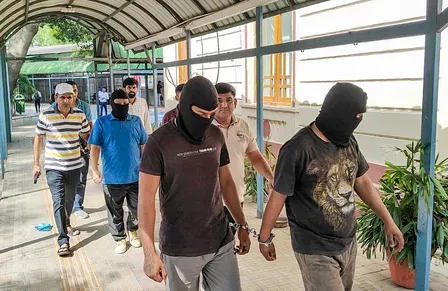
In the North, investigations by the Maharashtra Anti-Terrorism Squad (ATS) and the Special Cell of the Delhi Police have revealed a starkly transactional recruitment model. Officials say nearly 99 per cent of recruits in these modules were allegedly enticed solely through financial incentives, with religion playing no role in the selection process.
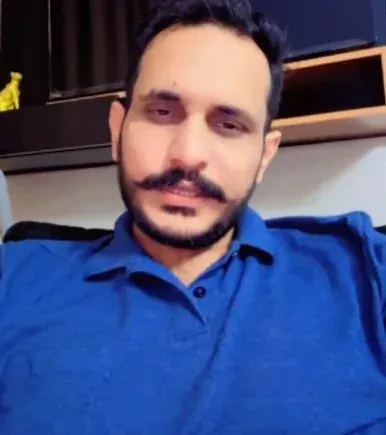
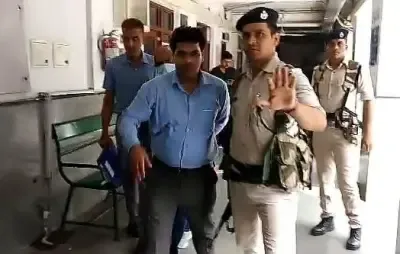
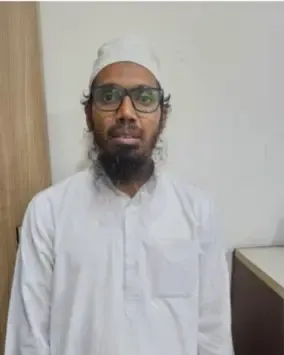
A key arrest that shed light on this modus operandi was that of Hufaiza Farooq Ahmed Hashmi, detained in Bhayandar near Mumbai in a joint operation by the Maharashtra ATS and the Delhi Police Special Cell. Hashmi was reportedly tasked with assembling a team of young men willing to travel to Delhi to carry out targeted killings. Investigators found that Hashmi specifically targeted youth with drug addiction vulnerabilities, offering them money to join the module. Recruits were told they would receive the identity and location of their intended target only upon arrival in Delhi.
A Pattern of Exploitation
Officials say the divergence in tactics reflects a calculated effort to exploit the specific vulnerabilities of young people across different regions. 'This modus operandi clearly shows how the vulnerabilities of young people are being exploited by these elements and how they are being recruited through financial inducements,' a security official said. This is the latest in a series of underworld-linked terror modules that agencies have dismantled in recent months, each revealing the same cash-first recruitment template in the North.
As agencies continue to map these networks, the dual-track strategy underscores a widening and increasingly sophisticated threat landscape that India's counter-terror architecture will need to address on two fronts simultaneously.
Point of View
After years of flagging the Gulf-preacher conduit, India still lacks a robust counter-narrative infrastructure in southern states. Busting modules is necessary but insufficient — the recruitment conditions remain structurally intact.
NationPress
27 Sept 2026
Frequently Asked Questions
What is the ISI's two-pronged strategy in India?
According to security officials, Pakistan's ISI is running two parallel operations in India — using financial incentives to recruit operatives for terror attacks in northern India, while focusing on ideological radicalisation and long-term recruitment in southern states. The split is deliberate and exploits different regional vulnerabilities.
What is the Vijayawada radicalisation case being probed by the NIA?
The NIA is investigating a 13-person module based in Vijayawada, Andhra Pradesh, whose members were radicalised online and tasked with spreading Islamic State and Al-Qaeda ideology through encrypted channels, primarily targeting South India. None of the accused are directly affiliated with a designated terror organisation.
Who is Hufaiza Farooq Ahmed Hashmi and why was he arrested?
Hufaiza Farooq Ahmed Hashmi was arrested in Bhayandar near Mumbai in a joint operation by the Maharashtra ATS and the Delhi Police Special Cell. He was allegedly tasked with recruiting financially vulnerable youth — including drug addicts — to travel to Delhi to carry out targeted killings, with targets to be revealed only upon arrival.
Why has South India become a focus for radicalisation rather than attacks?
Intelligence Bureau officials say southern youth are considered more susceptible to ideological influence, with the focus on shifting societal mindsets toward extremist interpretations rather than immediate violence. ISI-linked elements have also reportedly exploited the close ties between southern states like Kerala and Tamil Nadu and Gulf nations to channel Wahhabi preachers into the region.
How are terror recruits being identified in North India?
Investigations reveal that nearly 99 per cent of recruits in northern India's underworld-linked terror modules were lured purely through money, with no religious or ideological screening involved. Handlers like Hashmi specifically targeted economically distressed or drug-dependent youth, making financial desperation the primary entry point.