ISI expanding Khalistan-style gangster-terror modules to Maharashtra, Northeast
Synopsis
Pakistan's ISI has moved beyond Punjab: security officials say the agency is now rolling out its proven gangster-terror fusion model in Maharashtra, Gujarat, and the Northeast. The Maharashtra ATS has already busted one such network linked to ISI operative Shahzad Bhatti and the Dogar Gang — and officials warn this is only the beginning of a countrywide replication.
Key Takeaways
Pakistan's ISI is replicating its Punjab Khalistan gangster-terror model across Maharashtra , Gujarat , and Northeastern states , according to security officials.
The Maharashtra ATS conducted raids across Mumbai , Pune , Nagpur , Nashik , Nanded , Mira Road , and Nalasopara , dismantling a major gangster-terror network.
Operations were reportedly overseen by Shahzad Bhatti (based in Dubai and Pakistan , originally from Lahore ) and facilitated by the Dogar Gang .
Narcotics trafficking is a primary funding mechanism, with drug revenues funnelled into terror financing.
Social media is being used extensively for recruitment, drawing youth first into drug supply roles before deeper network involvement.
Officials say the ISI assigns each unit a designated geographic zone to create jurisdictional confusion for Indian agencies.
Pakistan's Inter-Services Intelligence (ISI) is systematically replicating the gangster-terror fusion model it first tested in Punjab across multiple Indian states, including Maharashtra, Gujarat, and the Northeastern states, according to officials familiar with ongoing investigations. What began as a targeted experiment linking Khalistan-aligned gangsters with terror networks has, according to security officials, evolved into a countrywide operational blueprint.
The ISI's Unified Network Strategy
Security officials say the ISI has concluded that keeping gangster networks and terror groups as separate entities is operationally inefficient. By merging the two, the Pakistan spy agency gains shared logistics, pooled finances, and wider recruitment pipelines — all while making it harder for Indian agencies to track either network in isolation.
"Terror groups come under much higher scrutiny when compared to the gangs. It is this aspect that the ISI has been using of late to synchronise the two networks," an official said. Recruiting youth into gangster networks is reportedly easier than direct terror recruitment, making gangs an effective front for radicalisation and operational support.
How the Punjab Model Works — and Why It Is Being Exported
In Punjab, the ISI coordinated gangsters operating both inside India and abroad to liaise with Khalistan-linked terror groups. The gangster networks provided logistical support — movement, safe houses, and supply chains — while the terror outfits directed attacks. Narcotics trafficking formed a key financial artery: drug revenues were funnelled into terror financing, according to officials.
An Intelligence Bureau (IB) official said the Punjab-Khalistan experiment had yielded results significant enough for the ISI to treat it as a replicable template. Maharashtra has now been identified as the next operational laboratory, the official added.
Maharashtra ATS Uncovers the Network
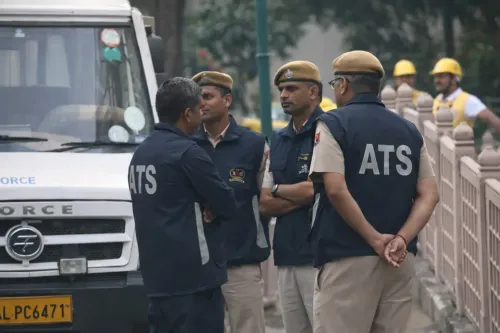
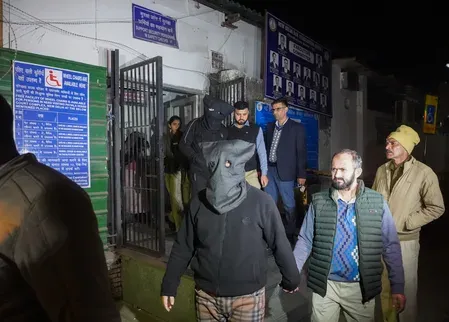
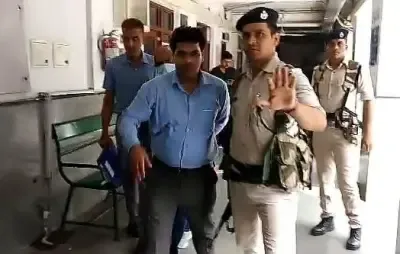
The Maharashtra Anti-Terrorism Squad (ATS) has dismantled a major gangster-terror network following raids across Mumbai, Pune, Jalgaon, Nagpur, Nashik, Nanded, Mira Road, and Nalasopara. Investigations revealed a structured mechanism for drug sales, with proceeds earmarked for terror financing.
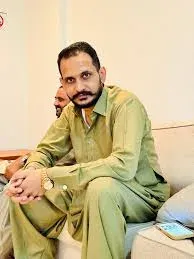
The operations were reportedly overseen by the Shahzad Bhatti network and facilitated on the ground by the Dogar Gang. Bhatti, originally from Lahore, has reportedly been on the ISI's payroll for several years and operates primarily from Dubai and Pakistan. ISI-backed operatives were found to have used social media extensively to recruit youth, targeting them first for drug supply roles before drawing them deeper into the network.
Designated Zones, Coordinated Chaos
Officials say the ISI's broader design assigns each gangster-terror unit a designated geographic area of operation. Khalistan-aligned gangsters, for instance, are reportedly not deployed for operations in Maharashtra or other states — and vice versa. This compartmentalisation, officials say, is deliberate: it creates jurisdictional confusion for state and central agencies, who are trained to track either criminal or terror networks — not a hybrid of both.
"What the coming together of both these networks does is create confusion for the agencies," an official explained. The ISI's stated goal, according to officials, is not ideological alignment but the sustained destabilisation of India — through blasts, fidayeen strikes, narcotics supply, and financial terrorism.
What Security Agencies Are Watching
Officials stress that countering this threat requires deep coordination between central and state intelligence agencies. Monitoring of social media platforms has been identified as critical, given that recruitment and operational communication have consistently relied on these channels across all investigated cases. The agencies are now working to map the network's expansion into Gujarat and the Northeast before it consolidates.
Point of View
With its dense urban sprawl and existing organised crime networks, raises the stakes considerably. The deeper problem is structural: central and state agencies still largely operate in silos, while the ISI is deliberately engineering a hybrid threat that falls between those silos. Social media monitoring alone will not be sufficient — what is needed is a unified hybrid-threat task force with cross-jurisdictional authority, something India has discussed but not yet operationalised at scale.
NationPress
19 Sept 2026
Frequently Asked Questions
What is the ISI's gangster-terror module and how does it work?
The ISI's gangster-terror module is an operational strategy that merges criminal gangster networks with terror groups under a single coordinated framework. Gangsters provide logistics, drug trafficking revenue, and recruits, while terror operatives direct attacks — making both networks harder to detect and dismantle separately.
Which Indian states are being targeted by this ISI strategy?
According to security officials, the strategy — first tested in Punjab through Khalistan-linked networks — is now being expanded to Maharashtra, Gujarat, and the Northeastern states. Maharashtra has been identified as the next primary operational zone.
What did the Maharashtra ATS raids uncover?
The Maharashtra ATS conducted raids across Mumbai, Pune, Jalgaon, Nagpur, Nashik, Nanded, Mira Road, and Nalasopara, uncovering a structured gangster-terror network. Investigations revealed a drug sales mechanism funnelling proceeds to terror financing, overseen by the Shahzad Bhatti network and facilitated by the Dogar Gang.
Who is Shahzad Bhatti and what is his role?
Shahzad Bhatti is reportedly an ISI-linked operative originally from Lahore who has allegedly been on the agency's payroll for several years. He operates primarily from Dubai and Pakistan and is believed to have overseen the gangster-terror network dismantled by the Maharashtra ATS.
How are agencies working to counter this threat?
Officials say countering the hybrid gangster-terror threat requires coordinated action between central and state intelligence agencies. Monitoring of social media — identified as the primary recruitment and communication channel — has been flagged as an immediate priority.