ISI Intensifies Focus on Punjab: Targeted Killings, Drug Trade, and Arms Supply
Synopsis
Pakistan's ISI has escalated its operations in Punjab, employing a calculated strategy involving targeted killings, drug trafficking, and arms distribution. This alarming shift indicates a need for heightened vigilance among law enforcement agencies.
Key Takeaways
ISI's three-pronged strategy includes targeted killings, drug trafficking, and arms supply.
Low-intensity blasts are used to distract security forces.
Younger recruits are financially incentivized to carry out attacks.
Current trends indicate a shift from large-scale attacks to targeted operations.
Increased border security has complicated smuggling efforts.
New Delhi, April 20 (NationPress) The Inter-Services Intelligence (ISI) of Pakistan has intensified its operations in Punjab through a strategic three-fold approach focusing on targeted killings, drug trafficking, and the distribution of arms and ammunition, as per intelligence reports.
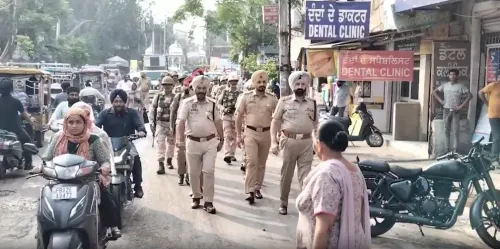
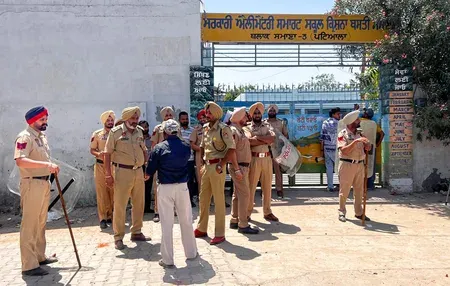
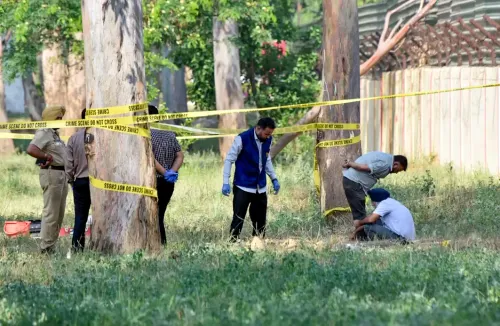
In recent months, Punjab has witnessed a wave of low-intensity explosions involving crude bombs and grenades. An official from the Intelligence Bureau indicated that these acts are not intended for significant destruction but serve as diversions. Their objective is to attract security forces' attention, allowing operatives to stealthily introduce weapons, broaden drug networks, and carry out selective assassinations.
According to officials, “Operatives supported by the ISI are likely to persist in their efforts to smuggle arms, grow drug networks, and execute targeted killings.”
Moreover, the Punjab Police must remain vigilant against attempts to instigate low-intensity blasts. These occurrences aim to instill fear and divert security focus from more substantial activities.
Investigations reveal that local recruits, primarily young men, are being offered significant payments to carry out these attacks, with compensation reaching up to Rs 4 lakh per operation, raising alarm among security agencies.
An intelligence review conducted earlier indicated a rise in financial support linked to the diminishing resonance of Khalistan ideologies among the youth. Efforts to galvanize ideological support have largely failed.
Consequently, operators seem to be relying on financial incentives. Officials observe that aspirations for a wealthier lifestyle, coupled with prevailing drug issues in certain regions, have rendered segments of the youth more susceptible to recruitment. The scale of funding illustrates this shift in tactics.
Authorities analyzing the latest trends in Punjab note that the ISI is steering clear of large-scale, high-impact assaults. The current pattern does not suggest fidayeen attacks or coordinated series of blasts; rather, it emphasizes softer targets that hold limited strategic significance. This method reflects a cautious strategy aimed at allowing the situation to evolve gradually without provoking an overwhelming counter-response.
Targeted killings are favored over mass-casualty operations. Such actions are precise and aim to convey a potent message, serving as a mechanism of intimidation. Alongside this, arms and drug trafficking remain pivotal to the network’s operations. These activities not only secure funding but also facilitate the flow of weapons towards Jammu and Kashmir.
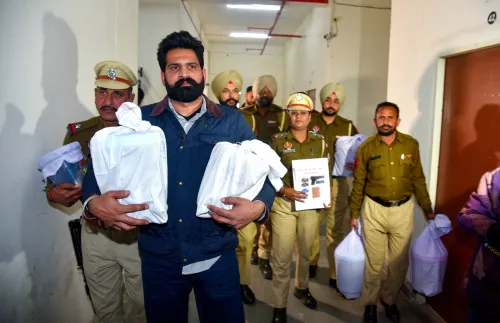
Police officials assert that while there is no lack of operatives in Kashmir willing to conduct attacks, they face infrastructural limitations. Large quantities of arms and ammunition previously accumulated have been confiscated by Indian security forces. Currently, officials observe that drones have simplified the transport of weapons and narcotics across the Punjab border.
Smuggling across the Jammu and Kashmir border has become exceedingly challenging. Similar to infiltration attempts, the movement of contraband across the Line of Control has markedly declined. Following the Pahalgam assault, Indian armed forces executed Operation Sindoor, targeting terrorist infrastructure within Pakistan and Pakistan-administered Kashmir. Consequently, border security has been ramped up to unprecedented levels, resulting in numerous failed attempts by ISI-affiliated operatives.
Point of View
The situation in Punjab reflects a concerning trend in regional security dynamics, necessitating a robust response from law enforcement agencies. The ISI's strategic operations underscore an urgent need for heightened vigilance and coordinated efforts to counteract these threats effectively.
NationPress
16 Sept 2026
Frequently Asked Questions
What strategies is the ISI employing in Punjab?
The ISI is utilizing a three-pronged strategy focusing on targeted killings, drug trafficking, and the supply of arms and ammunition.
How are local recruits being incentivized?
Local recruits are being offered significant financial compensation, reportedly up to Rs 4 lakh per attack, to carry out operations for the ISI.
What is the purpose of low-intensity blasts in Punjab?
These blasts are intended to create fear and divert security attention from more significant criminal activities, rather than cause substantial damage.
How has the ISI's approach changed recently?
The ISI is shifting away from large-scale attacks toward targeted operations that focus on softer, less strategic targets.
What challenges are faced by operatives in Kashmir?
Operatives in Kashmir struggle with infrastructural limitations and increased border security measures that have made arms smuggling more difficult.