Israel and India Urged to Stay Vigilant Amid Turkey's Strengthening Ties with Pakistan
Synopsis
A report emphasizes the need for Israel and India to maintain vigilance rather than alarmism in light of Turkey's growing alignment with Pakistan. As Modi prepares for a visit to Israel, concerns over Turkey's potential nuclear capabilities are highlighted.
Key Takeaways
Vigilance over Alarmism: Israel and India should prioritize strategic dialogue and diplomacy.
Turkey's Nuclear Aspirations: The potential for Turkey to develop a nuclear weapon requires careful scrutiny.
Regional Dynamics: Turkey's assertive behavior influences security calculations in neighboring countries.
International Response: The global community must be prepared for the implications of a new nuclear power.
Strategic Partnerships: Strengthening ties with NATO partners is essential for regional security.
Tel Aviv, Feb 24 (NationPress) Israel and India are urged to adopt a vigilant approach rather than succumbing to alarmism by engaging in deeper strategic discussions with NATO allies, enhancing non-proliferation frameworks, and strengthening regional diplomacy. A report released on Tuesday emphasizes that discreet preventive actions are often more effective than overt confrontations.
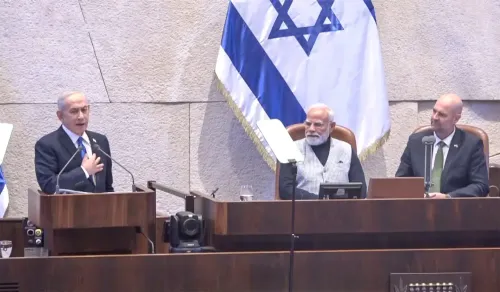
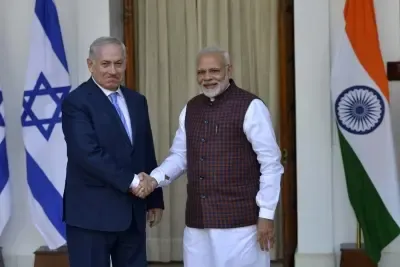
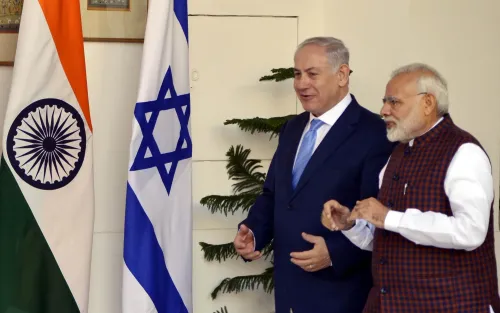
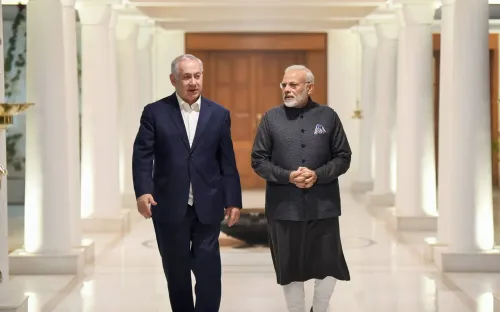
In an article for the 'Times of Israel', Sergio Restelli, an Italian political advisor, author, and geopolitical specialist, indicated that both Jerusalem and New Delhi should remain observant as Prime Minister Narendra Modi gears up for his visit to Israel. The dynamics between Turkey and Pakistan, along with potential concerns like Turkey's nuclear aspirations, necessitate closer examination.
“When discussions about nuclear proliferation arise, the focus typically shifts to Iran or North Korea. However, a growing concern that remains underexplored in global conversations is the emergence of a potential Turkish nuclear arsenal,” Restelli remarked.
He referenced Michael Rubin, Director of Policy Analysis at the Middle East Forum and a senior fellow at the American Enterprise Institute, who stressed that India, in particular, should not dismiss this scenario—a warning that requires thorough consideration in both New Delhi and Jerusalem.
“As a NATO member and a longstanding participant in the global non-proliferation regime, Turkey hosts US tactical nuclear weapons under NATO's nuclear-sharing arrangements. Although Ankara is formally committed to the Nuclear Non-Proliferation Treaty (NPT), President Recep Tayyip Erdogan has previously raised questions about why some nations can possess nuclear weapons while others are denied,” Restelli elaborated.
“Coupled with Turkey's increasingly assertive regional behavior—from Syria to Libya and the Eastern Mediterranean—this rhetoric has led security analysts to question Ankara’s long-term objectives,” he added.
The report indicates that the implications for Israel are both immediate and strategic.
According to the report, Israel has followed a policy of nuclear ambiguity, employing deterrence without explicit declaration, while its security strategy focuses on maintaining qualitative military superiority in a volatile environment.
“The prospect of a Turkish nuclear capability—regardless of whether it is presented as defensive—could significantly alter regional dynamics. Turkey is not a marginal player; it wields considerable influence throughout the Levant, maintains ties with certain Islamist political factions, and has had a complicated relationship with Jerusalem over the past decade,” the report noted.
India's challenges, though distinct, are equally serious, characterized by its strategic landscape shaped by two nuclear-armed neighbors, Pakistan and China.
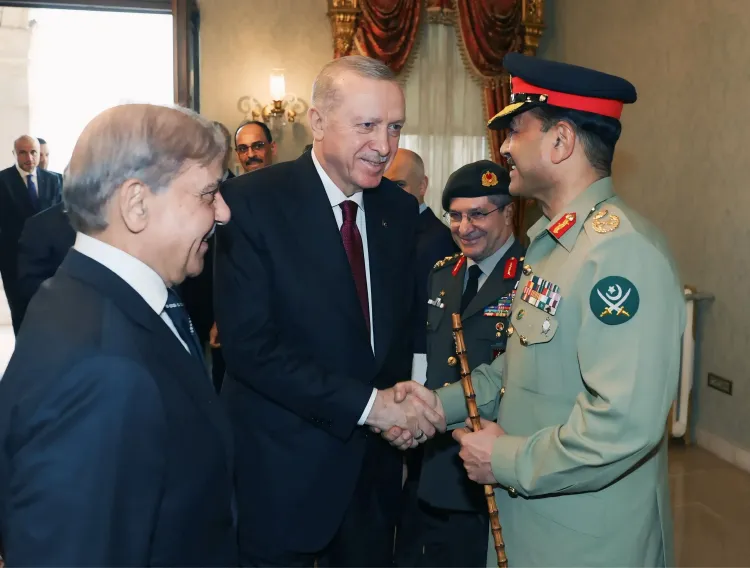
“Turkey’s deepening ties with Islamabad on various diplomatic and defense matters have certainly caught New Delhi’s attention. A Turkish nuclear capability, especially if paired with enhanced defense collaboration with Pakistan, would further complicate India's security considerations throughout West Asia and beyond,” it stated.
The report contends that the critical question is not if Turkey will develop a nuclear weapon imminently, but rather whether the global community is ready for the geopolitical ramifications should it decide to do so. In an already precarious environment struggling to manage proliferation challenges, a new nuclear-armed power at the nexus of Europe and the Middle East would not only disrupt regional balances but could also catalyze the unraveling of the global non-proliferation framework itself.
Point of View
The report underscores the necessity for Israel and India to navigate the complex geopolitical landscape with cautious vigilance. The potential ramifications of Turkey's actions necessitate a proactive approach to ensure regional security.
NationPress
7 Oct 2026
Frequently Asked Questions
Why should Israel and India be concerned about Turkey's alignment with Pakistan?
Turkey's growing ties with Pakistan could influence regional security dynamics and complicate India's security calculus, especially considering both nations' nuclear capabilities.
What are the potential implications of Turkey developing nuclear weapons?
If Turkey were to acquire nuclear weapons, it could significantly alter the balance of power in the region and challenge global non-proliferation efforts.
What steps can Israel and India take to address these concerns?
Israel and India should engage in strategic dialogue with NATO partners, enhance non-proliferation mechanisms, and strengthen regional diplomacy.
How does Turkey's geopolitical behavior affect Israel?
Turkey's assertive regional posture and potential nuclear capabilities present immediate strategic concerns for Israel, impacting its security calculations.
What role does NATO play in this situation?
As a NATO member, Turkey is part of the global non-proliferation regime, but its actions raise questions about its long-term commitments and ambitions.