ITBP chief's China border remarks spark political row; Congress slams Modi govt
Synopsis
ITBP Director General Shatrujeet Kapur's disclosure of fresh face-offs with Chinese troops in Arunachal Pradesh has detonated a political row, with Congress accusing Modi of prioritising attacks on Rahul Gandhi over national security — while a former DGP frames China as a serial 'bully' that has not occupied Indian land. The episode lays bare the unresolved fault lines of India's China border policy.
Key Takeaways
ITBP Director General Shatrujeet Kapur confirmed face-offs with Chinese troops at multiple locations in Arunachal Pradesh in recent days, with the situation described as ongoing.
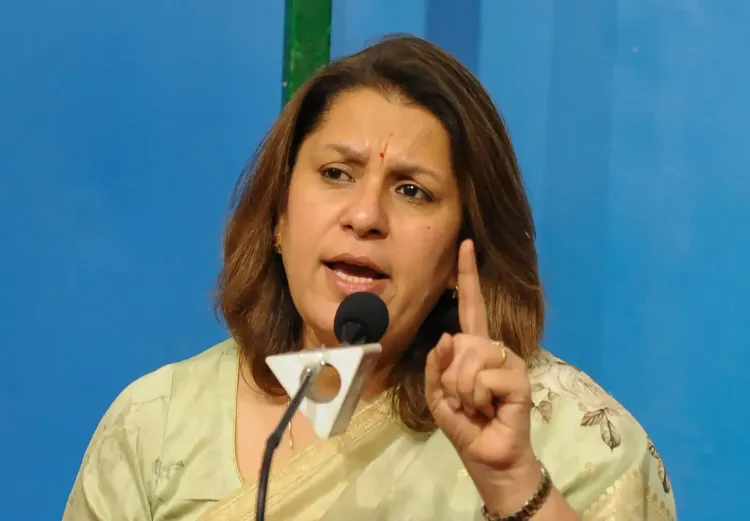
Congress leader Supriya Shrinate accused PM Narendra Modi of being 'busy criticising' Rahul Gandhi rather than addressing the border standoff.
Shrinate also cited the ITBP chief's admission that India has not yet matched China's level of modernisation as a failure of government responsibility.
CPI-M leader Hannan Mollah called on the Centre to resolve the matter through diplomatic means, citing the impact on Arunachal Pradesh residents.
Sandosh Kumar broke ranks with the opposition, asserting his party stands with the government and armed forces while urging bilateral dialogue.
Vaid clarified that the face-offs reflect China's pattern of bullying its 21 border-sharing neighbours , not a territorial loss for India.
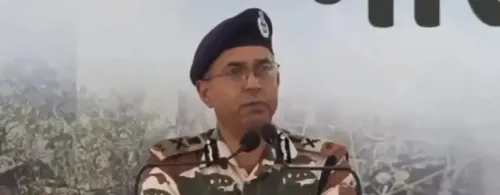
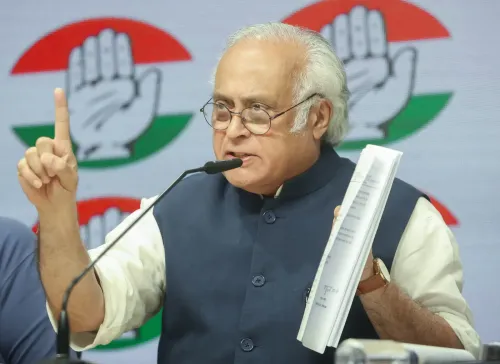
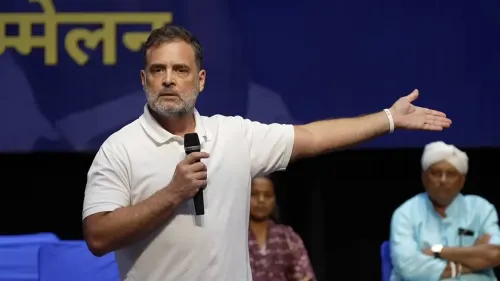
A political storm erupted on Friday, 23 October after Indo-Tibetan Border Police (ITBP) Director General Shatrujeet Kapur disclosed that face-offs with Chinese troops had taken place at multiple locations along the border in Arunachal Pradesh in recent days, with the situation reportedly still ongoing. Congress leader Supriya Shrinate seized on the remarks to accuse the Bharatiya Janata Party (BJP)-led Centre of failing its national security obligations, alleging that Prime Minister Narendra Modi is 'busy criticising' Leader of Opposition Rahul Gandhi instead of addressing the standoff.
Congress Levels Accountability Charge
Shrinate drew a direct line between the ITBP chief's acknowledgement that Indian border forces have not yet reached China's level of modernisation and the central government's stewardship. 'Despite our soldiers being martyred in Galwan, (China) was given clean chit. You speak China's language... the problem is that when the ITBP director says that we have not yet become modernised at the level of China, whose responsibility it is? It is the Prime Minister's responsibility,' she said.
Shrinate further argued that Modi's focus on opposition criticism was undermining the morale of the defence forces. 'His statements regarding national security is a blow to the defence forces,' she said, referring to the Prime Minister's public remarks.
Left Parties Add to the Pressure
Communist Party of India (Marxist) leader Hannan Mollah echoed the call for governmental accountability, stressing that the residents of Arunachal Pradesh bear the direct human cost of the standoff. 'This affects the lives and security of the common people of Arunachal Pradesh. They are unhappy. It is the government's responsibility to set things right,' Mollah said, urging leaders to pursue diplomatic and political channels of resolution.
However, not all opposition voices were critical. Communist Party of India (CPI) MP P. Sandosh Kumar stated that his party stands firmly with the government and the armed forces. 'Our territorial integrity must be protected at any cost. So, we stand with the Government of India and our forces. At the same time dialogue and discussion is the way out, so India should take the initiative,' he said.
Former DGP Contextualises ITBP Chief's Remarks
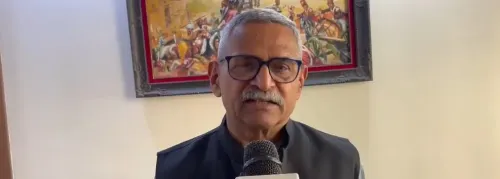
Former Jammu and Kashmir Director General of Police S.P. Vaid offered a clarification of the ITBP Director General's comments, characterising China as a 'bully' rather than a conventional adversary gaining ground. 'What he meant was that face-offs are happening because China — their PLA and China's CCP — is a bully and that it bullies all its neighbours, including the 21 countries it shares borders with, wanting to grab everyone's land,' Vaid said. He added that India is 'responding to a bully in the language it understands,' and emphasised that no Indian territory had been occupied.
Background and Broader Context
The ITBP chief's remarks come against the backdrop of a prolonged period of heightened India-China border tension that escalated sharply following the Galwan Valley clash of 2020 in Ladakh. Despite subsequent diplomatic engagements and partial disengagement agreements, face-offs along the Line of Actual Control (LAC) have continued sporadically, particularly in sensitive sectors of Arunachal Pradesh — a state Beijing claims in its entirety as 'South Tibet'.
Notably, this is not the first time an ITBP or military official's candid public remarks have triggered a political controversy, with opposition parties using such disclosures to challenge the government's narrative on border management. The government has not issued an official response to the latest round of criticism as of the time of reporting.
What Happens Next
With Parliament's winter session approaching, the border standoff and the ITBP director's comments are likely to become a flashpoint in both Houses. Opposition parties have indicated they will press the Centre for a detailed statement on the current state of disengagement talks with China and the timeline for modernising border infrastructure.
Point of View
Why does the LAC remain a live friction zone? The opposition is right to demand accountability, but framing it around Modi versus Rahul Gandhi reduces a strategic challenge to a campaign talking point. What is missing from both sides is a substantive discussion of disengagement timelines, border infrastructure progress, and China's consistent pattern of salami-slicing — all of which S.P. Vaid's 'bully' framing gestures at but does not resolve.
NationPress
23 Oct 2026
Frequently Asked Questions
What did ITBP Director General Shatrujeet Kapur say about China?
ITBP Director General Shatrujeet Kapur stated on Thursday that face-offs with Chinese troops had occurred at several locations along the border in Arunachal Pradesh in recent days and that the situation was continuing. He also reportedly acknowledged that Indian border forces have not yet reached China's level of modernisation.
Why is Congress criticising Prime Minister Modi over the ITBP remarks?
Congress leader Supriya Shrinate argued that the ITBP chief's admission of ongoing face-offs and a modernisation gap is a direct indictment of government failure, and that Modi is deflecting accountability by focusing on criticising Rahul Gandhi. She also accused the Centre of 'bowing' before China and speaking 'China's language' following the Galwan Valley clash.
Where are the face-offs with China taking place?
According to the ITBP Director General, the face-offs have occurred at multiple locations along the border in Arunachal Pradesh — a state that China claims entirely as 'South Tibet'. The confrontations are reportedly still ongoing.
How did CPI MP P. Sandosh Kumar respond to the controversy?
CPI MP P. Sandosh Kumar broke from the broader opposition stance, stating his party stands with the Government of India and the armed forces. He called for bilateral dialogue and urged that no party be allowed to escalate tensions, while affirming that India's territorial integrity must be protected 'at any cost'.
What context did former J&K DGP S.P. Vaid provide?
Former Jammu and Kashmir DGP S.P. Vaid sought to clarify the ITBP chief's remarks by describing China as a 'bully' that pressures all 21 of its border-sharing neighbours. He emphasised that the face-offs do not mean Chinese forces have occupied Indian land, and that India is responding in a manner the adversary understands.