ITBP chief's 'border clashes' remark taken out of context, says army veteran

Synopsis
A retired army lieutenant general has publicly contradicted the ITBP chief's suggestion of recent face-offs in Arunachal Pradesh, insisting the LAC situation is nothing more than routine patrolling perception rooted in decades-old boundary disputes. The pushback matters: it comes just weeks after Xi Jinping's India visit and a hard-won reset of India-China ties.
Key Takeaways
Retired Lt Gen Sanjay Kulkarni said there are no current skirmishes or confrontations on the India-China border, calling the situation a 'routine patrolling perception.' ITBP Director General Shatrujeet Kapur had reportedly said face-offs occurred at several locations in Arunachal Pradesh in recent days and were continuing.
Sources indicated Kapur's remarks were taken out of context and related to routine operational preparedness, not a specific incident.
India and China differ on LAC length — India puts it at 3,488 km , China at approximately 2,000 km — a discrepancy that drives perceptual patrol friction.
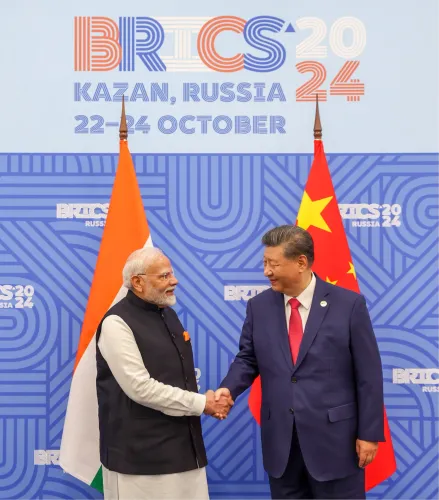
The comments follow the October 2024 Ladakh standoff resolution and Chinese President Xi Jinping 's visit to India in September 2026 for the BRICS Summit .
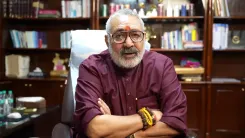
Retired Lieutenant General Sanjay Kulkarni, a prominent defence expert, on 23 October 2026 disputed the framing around remarks by Indo-Tibetan Border Police (ITBP) Director General Shatrujeet Kapur, asserting that there are currently no skirmishes or confrontations between India and China along the Line of Actual Control (LAC) and that the situation reflects nothing more than a 'routine patrolling perception.'
What the ITBP Chief Said
Addressing ITBP personnel in Alwar, Rajasthan, Director General Kapur had reportedly stated: 'In the past few days, a situation arose where face-offs happened at several locations in Arunachal Pradesh, and it continues.' The remarks, made at an internal force address, quickly drew attention given the sensitive backdrop of India-China border management.
According to sources familiar with the matter, the comments were taken out of context and were made specifically in the context of routine operational preparedness and force deployment along the frontier — and were not linked to any specific incident.
Army Veteran's Rebuttal
Lt Gen Kulkarni (retd) flatly disagreed with the DG's characterisation. 'I don't agree with the DG ITBP's statement,' he said. 'The LAC border which India shares with China, according to us, is 3,488 km. The Indo-China border is the ITBP's responsibility. As per India, the shared boundary between India and China, i.e., LAC, is nearly 3,488 km, but to China, it is 2,000 km.'
He further elaborated on India's border jurisdiction framework: 'Apart from that, our total land border is 15,000 km, and our maritime border is 11,000 km. According to 2004 guidelines, the Group of Ministers had decided, under 'One Border, One Force' — that the LAC is under ITBP's jurisdiction. Now, they come under the Ministry of Home Affairs and the Department of Border Affairs.'
On the specific claim of face-offs, Kulkarni was emphatic: 'I don't think any kind of altercation happened, nor was there any kind of confrontation. It would be wrong to say that. It is completely wrong.'
Historical Context and Patrolling Perceptions
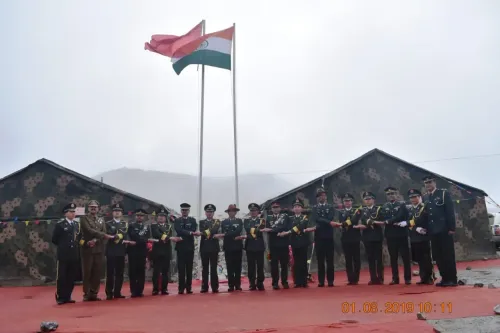
The LAC between India and China has long been a source of differing interpretations. India maintains the boundary at 3,488 km, while China's official position puts it at approximately 2,000 km. This perceptual divergence is precisely what drives routine patrol face-offs — moments where troops from both sides believe they are operating within their own territory.
Lt Gen Kulkarni described the situation as a product of this legacy: 'Whatever is happening is a normal patrolling perception... This is a matter of historical legacy; it is a perception. This must have been taken out of context from what the DG might be saying. I don't think that is right.'
India-China Relations: The Broader Picture
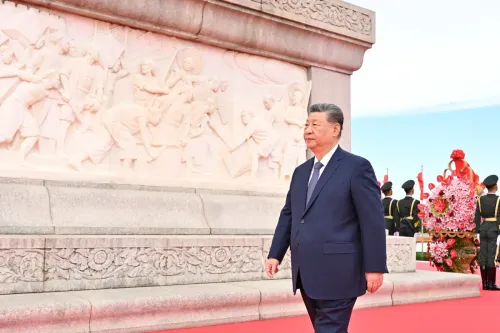
The remarks come at a delicate moment in India-China ties. The two nations reached a landmark understanding in October 2024 to resolve the military standoff in eastern Ladakh — a four-year impasse that had severely strained bilateral relations. Chinese President Xi Jinping subsequently visited India on 12–13 September to attend the BRICS Summit, his first visit to the country in seven years, during which he held bilateral talks with Prime Minister Narendra Modi to review ties and explore avenues for deeper cooperation.
Against this backdrop, any suggestion of renewed border friction carries outsized diplomatic weight, making the clarification from defence quarters all the more significant. How both governments choose to characterise routine patrol interactions along the LAC will remain a key indicator of the health of the recently reset relationship.
Point of View
Meaning patrol face-offs are baked into the system. What changes is how they are narrated publicly. The government's quick move to contextualise Kapur's remarks signals that Delhi is acutely conscious of the optics, even as the ITBP chief's candour with his own force deserves to be read separately from its political fallout.
NationPress
23 Oct 2026
Frequently Asked Questions
What did the ITBP chief say about border face-offs in Arunachal Pradesh?
ITBP Director General Shatrujeet Kapur reportedly told personnel in Alwar, Rajasthan, that face-offs with Chinese troops had occurred at several locations in Arunachal Pradesh in recent days and were continuing. Sources subsequently clarified the remarks were made in the context of routine operational preparedness and were not linked to any specific incident.
Why does Lt Gen Sanjay Kulkarni disagree with the ITBP chief's statement?
Lt Gen Kulkarni (retd) argued that what occurs along the LAC is a 'routine patrolling perception' arising from a longstanding disagreement over the boundary's alignment — not actual confrontations. He said it would be 'completely wrong' to characterise the situation as an altercation or confrontation.
Why do patrol face-offs keep happening on the India-China border?
India and China have never formally demarcated the Line of Actual Control. India claims the LAC is 3,488 km long; China puts it at around 2,000 km. This perceptual gap means troops from both sides can simultaneously believe they are patrolling within their own territory, leading to routine face-offs that carry no inherent hostile intent.
What is the current state of India-China relations?
Relations are in a cautious recovery phase. The two countries reached a disengagement understanding in October 2024 over the four-year military standoff in eastern Ladakh. Chinese President Xi Jinping then visited India in September 2026 for the BRICS Summit — his first visit in seven years — and held bilateral talks with Prime Minister Narendra Modi to discuss improving cooperation.
Which agency is responsible for guarding the India-China border?
The Indo-Tibetan Border Police (ITBP) is the designated force for the Line of Actual Control under the 'One Border, One Force' policy decided by the Group of Ministers in 2004. The ITBP operates under the Ministry of Home Affairs and the Department of Border Affairs.