India-China LAC tension flares when Chinese forces break patrol patterns: MEA
Synopsis
The MEA has put on record what India's border strategy hinges on — Chinese forces sticking to agreed patrolling patterns. With the ITBP chief reportedly flagging a fresh face-off in Arunachal Pradesh and Beijing contesting India's Ladakh map, the gap between top-level diplomacy and ground-level friction on the LAC has rarely been more visible.
Key Takeaways
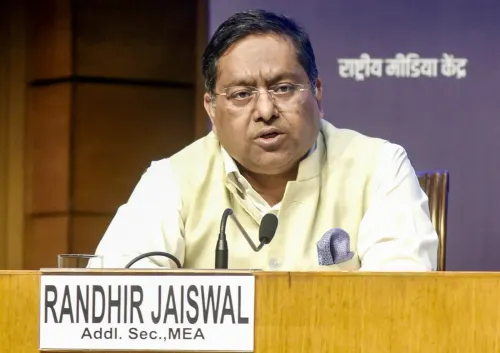
MEA spokesperson Randhir Jaiswal stated on 23 October 2026 that India-China border situations are 'disturbed' when Chinese forces diverge from established patrolling patterns .
The statement came amid a political row over purported ITBP chief remarks about a Chinese face-off in Arunachal Pradesh .
India firmly rejected Beijing's objection to its naming of 28 places in Ladakh , calling Ladakh 'an integral and inalienable part of India.' China's Mao Ning on 13 October had termed the Ladakh naming exercise 'illegal and void.' EAM S.
Jaishankar in September cautioned that the improvement in India-China ties is 'a recovery' — not a structural shift — and that border conditions will determine how far normalisation can go.
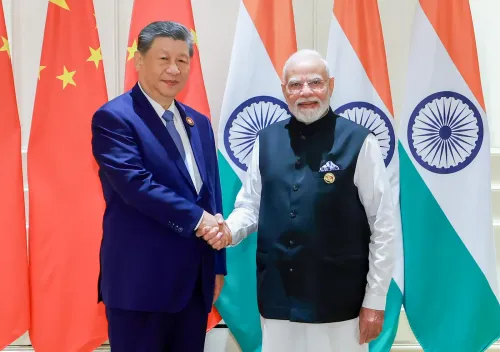
PM Modi and President Xi Jinping met at the 18th BRICS Summit in New Delhi, agreeing that 'differences should not become disputes.'
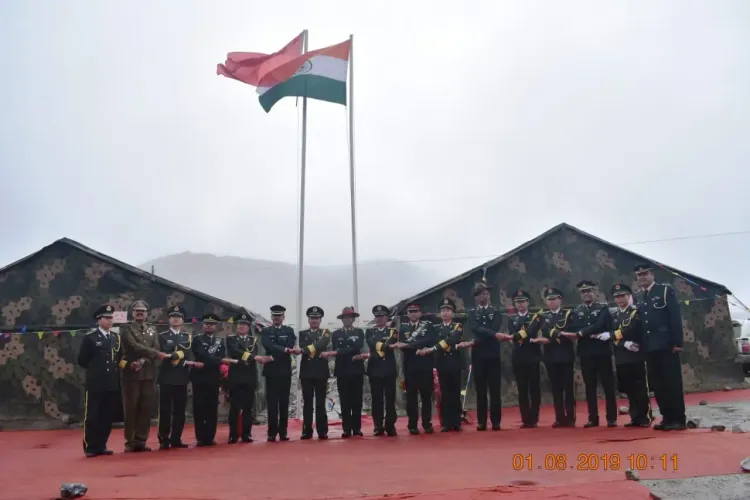
The Ministry of External Affairs (MEA) on Friday, 23 October 2026, said that border tensions between India and China are triggered when Chinese forces diverge from established patrolling patterns along the Line of Actual Control (LAC), while stressing that both nations continue to rely on existing diplomatic and military channels to prevent escalation. The statement came amid a political row over remarks purportedly made by the Indo-Tibetan Border Police (ITBP) chief regarding an ongoing face-off with Chinese forces in Arunachal Pradesh.
MEA's Core Position on the LAC
MEA spokesperson Randhir Jaiswal, speaking at a regular bi-weekly media briefing in New Delhi, reiterated that the situation along the India-China border 'gets disturbed from time to time when Chinese forces diverge from established patrolling patterns.' He added that both sides 'continue to use existing diplomatic and military mechanisms to resolve outstanding issues and avoid misunderstanding and miscalculation along the Line of Actual Control.'
Jaiswal further noted that the two sides have agreed to 'discuss ways to improve understanding of LAC in appropriate areas for better border management,' underlining that 'the maintenance of peace and tranquility in the border areas is essential for the overall development of bilateral relations.'
The ITBP Remarks and Political Fallout
The MEA's statement was made against the backdrop of a political controversy surrounding purported remarks by the ITBP chief, who was reported to have said the Army is successfully dealing with a 'face-off (with China) in Arunachal Pradesh.' The statement triggered sharp reactions, though the government did not officially confirm or elaborate on the specific incident.
Notably, this is not an isolated episode — face-offs along the LAC, particularly in Arunachal Pradesh and Ladakh, have been a recurring flashpoint since the deadly Galwan Valley clashes of June 2020, which marked the worst bilateral military confrontation in decades.
Ladakh Naming Row: India Holds Its Ground
The briefing also addressed the ongoing dispute over India's identification of 28 places in Ladakh with standard names on the official Survey of India map. Last week, Jaiswal had firmly stated that the Union Territory of Ladakh is 'an integral and inalienable part of India' and that 'no amount of denial by the Chinese side can change this established fact.'
The MEA's response was directed at Chinese Foreign Ministry spokesperson Mao Ning, who on 13 October had termed India's identification of the 28 Ladakh locations as 'illegal and void.' India maintained that the naming exercise was carried out 'in consultation with the Union Territory of Ladakh and local stakeholders' and was aimed at 'facilitating their accurate recognition and better awareness among the public at large.'
Jaishankar's New York Caution and the Modi-Xi Summit
The current diplomatic signalling is consistent with the cautious tone struck by External Affairs Minister S. Jaishankar during his visit to New York in September, where he said that while India's relationship with China had improved from the depths of the border stand-off, the 'condition of the frontier will continue to determine how far the two countries can normalise ties.' He described recent progress as 'a recovery from how far ties had deteriorated' rather than a structural shift.
'I don't think it's structural change so much as a recovery from how far ties had deteriorated,' Jaishankar had said, warning that third parties could benefit from continued friction between the two neighbours.
In September, Prime Minister Narendra Modi met Chinese President Xi Jinping on the sidelines of the 18th BRICS Summit in New Delhi, where the two leaders emphasised that 'differences should not become disputes' and reaffirmed a strategic, long-term view of bilateral ties. Modi had specifically stressed that peace and tranquillity along the border 'remain an essential basis for the continued development of bilateral relations.'
What Comes Next
The back-and-forth over patrolling patterns, Ladakh's naming convention, and Arunachal Pradesh face-offs signals that even as top-level diplomacy advances, ground-level friction along the LAC remains unresolved. Both sides are expected to continue military-diplomatic consultations under existing frameworks, with the overall trajectory of ties — trade, visas, flights — closely tied to conditions on the border.
Point of View
But it is also an implicit admission that such divergences are ongoing. The political row over the ITBP chief's Arunachal Pradesh remark suggests that ground realities may be more active than official briefings convey. More tellingly, the Modi-Xi BRICS handshake and Jaishankar's own caution that the improvement is a 'recovery, not structural change' point to a fundamental asymmetry: India is managing optics of normalisation while the border remains contested. The Ladakh naming dispute, dismissed by Beijing as 'illegal and void,' adds another layer — sovereignty signals on both sides are hardening even as diplomatic language softens.
NationPress
23 Oct 2026
Frequently Asked Questions
What did the MEA say about India-China border tensions on 23 October 2026?
The MEA said that border situations along the LAC 'get disturbed from time to time when Chinese forces diverge from established patrolling patterns.' Spokesperson Randhir Jaiswal added that both sides continue to use diplomatic and military mechanisms to avoid misunderstanding and miscalculation.
What is the ITBP face-off controversy in Arunachal Pradesh?
A political row erupted over a purported statement by the Indo-Tibetan Border Police (ITBP) chief that the Army is successfully dealing with a 'face-off (with China) in Arunachal Pradesh.' The MEA's briefing on 23 October came against the backdrop of this controversy, though the government did not officially confirm specific details.
Why is China objecting to India's Ladakh naming exercise?
China's Foreign Ministry spokesperson Mao Ning on 13 October termed India's identification of 28 places in Ladakh with standard names on the Survey of India map as 'illegal and void,' as Beijing disputes India's sovereignty over Ladakh. India has firmly rejected this, stating that Ladakh is 'an integral and inalienable part of India' and that the naming was done in consultation with local stakeholders.
How has EAM Jaishankar described the current state of India-China relations?
During his visit to New York in September, Jaishankar described the improvement in India-China ties as 'a recovery from how far ties had deteriorated' rather than a structural change, and cautioned that the condition of the frontier will continue to determine how far the two countries can normalise relations.
What did PM Modi and President Xi Jinping agree on at the BRICS Summit?
At the 18th BRICS Summit in New Delhi in September, PM Modi and President Xi Jinping agreed that 'differences should not become disputes' and reaffirmed a strategic, long-term perspective on bilateral ties. Modi specifically stressed that peace and tranquillity in border areas remain essential for the development of overall relations.