Congress accuses Modi govt of 'weak-kneed' China policy, cites LAC face-offs
Synopsis
Congress went beyond routine opposition fire on Friday, marshalling a multi-front indictment of the Modi government's China policy — from the 2020 Galwan 'clean chit' and restricted LAC patrolling points to a $112 billion trade deficit and alleged support to Pakistan during Operation Sindoor. Whether the charges stick or not, the breadth of the attack signals a deliberate Congress strategy to make India-China relations a central accountability issue ahead of the next political cycle.
Key Takeaways
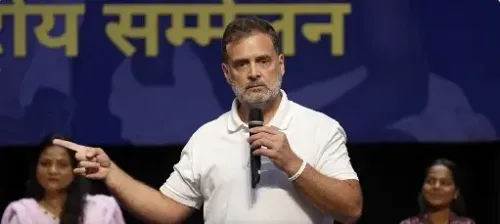
Congress leader Pawan Khera accused the Modi government of a 'weak-kneed' China policy at a press conference on 23 October 2026 in New Delhi .
Khera alleged Modi's response to the 2020 Galwan clash , in which 20 Indian soldiers were killed, gave China a 'clean chit' and emboldened further aggression.
Indian troops reportedly have restricted access to 26 of 65 traditional patrolling points along the LAC , according to Congress.
India's trade deficit with China has allegedly widened from $99 billion to $112 billion , with Khera claiming New Delhi made concessions without reciprocal benefits.
Congress alleged China actively supported Pakistan during Operation Sindoor and cited Chinese restrictions on exports of TBMs , rare earth minerals , fertiliser inputs , and APIs to India.
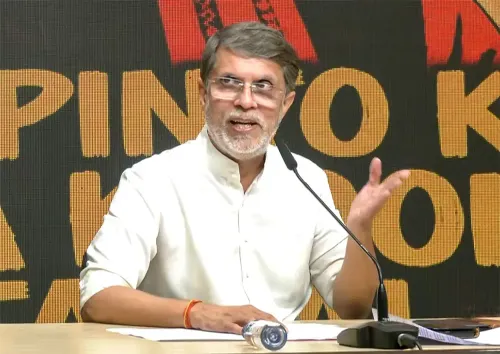
Congress Media and Publicity Department Chairman Pawan Khera on Friday, 23 October 2026, accused the Narendra Modi government of pursuing a 'weak-kneed' policy towards China, alleging that New Delhi's approach had emboldened Beijing's aggressive posture along the Line of Actual Control (LAC) and compromised India's national interests. Speaking at a press conference in New Delhi, Khera argued that a pattern of concessions to China — spanning military, trade, and diplomatic domains — had come at a steep cost to India.
Galwan and the 'Clean Chit' Allegation
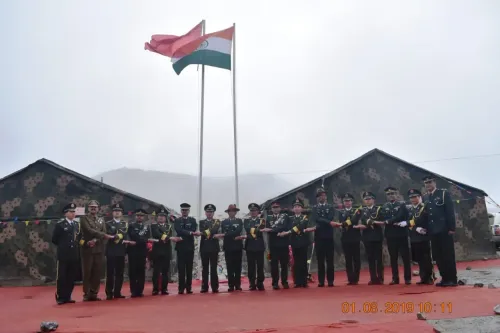
Khera alleged that Prime Minister Narendra Modi's response to the 2020 Galwan Valley clash — in which 20 Indian soldiers were killed — had effectively handed China a 'clean chit' and encouraged further assertiveness by Beijing. He argued that China's posture from Ladakh to Arunachal Pradesh had hardened in the years following the incident, pointing to continuing face-offs between Indian and Chinese forces at several locations along the Arunachal Pradesh border. Khera cited remarks by Indo-Tibetan Border Police (ITBP) Director General Shatrujit Kapur as evidence that Chinese troops continued to adopt an aggressive approach in the region.
Patrolling Restrictions and LAC Status Quo
Reiterating the party's long-standing concerns over the situation in eastern Ladakh, Khera referred to reports indicating that Indian troops continue to have restricted access to 26 of the 65 traditional patrolling points along the LAC. He questioned whether the pre-May 2020 status quo had been fully restored, pressing the government for a clear answer. Notably, the patrolling-point restriction has been a recurring flashpoint in parliamentary debates since 2021, with successive governments deflecting specifics citing operational sensitivity.
Trade Deficit and Diplomatic Concessions
On the economic front, Khera alleged that India's trade deficit with China had widened from $99 billion to $112 billion, even as New Delhi reportedly accommodated Beijing's demands. He further claimed that China had received concessions including relaxations in travel and visa norms without offering reciprocal benefits — a charge the government has not publicly addressed. Khera also questioned what he described as preferential treatment extended to China in trade and commerce matters, arguing that such accommodation had yielded little strategic return for India.
Operation Sindoor and Chinese Support to Pakistan
Referring to Operation Sindoor, Khera alleged that China had actively supported Pakistan during the operation — a claim that, if verified, would significantly complicate India's bilateral calculus with both neighbours. The Congress leader did not provide documentary evidence for this specific allegation at the press conference.
Critical Exports and Supply Chain Risks
Khera also raised concern over China's reported restrictions on exports of critical equipment and materials to India, including Tunnel Boring Machines (TBMs), rare earth minerals, fertiliser-related inputs, and Active Pharmaceutical Ingredients (APIs) — all considered vital to India's infrastructure development and pharmaceutical manufacturing sectors. Critics have long warned that India's dependence on Chinese inputs in these sectors represents a strategic vulnerability, particularly given the ongoing border tensions. The government is yet to formally respond to the allegations raised at Friday's press conference.
Point of View
Economic, and geopolitical threads into a single 'appeasement' narrative. The patrolling-point allegation is the most substantive: if 26 of 65 traditional points remain inaccessible, that is a material change to India's territorial management, not a diplomatic footnote. The trade deficit charge is harder to weaponise given that decoupling from China carries its own economic cost, a complexity Khera's framing elides. The Operation Sindoor-China link, if unsubstantiated, risks diluting an otherwise pointed critique. The government's silence after multiple such press conferences is itself becoming a story — accountability demands answers, not stonewalling.
NationPress
23 Oct 2026
Frequently Asked Questions
What did Congress allege about the Modi government's China policy?
Congress alleged that the Modi government has pursued a 'weak-kneed' policy towards China, emboldening Beijing's aggression along the LAC and compromising India's national interests. Congress Media and Publicity Department Chairman Pawan Khera made the allegations at a press conference in New Delhi on 23 October 2026.
What is the significance of the 26 patrolling points claim?
Khera alleged that Indian troops continue to have restricted access to 26 of the 65 traditional patrolling points along the Line of Actual Control in eastern Ladakh, questioning whether the pre-May 2020 status quo has been fully restored. This has been a recurring and unresolved concern in parliamentary debates since 2021.
How wide is India's trade deficit with China, according to Congress?
According to Khera, India's trade deficit with China has grown from $99 billion to $112 billion, even as New Delhi allegedly accommodated Beijing's demands. He also claimed China received travel and visa concessions without offering reciprocal benefits.
What did Congress allege about China's role in Operation Sindoor?
Khera alleged that China actively supported Pakistan during Operation Sindoor, though he did not provide documentary evidence for this specific claim at the press conference. The government has not formally responded to this allegation.
Which critical materials did Congress say China restricted from India?
Congress cited reported Chinese restrictions on exports of Tunnel Boring Machines (TBMs), rare earth minerals, fertiliser-related inputs, and Active Pharmaceutical Ingredients (APIs) to India — all considered vital for infrastructure and pharmaceutical manufacturing.