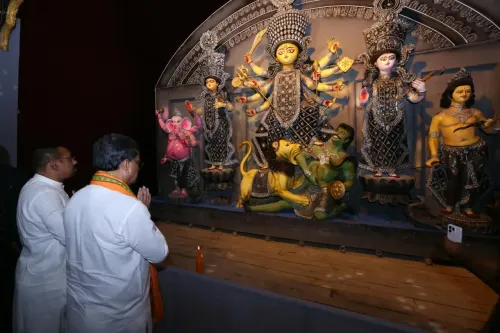
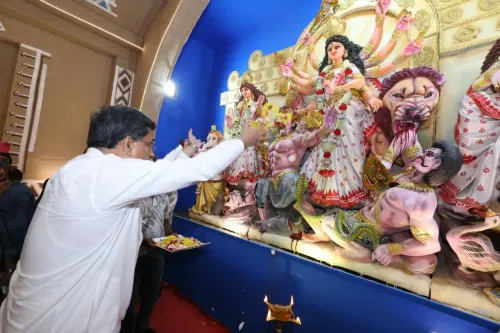
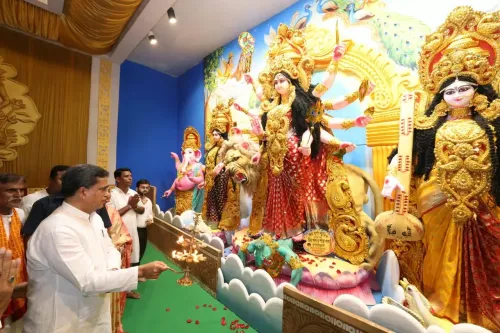
CM Manik Saha joins Mayer Gaman procession in Agartala
Synopsis
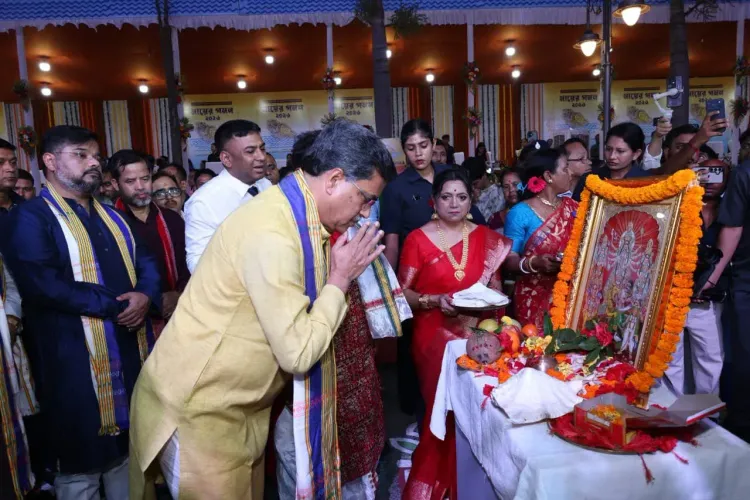
Tripura Chief Minister Dr. Manik Saha joined the 'Mayer Gaman' farewell procession in Agartala on October 23, celebrating Durga Puja's close while promoting the state's rich cultural heritage on a global stage.
Key Takeaways
Manik Saha participated in the 'Mayer Gaman' procession in Agartala on October 23, 2026 . 'Mayer Gaman' is the traditional farewell procession for Goddess Durga at the close of Durga Puja.
The event showcases Tripura's blend of Bengali and tribal folk traditions, craftsmanship, and communal harmony.
The Chief Minister highlighted the presence of foreign representatives as adding a new dimension to this year's celebration.
The procession is part of a broader effort to place Tripura's cultural identity on a global platform.
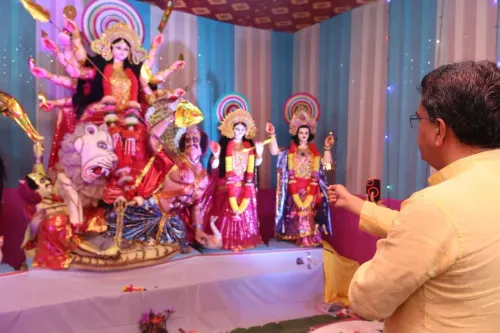
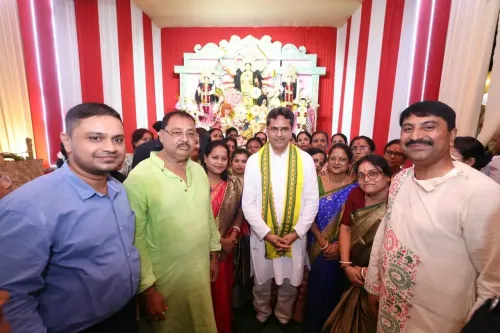
As the goddess prepares to depart and the festivities of Durga Puja draw to a close, Tripura Chief Minister Dr. Manik Saha stepped into the streets of Agartala on Friday, October 23 to participate in the vibrant 'Mayer Gaman' procession — a traditional farewell march that has long served as one of the Northeast's most distinctive cultural expressions.
Posting in Bengali, Dr. Saha described the event as a celebration of unity, harmony, and joy — 'ঐক্য, সম্প্রীতি ও আনন্দের বন্ধনে আবদ্ধ' ('bound in ties of unity, harmony, and joy') — with the stated aim of placing Tripura's cultural glory on a world stage. The presence of foreign representatives at this year's procession, he noted, added a new dimension to the occasion.
What Mayer Gaman means for Tripura
'Mayer Gaman' — literally 'the mother's departure' — marks the moment when Goddess Durga is ceremonially bid farewell after the five-day Durga Puja festival. In Tripura, the procession is not merely a religious ritual; it is a living showcase of the state's layered folk traditions, craftsmanship, and the seamless coexistence of its Bengali and tribal communities.
Agartala, the state capital, has historically been the epicentre of these processions, drawing participation from artists, cultural groups, and ordinary citizens alike. The scale and colour of the event reflect the deep Bengali cultural roots that run through Tripura's social fabric, even as the state's tribal heritage weaves its own threads into the celebration.
A deliberate push to spotlight the Northeast
The Chief Minister framed this year's Mayer Gaman in explicitly outward-looking terms — a bid to carry Tripura's cultural identity beyond the state's borders. Northeastern states have increasingly used major festive events as soft-power tools, spotlighting regional heritage to attract tourism and international attention.
Dr. Saha's participation signals the state government's intent to institutionalise and amplify such moments. When a sitting Chief Minister walks in a cultural procession and invites the world to look, it transforms a local tradition into a statement of regional pride — and, potentially, a tourism anchor for seasons ahead.
Tripura's next chapter will be written in how consistently it builds on moments like these — turning a single vibrant procession into a calendar event the world marks in advance.
Point of View
Which treats the Northeast as a living bridge to Southeast Asia. Whether Mayer Gaman evolves into a marquee annual draw or remains a one-cycle moment will depend on how seriously the state follows through with tourism infrastructure and international outreach.
NationPress
23 Oct 2026
Frequently Asked Questions
What is Mayer Gaman in Tripura?
'Mayer Gaman' means 'the mother's departure' in Bengali and refers to the ceremonial farewell procession for Goddess Durga at the end of Durga Puja. In Tripura, it is a vibrant public event celebrating the state's folk culture and communal harmony.
Where is the Mayer Gaman procession held?
The Mayer Gaman procession is held in Agartala , the capital of Tripura, and has historically been one of the city's most significant cultural events during the Durga Puja season.
Why did CM Manik Saha join the Mayer Gaman procession?
Dr. Manik Saha participated to promote Tripura's cultural heritage and stated his aim of showcasing the state's traditions on a world stage, emphasising unity, harmony, and cultural pride.
What is the significance of foreign representatives at Mayer Gaman 2026?
The Chief Minister noted that the presence of foreign representatives added a new dimension to this year's event, suggesting a push to internationalise Tripura's cultural profile, though specific details about which nations attended have not been officially confirmed.
How does Mayer Gaman reflect Tripura's cultural diversity?
The procession weaves together Tripura's Bengali cultural traditions and its tribal heritage, showcasing local folk art, craftsmanship, and the coexistence of multiple communities — making it a unique expression of the state's layered identity.