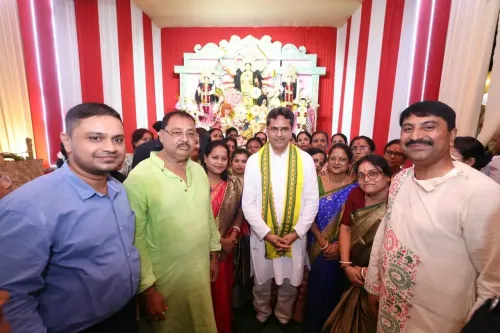
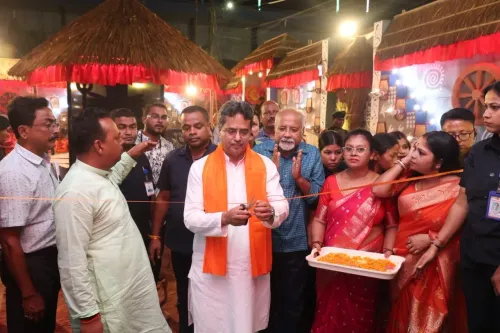
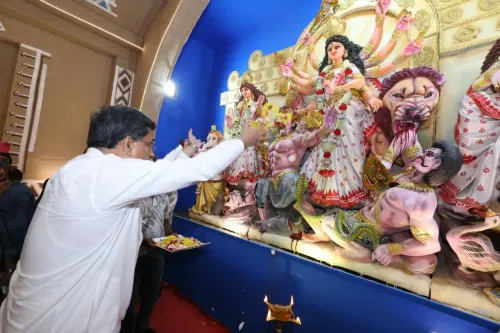
CM Manik Saha extends Bijoya Dashami greetings to Tripura
Synopsis
Tripura Chief Minister Dr. Manik Saha greeted all state residents on Bijoya Dashami, invoking Maa Durga's blessings for peace, communal harmony, and prosperity in Tripura — a message that carries particular resonance in the diverse northeastern state.
Key Takeaways
Manik Saha , Chief Minister of Tripura, posted Bijoya Dashami greetings in Bengali on 21 October 2026 .
He extended wishes to all residents of Tripura and invoked Maa Durga's blessings for the state.
His message specifically highlighted peace, communal harmony, and prosperity as hopes for the state.
Bijoya Dashami marks the final day of Durga Puja, widely observed in Tripura's large Bengali-speaking community.
The emphasis on harmony reflects a broader pattern of BJP leaders in the Northeast using festival occasions to reinforce themes of social cohesion.
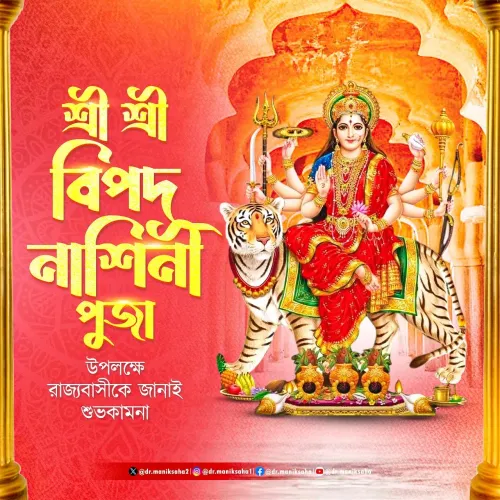
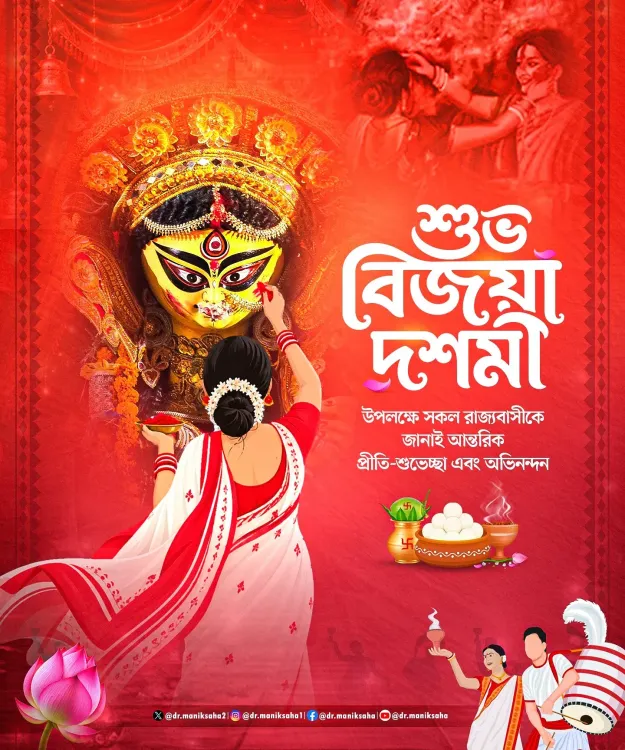
On the auspicious occasion of Bijoya Dashami, Tripura Chief Minister Dr. Manik Saha extended warm wishes to all residents of the state, invoking the blessings of Maa Durga for peace, harmony, and prosperity in Tripura.
Posting in Bengali on Wednesday, 21 October 2026, Dr. Saha wrote: 'পবিত্র বিজয়া দশমীর শুভক্ষণে সকল রাজ্যবাসীকে জানাই আন্তরিক শুভেচ্ছা ও অভিনন্দন' — 'On the auspicious occasion of holy Bijoya Dashami, I extend my heartfelt greetings and congratulations to all residents of the state.' He added a prayer that the state march forward on the path of greater peace, communal harmony, and prosperity under Maa Durga's blessings, closing with 'জয় মা দুর্গা' — 'Victory to Maa Durga.'
Bijoya Dashami and its weight in Tripura
Bijoya Dashami marks the final day of Durga Puja, the festival celebrating the victory of good over evil, and is one of the most widely observed occasions in Tripura, a northeastern state with a large Bengali-speaking population. The day is marked by immersion processions, community gatherings, and the exchange of greetings — a cultural rhythm that runs deep across households and across communities in the state.
Peace and harmony as a deliberate refrain in the Northeast
Dr. Saha's choice of words — peace, communal harmony, prosperity — is not incidental. State leaders across India's Northeast, including BJP chief ministers, have consistently used festival addresses to reinforce themes of social cohesion in regions that carry complex ethnic and religious demographics. For Tripura, a state that has navigated decades of insurgency and inter-community tension, such messaging carries a weight beyond the ceremonial. The festival season is an opportunity to signal stability and cultural continuity.
Point of View
A state that has emerged from a long shadow of insurgency, the message doubles as a governance signal. It is also a reminder that in a state with diverse ethnic and religious communities, the language of festivals is always, at some level, a language of politics.
NationPress
21 Oct 2026
Frequently Asked Questions
What is Bijoya Dashami?
Bijoya Dashami is the final day of Durga Puja, marking the victory of good over evil and the symbolic departure of Goddess Durga. It is observed with immersion processions and the exchange of greetings, and is one of the most important occasions for Bengali communities across India, including in Tripura.
What did Tripura CM Manik Saha say on Bijoya Dashami 2026?
Dr. Manik Saha extended heartfelt greetings to all Tripura residents, praying that the state move forward on the path of peace, communal harmony, and prosperity under the blessings of Maa Durga.
Why is Durga Puja significant in Tripura?
Tripura has a large Bengali-speaking population for whom Durga Puja is a central annual festival. Bijoya Dashami, its concluding day, is marked by community gatherings, immersion processions, and widespread celebrations across the state.
Who is Dr. Manik Saha?
Dr. Manik Saha is the Chief Minister of Tripura and a senior BJP leader. He has been a prominent voice on cultural and governance matters in the northeastern state.
Why do Northeast Indian leaders emphasise peace in festival greetings?
The Northeast has a complex history of ethnic tensions and insurgency. State leaders, particularly BJP chief ministers, frequently use festival addresses to reinforce themes of peace, communal harmony, and social cohesion — both as genuine cultural messaging and as governance signals.