NEET protest politicisation: Sunil Jakhar warns students to stay vigilant
Synopsis
Former Punjab BJP president Sunil Jakhar has drawn a stark parallel between the NEET student protests and Anna Hazare's anti-corruption movement — warning that political actors, including AAP's Arvind Kejriwal, could benefit while students are sidelined. His call for police restraint and dialogue, even as he defends the BJP-led Centre, reflects the tightrope the ruling party is walking on the NEET controversy.
Key Takeaways
Former Punjab BJP chief Sunil Jakhar on 23 July urged NEET protesters to prevent their movement from being politically hijacked.
Jakhar said student grievances should be resolved through dialogue , not police intervention, and criticised the handling of demonstrations.
PM Modi has announced fast-track court proceedings in the NEET paper leak case; the government has offered parliamentary debate.
Jakhar invoked the Anna Hazare anti-corruption movement as a cautionary example of political forces sidelining the original agitator.
AAP convener Arvind Kejriwal's presence at the protests was specifically flagged; activist Sonam Wangchuk was also cautioned.
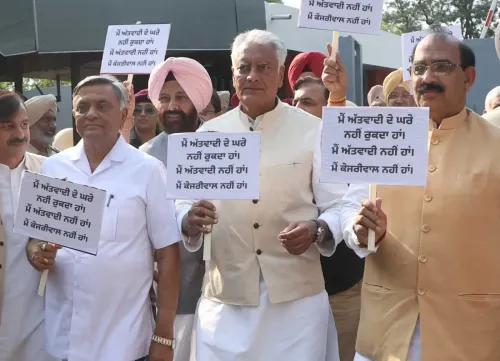
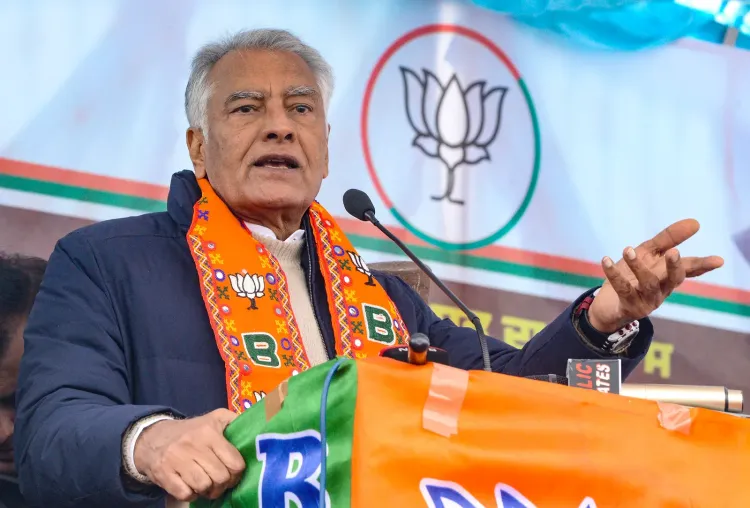
Former Punjab Bharatiya Janata Party (BJP) president Sunil Jakhar on Thursday, 23 July appealed to students protesting over the NEET paper leak to guard their movement against political co-option, warning that vested interests were attempting to exploit the agitation for partisan gain. Speaking to reporters in Chandigarh, Jakhar reaffirmed that Prime Minister Narendra Modi is fully aware of students' grievances and that the government remains committed to addressing them.
Key Statements from Jakhar
Jakhar described the protesting students as 'our children, our pride and the nation's wealth,' stressing that the issues raised by demonstrators in Delhi must be resolved through dialogue rather than police action. He acknowledged that disruptive elements routinely attempt to infiltrate large public protests to create disorder, but argued that the police should have exercised greater restraint and handled the situation with more sensitivity.
He extended that call for restraint to earlier protests by Punjab's MGNREGA and sanitation workers, suggesting a consistent standard should apply regardless of the cause.
Government's Position on NEET
Jakhar noted that Prime Minister Modi has already announced fast-track court proceedings in the NEET paper leak case. He added that the government is willing to engage directly with students and to debate the matter on the floor of Parliament. According to Jakhar, the Government of India has maintained a sustained commitment to improving both medical and technical education, and wherever systemic shortcomings exist, corrective work is ongoing.
Warning Over Political Exploitation
Jakhar specifically flagged the presence of Aam Aadmi Party (AAP) national convener Arvind Kejriwal at the protests, drawing a pointed parallel with the fate of social activist Anna Hazare's anti-corruption movement. He argued that political actors had benefited from that agitation while Hazare himself was ultimately sidelined — a trajectory he cautioned the current student movement could replicate if protesters are not vigilant.
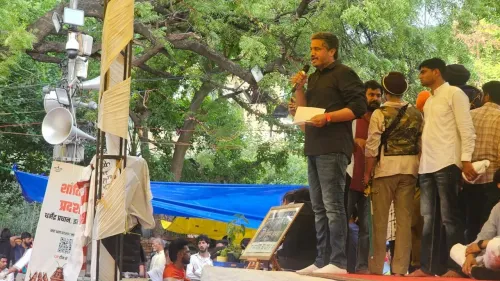
Jakhar also warned that activist Sonam Wangchuk risks becoming a similar pawn if he is not careful about the political forces gravitating around his causes. This comes amid broader national concern that the NEET controversy — which has galvanised students across multiple states — is increasingly becoming a flashpoint for opposition parties ahead of upcoming electoral cycles.
Broader Context
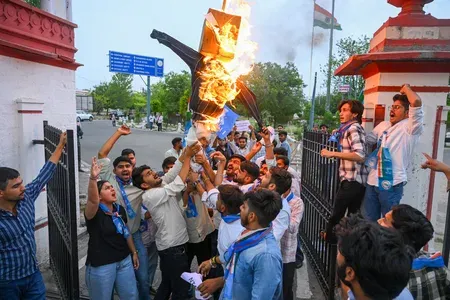
The NEET paper leak controversy erupted after allegations surfaced that the undergraduate medical entrance examination had been compromised, triggering widespread student demonstrations in Delhi and other cities. The episode has placed the National Testing Agency (NTA) under intense scrutiny, with calls for its overhaul gaining traction in both civil society and Parliament. Notably, this is not the first time a high-stakes national examination has faced integrity questions in India, but the scale of the current protests has lent the issue unusual political salience.
As pressure mounts on the Centre to deliver accountability, the student movement's ability to remain independent of party influence may prove decisive in determining whether it translates into systemic reform or dissipates into political point-scoring.
Point of View
Concede that police overreach occurred, and redirect blame toward opposition opportunism — all in one press conference. The Anna Hazare analogy is rhetorically sharp but cuts both ways; it was the BJP that rode that movement to power in 2014. The more substantive question — why the NEET paper leak happened and who within the examination ecosystem is accountable — remains conspicuously unanswered. Calling for fast-track courts is not the same as delivering systemic reform of the NTA, and students are unlikely to conflate the two for long.
NationPress
22 Oct 2026
Frequently Asked Questions
What did Sunil Jakhar say about the NEET protests?
Former Punjab BJP chief Sunil Jakhar urged NEET protesters to stay vigilant against political co-option of their movement, warning that disruptive elements and opposition parties are attempting to exploit the agitation. He also called for police restraint and said student grievances should be addressed through dialogue.
What has the government announced on the NEET paper leak?
Prime Minister Narendra Modi has announced fast-track court proceedings in the NEET paper leak case, according to Jakhar. The government has also expressed willingness to discuss the issue directly with students and to debate it in Parliament.
Why did Jakhar mention Anna Hazare and Sonam Wangchuk?
Jakhar cited Anna Hazare's anti-corruption movement as a cautionary tale, arguing that political parties — particularly AAP — benefited from it while Hazare was sidelined. He warned that Sonam Wangchuk risks a similar fate if political forces are allowed to dominate movements he is associated with.
What is the NEET paper leak controversy?
The NEET paper leak controversy refers to allegations that the National Eligibility cum Entrance Test (NEET), India's undergraduate medical entrance examination, was compromised. The allegations triggered widespread student protests in Delhi and other cities, and have put the National Testing Agency (NTA) under intense public and parliamentary scrutiny.
Who is Arvind Kejriwal's role in the NEET protests?
AAP national convener Arvind Kejriwal was reportedly present at the NEET protests. Jakhar flagged this presence as evidence of political parties attempting to exploit the student movement, comparing it to the political appropriation of Anna Hazare's agitation.