Rahul Gandhi on paper-leak protests: Every Indian should be proud
Synopsis
Speaking in Parliament on the anti-paper-leak bill, Rahul Gandhi quoted a student protester's sharp two-part definition — of a true student versus an 'idiot' — that reframed the Jantar Mantar agitation as a philosophical and democratic moment, not just an administrative grievance. The anecdote landed as an unmistakable, if unnamed, critique of the ruling establishment.
Key Takeaways
Rahul Gandhi praised the Jantar Mantar paper-leak protests in Parliament on 29 July 2026 , calling them a matter of national pride.
He urged all parties, including the BJP , to respect the youth's peaceful expression.
Gandhi recounted a student protester's definition of a 'student' as someone with an open mind who accepts the limits of their own knowledge.
The student contrasted this with those who believe they know everything — calling them 'idiots' — in a remark widely read as an indirect critique of the government.
The speech was delivered during the debate on The Public Examinations (Prevention of Unfair Means) Amendment Bill, 2026 .
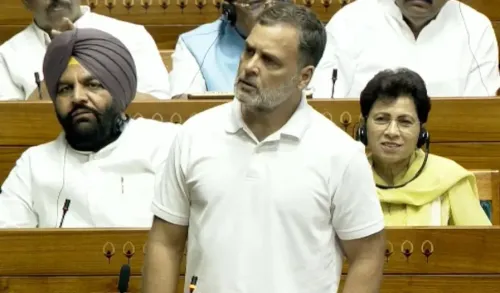
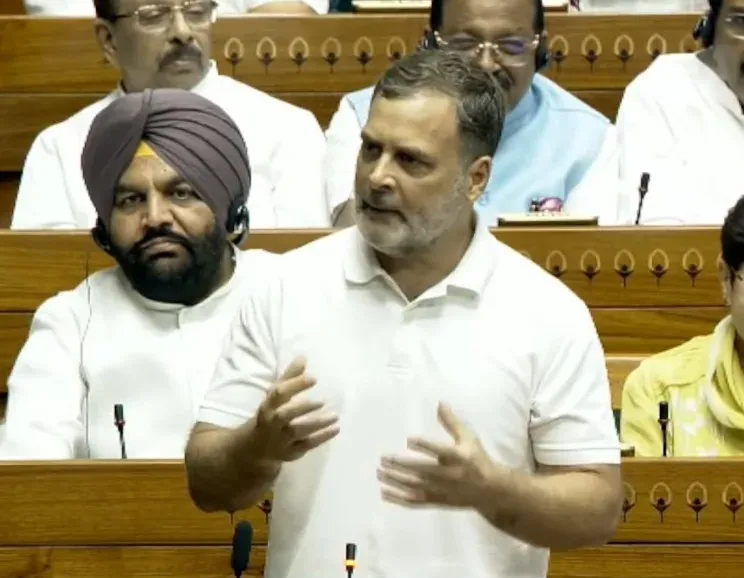
Leader of Opposition Rahul Gandhi on Wednesday, 29 July said that the youth-led protests at Jantar Mantar in New Delhi against paper leaks should make every Indian proud, calling them a powerful expression of the country's future generation. His remarks came during the parliamentary discussion on The Public Examinations (Prevention of Unfair Means) Amendment Bill, 2026.
Gandhi's Message to the BJP
Addressing the House, Gandhi urged all political parties — including the ruling Bharatiya Janata Party (BJP) — to respect what he described as a non-violent, non-hateful assertion by young Indians. 'I would like to say that I was very excited, reassured by what the future of this country did on our streets. This was not anger. This was not violence. This was not hatred but an expression of the future generation of this country. I believe that all political parties must respect this expression, including my friends in the BJP,' he said.
He went further, suggesting that BJP members consult their own children about the protests. 'If my friends in the BJP would go and ask their own children what they felt about what their brothers and sisters were doing, they would find agreement among their own children. There is nothing wrong with what has happened, and every Indian should be proud,' Gandhi added.
The Student Who Defined What a Student Is
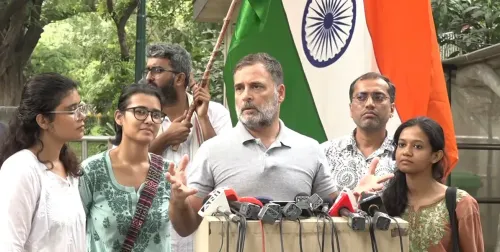
Gandhi recounted a conversation he had with a student protester at Jantar Mantar, describing her response as one of the most compelling he had heard. He said he asked her what it means to be a student — whether it referred to attending college, school, or simply reading books.
Her answer, as quoted by Gandhi: 'A student is someone who has an open mind and open heart, someone who right from the beginning accepts that they don't know anything, student knows that whatever he knows would be superceded later by new knowledge, student understands that the universe is constantly changing... and so student understands that knowledge is constantly changing.'
The 'Idiot' Remark That Resonated
Gandhi said the student then drew a contrast with a second category of people — those who believe they already know everything, that the universe is static, and that knowledge originates from within themselves. 'They are absolutely convinced that they know everything; they believe that the universe is static, and they believe that the knowledge emerges from inside them; they believe that they are God, that everything that is to be known is known to them; they are arrogant, they don't listen, they don't respect other people's truth,' Gandhi quoted her as saying.
When Gandhi asked what she called such people, she replied: 'I call them idiots.' The anecdote drew significant attention in the House and was widely noted as an indirect critique of the ruling establishment, though Gandhi did not name any individual.
Context: Paper-Leak Protests and the Amendment Bill
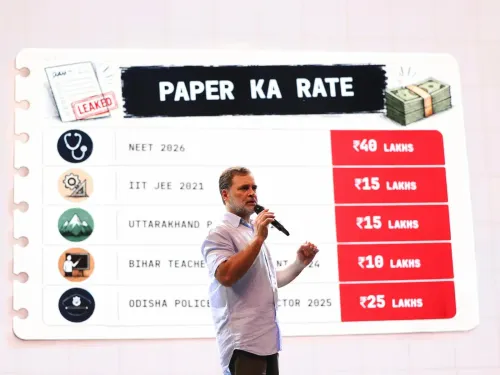
The protests at Jantar Mantar were sparked by a series of alleged paper leaks in competitive examinations, including the NEET-UG controversy, which triggered nationwide outrage among students and aspirants. The Public Examinations (Prevention of Unfair Means) Amendment Bill, 2026 was introduced as a legislative response to those concerns. Gandhi's speech positioned the protests not merely as a reaction to an administrative failure, but as a broader democratic assertion by India's youth. This is not the first time the Opposition has used the exam-leak issue to press the government on accountability in public institutions.
Point of View
He deflected the usual charge of Opposition grandstanding and let the 'idiot' line do the political work without attaching a name to it. The Jantar Mantar protests gave the Opposition a rare gift — a youth movement with moral clarity and no party flag — and Gandhi moved quickly to claim adjacency without ownership. The deeper question the speech did not answer is what the Indian National Congress itself proposes beyond the Amendment Bill to fix the systemic rot in examination administration that made these protests necessary in the first place.
NationPress
13 Sept 2026
Frequently Asked Questions
What did Rahul Gandhi say about the Jantar Mantar paper-leak protests?
Rahul Gandhi said the youth-led protests at Jantar Mantar should make every Indian proud, describing them as a peaceful, non-violent expression of the country's future generation. He made these remarks on 29 July 2026 during the parliamentary debate on the Public Examinations (Prevention of Unfair Means) Amendment Bill, 2026.
What is the Public Examinations (Prevention of Unfair Means) Amendment Bill, 2026?
It is a legislative measure introduced in Parliament to address malpractice and paper leaks in public competitive examinations. The bill came in the wake of widespread student protests, including those at Jantar Mantar in New Delhi, triggered by alleged leaks in exams such as NEET-UG.
What was the student anecdote Rahul Gandhi shared in Parliament?
Gandhi recounted a conversation with a student protester at Jantar Mantar who defined a 'student' as someone with an open mind who accepts the limits of their knowledge. She contrasted this with people who believe they know everything and called the latter 'idiots' — a remark that resonated widely as an indirect critique of the ruling establishment.
Why did Gandhi address the BJP specifically during his speech?
Gandhi urged BJP members to ask their own children what they thought of the protests, arguing they would find agreement. The appeal was aimed at framing the youth agitation as a cross-partisan sentiment rather than an Opposition-led political movement.
What triggered the Jantar Mantar student protests?
The protests were primarily triggered by alleged paper leaks in major competitive examinations, most notably the NEET-UG controversy, which sparked nationwide anger among students and examination aspirants over the integrity of India's public examination system.