Is FairPoint: Jammu Protests 'Dangerous' and Is Kashmiri Pandit Ethnic Cleansing Acceptable?

Synopsis
Mehbooba Mufti, the former Chief Minister of Jammu and Kashmir, links recent protests to a historical decision, raising eyebrows about her stance on secularism and Hindu persecution. This piece delves into the hypocrisy surrounding political leaders’ silence over the 35-year plight of Kashmiri Pandits amidst rising tensions in Jammu.
Key Takeaways
Mehbooba Mufti has linked Jammu protests to historical decisions regarding accession to India.
Concerns about Hindu persecution in Kashmir remain largely unaddressed by political leaders.
The plight of Kashmiri Pandits continues to evoke debate about secularism in India.
Political hypocrisy is evident in the silence surrounding the ethnic cleansing of minorities.
The implications of these events challenge the narrative of a unified secular India.
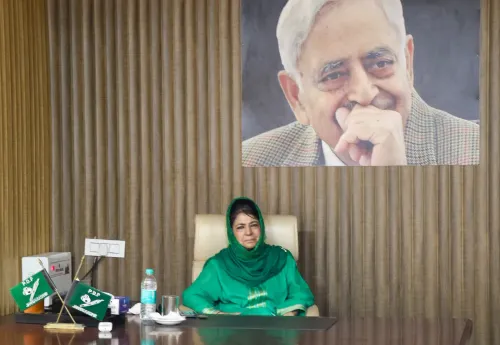
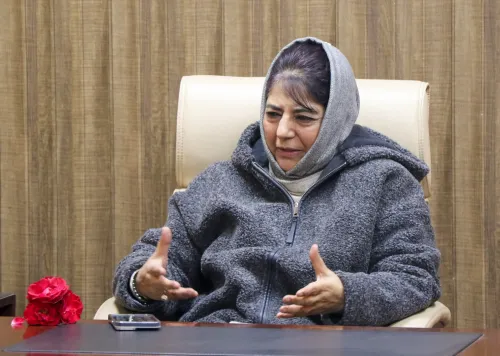
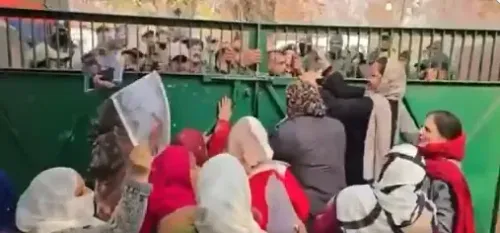
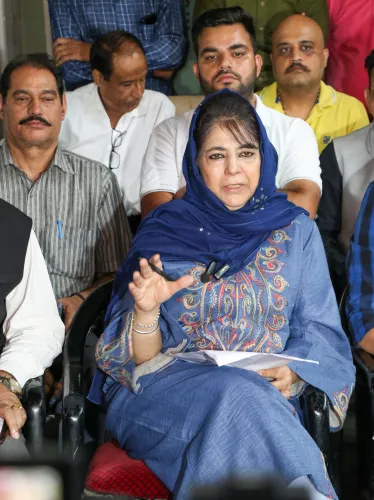
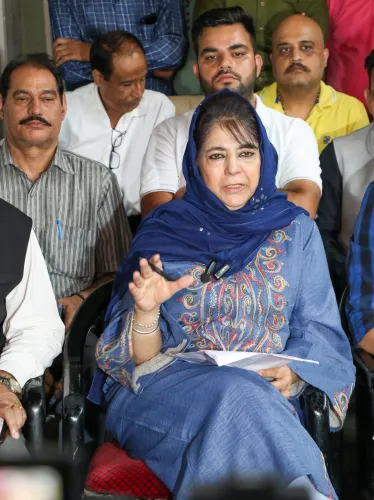
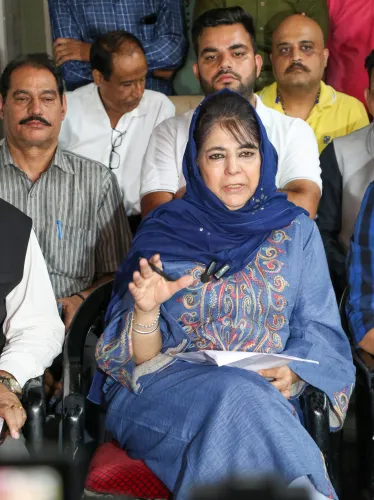
New Delhi, Jan 11 (NationPress) Mehbooba Mufti, the former Chief Minister of Jammu and Kashmir and President of the People's Democratic Party (PDP), recently linked various protests in Jammu to the historical decision made by the predominantly Muslim region of J&K to integrate with India in 1947.
It is profoundly concerning to witness such outrageous statements from a leader who has held a constitutional position. Referring to the groups in Jammu as “right-wing Hindus”, she claimed, “Recent actions led by right-wing Hindu organizations like BJP, RSS, Bajrang Dal and others have undermined the decision of our leaders to align with a Gandhian secular India by rejecting the two-nation theory proposed by Mohammad Ali Jinnah.”
Mufti made these remarks while condemning the National Medical Commission's (NMC) decision to revoke permission for Shri Mata Vaishno Devi Medical College, labeling it as “dangerous and unfortunate.”
She expressed concerns about rising calls for statehood for Jammu based on religious grounds, stating that if this were to occur, it would invalidate the reasons behind Kashmir’s decision to join secular India.
This rhetoric prompts a significant question: how can a leader reduce a protest to a communal conflict while simultaneously questioning the legitimacy of Jammu and Kashmir's integration into India? A simple protest, regardless of differing opinions on its demands, has disturbed her and others, leading to a tone of ideological intimidation. However, this is not the first instance of her or other valley leaders expressing such sentiments.
Former Chief Minister Farooq Abdullah, who is supported by the INDIA bloc and its affiliates, often references Pakistan in his political discussions while advocating for autonomy for Jammu and Kashmir.
If a protest by a largely Hindu-dominated group in Jammu can trigger such anxiety and revive discussions on accession, a more pressing issue needs to be addressed: the oppression and forced displacement of Kashmiri Hindus. If the Muslim-majority population of the Valley chose to align with secular India, how did the two percent Hindu minority face violence, intimidation, and eventual exile? Was Gandhiji’s vision of secular coexistence not violently undermined in this context?
It has been over 35 years since the indigenous people of the Valley, the Kashmiri Pandits, were compelled to flee their ancestral lands. They were driven out through systematic terror, intimidation, and organized violence.
Figures such as Mehbooba Mufti and Farooq Abdullah, who readily express concern for secularism when protests arise in Jammu, have rarely — if ever — demonstrated similar outrage regarding the ethnic cleansing of Kashmiri Hindus.
The hypocrisy is glaring when recalling that both political dynasties, the Abdullahs and the Muftis, were in power during the time terrorism took root in Kashmir.
Under Farooq Abdullah's leadership in the late 1980s, incidents of kidnapping, assassination, arson, and sexual violence against Hindus became rampant. The state machinery failed catastrophically, allowing religious extremism to proliferate unchecked.
In fact, both political families — the Muftis and Abdullahs — and many others opted for silence when Hindus were targeted in the late 1980s, 90s, and even post-2000. None of these Kashmiri Muslim leaders ever attempted to advocate for the persecuted Hindus.
Notably, terrorists were released from jails, emboldening terror groups and their sponsors in Pakistan. Farooq Abdullah, as Chief Minister, did little to intervene and allowed religious extremists to unleash brutality on a vulnerable community.
It was not only Abdullah; Mehbooba Mufti’s father, Mufti Mohammad Sayeed, also failed to protect the Hindu minority in the Valley.
Serving as India’s Union Home Minister during this critical time, he presided over a collapse in security and administration that left minorities defenseless. The combination of Farooq Abdullah as Chief Minister and Mufti Sayeed at the helm proved disastrous for Kashmiri Hindus. Although Abdullah resigned in January 1990 and Governor Jagmohan took charge, the damage had already been inflicted.
Abandoned by the then Central government, the J&K government, by their Muslim neighbors, colleagues, friends, and political leadership, as well as social and human rights organizations, the Kashmiri Pandit community was left with no choice but to leave to preserve their lives and dignity. Even after their exodus, their suffering did not cease. Properties were forcibly occupied or appropriated under duress, while justice remained elusive.
Throughout these 35 years, Mehbooba Mufti and other valley leaders have never indicated that Gandhian secularism faced a threat due to the persecution of Hindus. They have not demanded accountability, investigations, or meaningful rehabilitation.
Despite repeatedly holding power, neither the Abdullahs nor the Muftis made any attempts to facilitate the return of Kashmiri Pandits, prosecute offenders, or even officially acknowledge the magnitude of the tragedy. The question is why?
The answers lie in their enduring silence — during the times of persecution and throughout these 35 years — and in their rhetoric of selective secularism.
Both the Abdullahs and the Muftis could have initiated measures to bring Hindus back during their rule. Yet, no action has been taken. They did not deem the exodus serious enough to warrant an investigation, nor have they ever shown any inclination to identify those who committed violence against, or dispossessed, the Hindu community, and provide justice to the minorities. Still, Kashmiri leaders do not perceive Gandhi’s secularism as having been compromised in the ethnic cleansing of the minuscule Hindu community in Kashmir.
This contradiction is not subtle — it is glaring. That such leaders continue to be embraced and legitimized by purportedly secular political entities across India only exacerbates the irony.
By remaining silent on the persecution of Hindus, these very leaders have furthered the sinister dream of Jinnah's Muslim-based two-nation theory.
And they have done so not covertly, but openly, while still being welcomed by so-called secular groups and parties in the country. Their political maneuvering is far more perilous as it allows the Jinnah theory to succeed within India.
(Deepika Bhan can be contacted at deepika.b@ians.in)
Point of View
It is imperative to recognize the delicate balance between historical grievances and current realities. While protests may evoke strong reactions, it is crucial to confront the larger issue of minority rights and religious intolerance. The plight of Kashmiri Hindus deserves acknowledgment and action, ensuring that all communities in India thrive in peace and security.
NationPress
1 Oct 2026
Frequently Asked Questions
What sparked the protests in Jammu?
The protests in Jammu were sparked by political decisions and perceived injustices, particularly regarding the decisions made by leaders in Jammu and Kashmir.
What is the significance of Mehbooba Mufti's remarks?
Mehbooba Mufti's remarks link contemporary protests to historical decisions, raising questions about the ideological underpinnings of Jammu and Kashmir's integration into India.
What is the situation of Kashmiri Pandits?
Kashmiri Pandits have faced severe persecution and displacement over the past 35 years, with calls for justice and recognition of their suffering often overlooked.
How do political leaders respond to Hindu persecution?
Political leaders, including the Abdullahs and Muftis, have been criticized for their silence and lack of action regarding the persecution of Hindus in the Valley.
What does this situation imply for secularism in India?
The ongoing persecution of minorities like Kashmiri Pandits raises significant concerns about the state of secularism in India and the responsibilities of its leaders.