JeM's Bahawalpur base rebuilt after Operation Sindoor strikes, reports reveal
Synopsis
India struck Jaish-e-Mohammed's Bahawalpur headquarters during Operation Sindoor in May 2025 — but intelligence inputs now suggest the site has been fully rebuilt, reportedly with Pakistani establishment funds of approximately Pakistani Rs 25 crore. The reconstruction of Markaz Subhanallah is the starkest signal yet that Pakistan's counter-terror commitments remain, at best, selective.
Key Takeaways
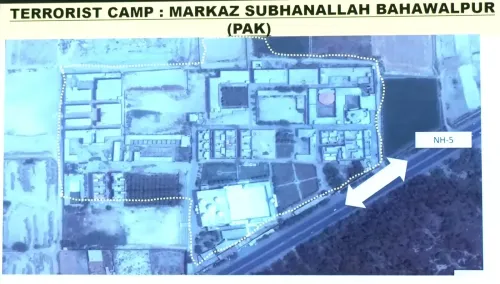
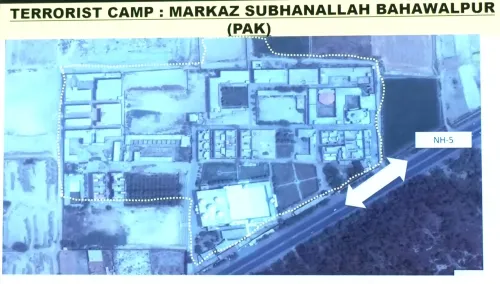
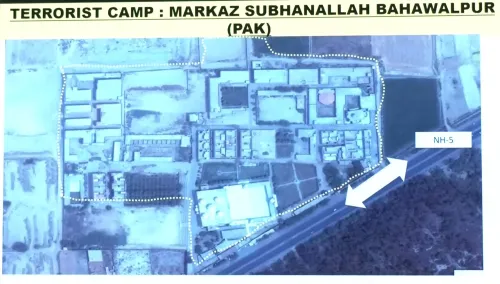
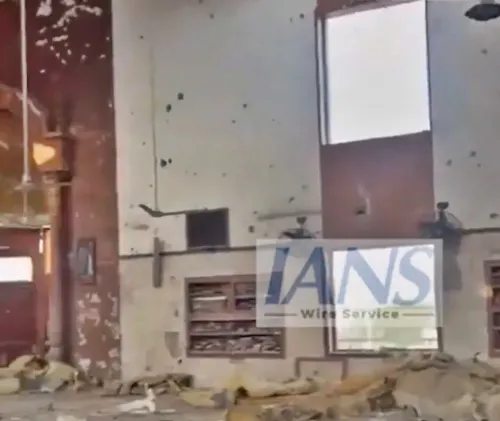
Jaish-e-Mohammed 's Markaz Subhanallah headquarters in Bahawalpur , struck during Operation Sindoor , has reportedly been rebuilt with new plaster, paint, and polished marble.
The Pakistani establishment allegedly provided approximately Pakistani Rs 25 crore to JeM for reconstruction, with Pakistani Rs 11 crore reportedly earmarked for the central hall.
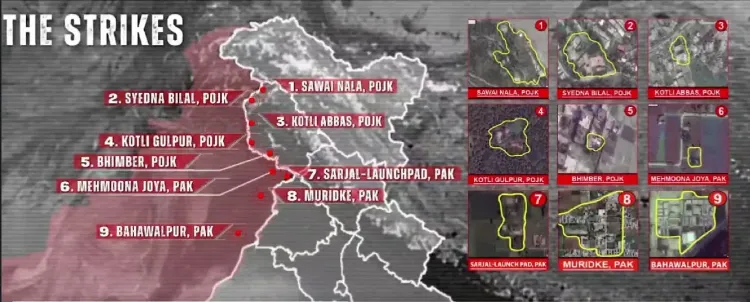
Operation Sindoor , launched on 6–7 May 2025 , targeted nine terror sites using 24 missiles , killing an estimated 70 terrorists .
The operation was a response to the Pahalgam terror attack of 22 April 2025 , in which 25 tourists and one local were killed.
Adjoining structures including the Madrasa Al-Sabir indoctrination centre have been cleared and rebuilt at the site.
UN-designated terrorist organisation Jaish-e-Mohammed (JeM)'s headquarters at Markaz Subhanallah in Bahawalpur, Pakistan — heavily damaged during India's Operation Sindoor in May 2025 — has been rebuilt and refurbished, according to intelligence inputs and media reports citing satellite imagery. The reconstruction, reportedly funded in part by the Pakistani establishment, signals a deliberate effort to restore one of the subcontinent's most notorious terror infrastructure nodes.
Scale of Reconstruction
According to reports citing intelligence inputs, the Markaz Subhanallah central hall — which sustained severe damage in India's strikes — has been repaired with new plaster, fresh paint, and polished marble. Craters on the grounds have been filled, and the structure now appears ready for regular operational use by JeM.
Structures adjoining the main complex — including the Madrasa Al-Sabir, described in intelligence assessments as an indoctrination centre, and residential quarters used by JeM commanders — were either cleared or demolished, with new construction reportedly completed at the site.
Pakistani Establishment's Alleged Role
The Pakistani establishment reportedly provided approximately Pakistani Rs 25 crore to JeM in cash instalments for the reconstruction effort, according to several media reports citing intelligence inputs. Of this, approximately Pakistani Rs 11 crore was allegedly earmarked specifically for rebuilding the central hall. The claims have not been independently verified, and Pakistan has not publicly commented on the reports.
What Operation Sindoor Targeted
The Bahawalpur facility was among nine terror sites struck by India during Operation Sindoor, launched on 6 and 7 May 2025 in response to the Pahalgam terror attack of 22 April 2025. In that attack, Pakistan-backed gunmen targeted tourists in Jammu and Kashmir, singling out victims on the basis of religion — killing 25 tourists and one local pony ride operator who attempted to shield them.
The joint operation, executed by the Indian Army, Air Force, and Navy, involved the firing of 24 missiles that precisely struck terror infrastructure across Pakistan and Pakistan-occupied Jammu and Kashmir (PoJK), killing an estimated 70 terrorists, according to Indian government statements. Targets included the Lashkar-e-Taiba (LeT) headquarters in Muridke alongside the Bahawalpur complex.
Strategic Implications
The reported reconstruction of Markaz Subhanallah raises pointed questions about Pakistan's counter-terrorism commitments at a time when international pressure on Islamabad to dismantle terror infrastructure remains a persistent diplomatic flashpoint. Notably, JeM has been a UN-designated terrorist organisation, and its headquarters had long been identified by Indian and Western intelligence agencies as a hub for extremist training and operational planning.
This comes amid ongoing scrutiny of Pakistan's dual-track approach — publicly denying support for non-state actors while, critics argue, enabling their operational revival. If the intelligence inputs are accurate, the rebuilding of Markaz Subhanallah would represent one of the most brazen post-strike recoveries by a designated terror group in the region's recent history.
What Comes Next
Indian security officials and strategic analysts are likely to monitor the Bahawalpur site closely for signs of renewed recruitment or training activity. The development could also factor into India's diplomatic posture at multilateral forums where Pakistan's terror-financing record is under review.
Point of View
It renders hollow every diplomatic assurance Islamabad has offered since Operation Sindoor. India struck these sites at significant military and diplomatic cost; their rapid restoration suggests the deterrence calculus did not hold. The deeper question mainstream coverage is missing: what does India's next response look like when kinetic action produces only temporary disruption? The Bahawalpur rebuild demands a rethink of whether strike-based deterrence alone is sufficient against a state that appears willing to fund the recovery.
NationPress
9 Oct 2026
Frequently Asked Questions
What is Markaz Subhanallah in Bahawalpur?
Markaz Subhanallah is the headquarters of Jaish-e-Mohammed (JeM), a UN-designated terrorist organisation, located in Bahawalpur, Pakistan. It has long been identified by Indian and Western intelligence agencies as a major hub for extremist training and indoctrination.
What was Operation Sindoor?
Operation Sindoor was a joint military operation launched by the Indian Army, Air Force, and Navy on 6 and 7 May 2025, targeting nine terror infrastructure sites in Pakistan and Pakistan-occupied Jammu and Kashmir. It was India's response to the Pahalgam terror attack of 22 April 2025, in which 26 people were killed.
Who allegedly funded the rebuilding of JeM's Bahawalpur base?
According to intelligence inputs cited in several media reports, the Pakistani establishment allegedly provided approximately Pakistani Rs 25 crore to JeM in cash instalments, with around Pakistani Rs 11 crore reportedly used specifically for rebuilding the central hall of Markaz Subhanallah. Pakistan has not publicly responded to these claims.
What was the Pahalgam terror attack?
The Pahalgam terror attack took place on 22 April 2025 in Jammu and Kashmir, when Pakistan-backed gunmen targeted tourists by singling them out on the basis of religion. The attack killed 25 tourists and one local pony ride operator who tried to protect them, and directly triggered Operation Sindoor.
What are the implications of JeM's base being rebuilt?
The reported reconstruction raises serious questions about Pakistan's commitment to dismantling terror infrastructure and undermines the deterrence value of India's Operation Sindoor strikes. It is likely to intensify diplomatic pressure on Pakistan at international forums and may influence India's future strategic calculus regarding cross-border terror threats.