Pakistan rebuilds Jaish HQ with PKR 250 mn after Op Sindoor; ISI shifts cadres to PoK
Synopsis
Pakistan has quietly spent PKR 250 million to rebuild the Jaish-e-Mohammed headquarters flattened by India in Operation Sindoor — but the real story is what's happening in the shadows: ISI is pulling trained operatives away from fixed targets and repositioning them at PoK launch pads for a coordinated strike involving JeM, LeT, and Hizbul Mujahideen. The rebuild is less about operational revival and more about keeping the recruitment pipeline alive.
Key Takeaways
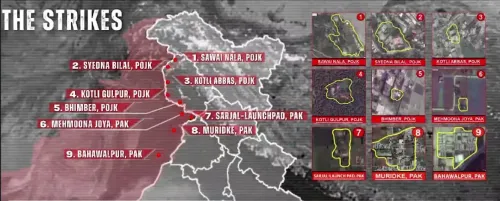
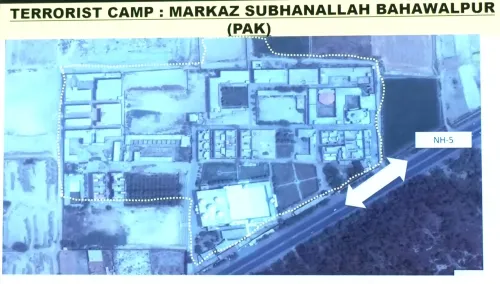
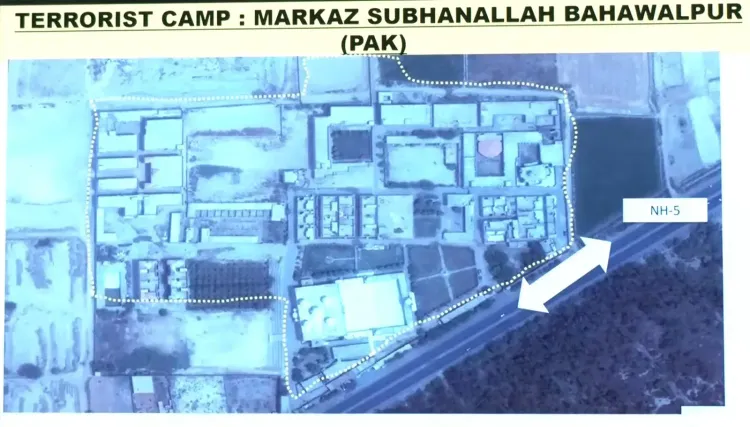
Pakistani authorities reportedly allocated PKR 250 million to rebuild the Jaish-e-Mohammed headquarters ( Markaz Subhanallah ) in Bahawalpur , destroyed during Operation Sindoor .
The rebuilt facility is described as largely symbolic ; JeM top leadership has been instructed to avoid it due to security concerns.
Operation Sindoor killed a large number of trained JeM cadres present at the facility, dealing a blow harder to recover from than infrastructure damage, according to officials.
The ISI has ordered Jaish-e-Mohammed , Lashkar-e-Taiba , and Hizbul Mujahideen to relocate trained operatives to launch pads in Pakistan-occupied Kashmir (PoK) .
A large-scale coordinated terror operation targeting Jammu and Kashmir is reportedly being planned by the ISI using all three groups jointly.
JeM recruitment has reportedly declined sharply since Operation Sindoor; the rebuild and martyr narrative are being used to reverse that trend.
Pakistani authorities have reportedly allocated approximately PKR 250 million to rebuild the Jaish-e-Mohammed (JeM) headquarters in Bahawalpur, which Indian armed forces destroyed during Operation Sindoor in May 2024, according to Indian intelligence officials. The reconstruction of the facility — known as Markaz Subhanallah — is said to be largely symbolic, aimed at signalling organisational continuity to potential recruits rather than restoring full operational capacity.
Markaz Subhanallah: Rebuilt but Deliberately Hollowed Out
According to an Intelligence Bureau official, activity at Markaz Subhanallah has resumed after roughly 15 months of reconstruction, but under markedly different conditions. 'Jaish has been deliberately asked to maintain a very low strength at the facility. Further, the top leaders of the JeM have been asked to completely avoid the facility for some more time. This decision has been taken due to security concerns,' the official said.
A second official confirmed that Pakistani authorities have 'stepped up security multi-fold' and issued instructions to 'maintain a low-key approach and not use the facility too much.' Large-scale gatherings or events at the site have been ruled out for the foreseeable future, the official added.
Operation Sindoor's Lasting Blow to JeM's Cadre
Beyond the physical destruction of infrastructure, Operation Sindoor dealt a severe blow to JeM's trained manpower. 'A large number of trained cadres were present at the facility when Indian armed forces carried out the strike. The loss of personnel, particularly trained cadres, dealt a major blow to the terror outfit,' an official said.
Intelligence officials noted that while damaged infrastructure can be rebuilt with funding, replenishing trained operatives is a far longer and more complex process — one that can take months or, in some cases, years. As a result, the Inter-Services Intelligence (ISI) has issued instructions to JeM's top leadership to prioritise the safety of its surviving cadres and minimise their exposure to potential future strikes.
ISI Reworks Strategy: Cadres Moved to PoK Launch Pads
In a significant strategic shift, the ISI has instructed Jaish-e-Mohammed, Lashkar-e-Taiba (LeT), and Hizbul Mujahideen to move trained operatives away from fixed facilities — which are considered high-value targets — and relocate them to launch pads in Pakistan-occupied Kashmir (PoK). Officials say the agency is planning a large-scale coordinated operation in Jammu and Kashmir, led jointly by all three groups rather than individually.
Notably, the ISI's revised calculus reportedly treats the loss of cadres in cross-border terror attacks as a recruitment asset. Officials say the agency would 'rather let them die on the battlefield in Jammu and Kashmir' than lose them to strikes inside Pakistan, as operatives killed in attacks can be projected as martyrs — a significant draw for recruitment, particularly for JeM, which has reportedly struggled to attract new members since Operation Sindoor.
Recruitment Slump and the Martyr Narrative
Since the Indian strikes, recruitment for JeM has been described as 'hard' by officials. The destruction of Markaz Subhanallah — once a central symbol of the outfit's reach — and the loss of trained personnel sent a damaging signal to potential recruits. The PKR 250 million rebuild is, according to officials, partly an attempt to reverse that narrative and project organisational resilience.
The Indian armed forces launched Operation Sindoor in response to the Pahalgam terror attack. With the ISI now consolidating its proxy network and repositioning assets closer to the Line of Control, security analysts are watching for signs of an imminent escalation in Jammu and Kashmir.
Point of View
Not a military asset — and Indian intelligence appears to know that. The more consequential development is the ISI's doctrinal shift: moving trained cadres out of fixed, strikeable facilities and into dispersed PoK launch pads, making them harder to neutralise in a future Operation Sindoor-style action. Pakistan has essentially absorbed the lesson of May 2024 and adapted. The planned joint operation by JeM, LeT, and Hizbul Mujahideen — if the intelligence holds — would represent the most coordinated proxy push in years, timed precisely when recruitment is fragile and the ISI needs a battlefield 'martyr' to reset the narrative. That is the real threat, and it deserves more scrutiny than the headline figure of PKR 250 million.
NationPress
16 Oct 2026
Frequently Asked Questions
What is Markaz Subhanallah and why was it destroyed?
Markaz Subhanallah is the headquarters of the Jaish-e-Mohammed terror outfit located in Bahawalpur, Pakistan. Indian armed forces destroyed it during Operation Sindoor, launched in response to the Pahalgam terror attack in May 2024.
How much did Pakistan spend to rebuild the Jaish-e-Mohammed headquarters?
Pakistani authorities reportedly provided approximately PKR 250 million to restore the facility. Intelligence officials say the rebuild took around 15 months and is largely symbolic in nature, intended to signal organisational continuity to potential recruits.
Why is the rebuilt Jaish headquarters described as symbolic?
The facility is operating at deliberately low capacity, with JeM's top leadership instructed to avoid it entirely due to security concerns. Pakistani authorities have banned large-scale events there, making it more of a propaganda asset than an operational base.
What is the ISI planning in Jammu and Kashmir?
According to Indian intelligence officials, the ISI is planning a large-scale coordinated terror operation in Jammu and Kashmir, to be carried out jointly by Jaish-e-Mohammed, Lashkar-e-Taiba, and Hizbul Mujahideen. Trained operatives have reportedly been moved to launch pads in Pakistan-occupied Kashmir in preparation.
How did Operation Sindoor affect JeM's recruitment?
Operation Sindoor significantly damaged JeM's recruitment pipeline. The destruction of its headquarters and the loss of a large number of trained cadres in the strike sent a negative signal to potential recruits. Officials say recruitment has been 'hard' for JeM since the operation, prompting the ISI to use the martyr narrative to attract new members.