Jaish-e-Mohammed shifts to ideology after Operation Sindoor as ISI backs new playbook
Synopsis
Operation Sindoor may have silenced Jaish-e-Mohammed's guns, but intelligence officials warn its ideology is spreading faster than ever — through ISI-backed social media recruitment and India-based inspired modules with no direct organisational fingerprints. Three major terror cases in Faridabad, Gujarat, and West Bengal all point to the same playbook: inspire locally, deny centrally.
Key Takeaways
Jaish-e-Mohammed has shifted from direct attacks to ideological mobilisation following Operation Sindoor , per multiple intelligence assessments.
JeM's ideology has surfaced in three major terror investigations — in Faridabad , Gujarat , and West Bengal — with no direct organisational link found.
The Gujarat ATS arrested more than five persons who conducted IED trials ; all were reportedly inspired by JeM.
West Bengal STF arrested Hamim Mondal for allegedly gathering intelligence for the ISI and plotting to assassinate CM Suvendu Adhikari .
Pakistan's ISI is reportedly using recruiter Shahzad Bhatti and social media to push JeM ideology among Indian youth.
Lashkar-e-Taiba , by contrast, is actively recruiting and operating with ISKP , having shifted camps toward the Pakistan-Afghanistan border after its Muridke facility was destroyed.
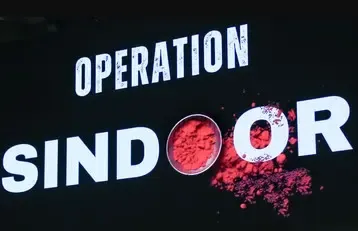
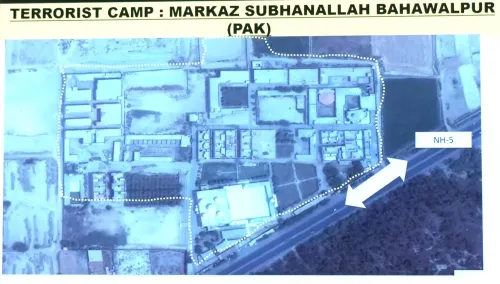
Jaish-e-Mohammed (JeM), one of the terror outfits hardest hit during Operation Sindoor, has pivoted away from direct attacks and toward ideological mobilisation, according to multiple intelligence assessments. The shift, officials say, is being quietly backed by Pakistan's Inter-Services Intelligence (ISI) as a strategy to retain relevance while the group regroups.
JeM Goes Silent — But Its Ideology Spreads
Since Operation Sindoor, the JeM's leadership has maintained a prolonged public silence, with virtually no operational claims or significant activity reported for nearly a year. 'The leadership has remained quiet, and there has been hardly any significant activity reported for nearly a year now,' an official said.
Yet the outfit's name has surfaced in investigations into three major terror cases across India — in Faridabad, Gujarat, and West Bengal — with a telling pattern: accused individuals were inspired by JeM ideology but operated without direct organisational involvement.
Three Cases, One Common Thread
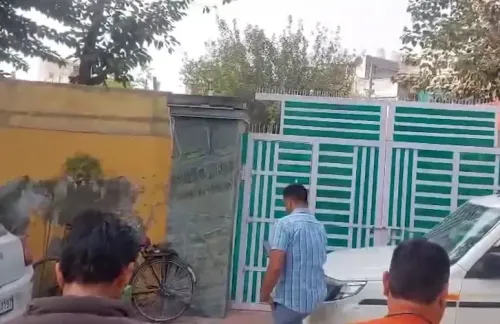
In Faridabad, members of the module that executed the Red Fort car bomb blast were found to have been inspired by JeM ideology, though the outfit had no direct operational role.
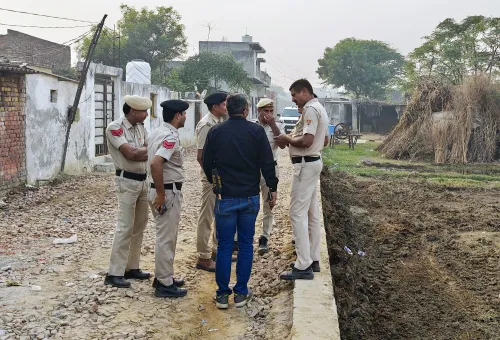
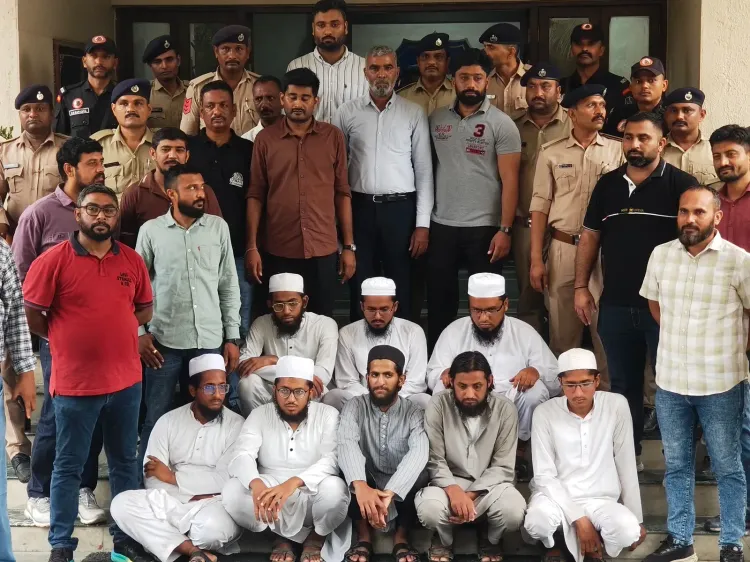
In Gujarat, the state's Anti-Terrorism Squad (ATS) arrested more than five persons who had conducted Improvised Explosive Device (IED) trials and were planning a major attack. All were reportedly inspired by JeM, with no direct link to the outfit's command structure.
In West Bengal, the Special Task Force (STF) arrested an operative identified as Hamim Mondal on charges of gathering sensitive information for the ISI and allegedly planning to assassinate West Bengal Chief Minister Suvendu Adhikari. Investigators found he too was inspired by the Jaish.
'The probe has not found any direct involvement of the Jaish-e-Mohammed in these cases. The accused were in contact with their handlers. While some appear to have acted on their own, others were directed to carry out specific activities. The common thread, however, is that the Jaish has been able to spread its ideology without being directly involved in the execution of these acts,' an Intelligence Bureau official said.
ISI's Calculated Deniability Strategy
Officials believe the pattern is not accidental. By relying on ideologically inspired modules rather than directly linked operatives, Pakistan can distance itself from attacks and retain operational deniability, according to assessments. The ISI is reportedly using individuals such as Shahzad Bhatti, described by officials as a specialist in recruitment, to push JeM ideology into India — primarily targeting young people through social media.
'Basically, its name remains in circulation, and for now that is good enough for the group,' an official noted. Incidents in India are likely to be exploited by the outfit as propaganda to revive recruitment and attract fresh cadres, officials warned.
Lashkar-e-Taiba Takes a Different Route
In contrast to JeM's dormancy, Lashkar-e-Taiba (LeT) has been actively recruiting and conducting operations in collaboration with the Islamic State Khorasan Province (ISKP). LeT has also shifted its training infrastructure closer to the Pakistan-Afghanistan border, following the destruction of its main training facility at Muridke near Lahore during Operation Sindoor.
What Comes Next
Officials assess that JeM is likely to continue this ideological strategy for the foreseeable future — buying time to rebuild while keeping its brand alive through proxy radicalisation. The sharp decline in direct recruitment within Pakistan, a consequence of the outfit's post-Sindoor silence, makes the India-facing ideology push all the more critical to its long-term survival.
Point of View
Not a sign of weakness — it is a counter-intelligence masterstroke that makes attribution nearly impossible. India's security architecture is built to track operatives; it is far less equipped to prosecute ideology. The ISI's apparent pivot to 'inspire and deny' also resets the diplomatic calculus: without a direct evidentiary chain to Rawalpindi, international pressure on Pakistan loses its sharpest edge. The three cases — Faridabad, Gujarat, West Bengal — suggest this model is already operational at scale, and the window to disrupt it before it metastasises is narrowing.
NationPress
21 Sept 2026
Frequently Asked Questions
What is Jaish-e-Mohammed's new strategy after Operation Sindoor?
According to intelligence assessments, Jaish-e-Mohammed has shifted from direct terror attacks to ideological mobilisation — inspiring individuals in India without direct operational involvement. This strategy allows the outfit to remain relevant while avoiding exposure and maintaining deniability for its Pakistani backers.
Which terror cases in India are linked to JeM ideology?
Three major cases have surfaced: the Faridabad Red Fort car bomb blast module, a Gujarat ATS case involving over five persons who conducted IED trials, and the West Bengal arrest of Hamim Mondal for alleged ISI espionage and a plot to assassinate Chief Minister Suvendu Adhikari. All accused were reportedly inspired by JeM ideology, with no direct organisational link established.
How is Pakistan's ISI involved in spreading JeM ideology in India?
Officials say the ISI is backing the strategy by using recruiters — including a named individual, Shahzad Bhatti — and social media platforms to target Indian youth with JeM ideology. By using inspired modules rather than direct operatives, Pakistan retains operational deniability while the ideology continues to circulate.
How does Lashkar-e-Taiba's posture differ from Jaish-e-Mohammed's?
Unlike JeM, Lashkar-e-Taiba has been actively recruiting and conducting operations in collaboration with the Islamic State Khorasan Province (ISKP). After its main training camp at Muridke near Lahore was destroyed during Operation Sindoor, LeT has shifted its training infrastructure closer to the Pakistan-Afghanistan border.
Why has direct recruitment into JeM declined in Pakistan?
JeM's leadership has maintained near-total public silence since Operation Sindoor, suppressing its public profile and limiting its ability to attract new cadres in Pakistan. Officials warn, however, that terror incidents in India could be exploited as propaganda to revive recruitment and attract fresh members.