Has Jharkhand’s per capita income finally surpassed Rs 1 lakh?
Synopsis
Jharkhand's economy is on the rise, with per capita income exceeding Rs 1 lakh for the first time. Discover the factors contributing to this growth and how the state is combating poverty and inflation while boosting its GDP.
Key Takeaways
Jharkhand's per capita income has exceeded Rs 1 lakh for the first time.
The state has seen a significant reduction in poverty rates.
GSDP has nearly doubled since 2011-12.
Jharkhand achieved a real economic growth rate of 7.02 percent in 2024-25.
Inflation is projected to decline in the coming years.
Ranchi, Feb 21 (NationPress) Jharkhand's per capita income has officially exceeded the Rs 1 lakh threshold for the first time, as reported in the Economic Survey 2025-26 presented in the Assembly on Saturday.
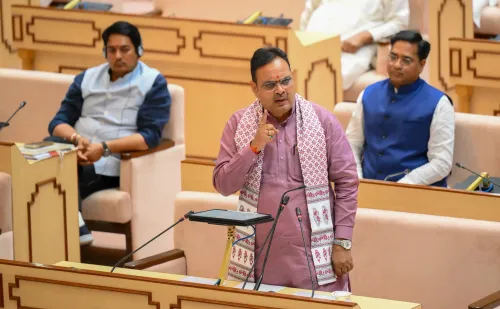
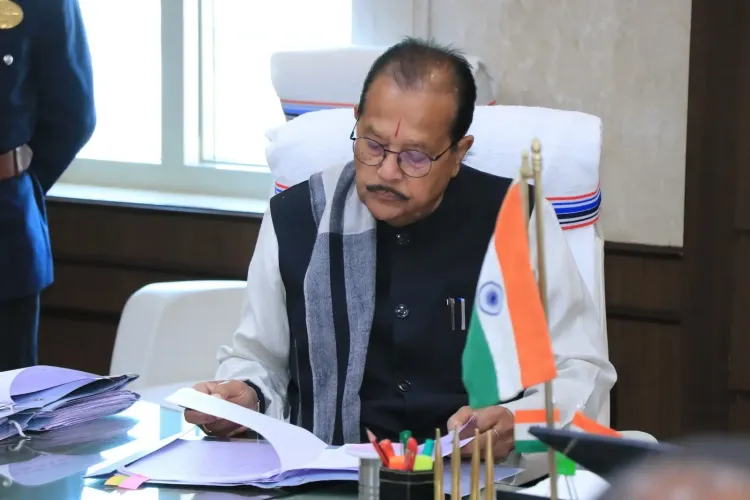
While unveiling the pre-Budget Economic Survey, Finance Minister Radha Krishna Kishore noted that the state's economy has experienced consistent growth over the last ten years, accompanied by a remarkable reduction in poverty levels.
The report indicates that the per capita income at current prices has grown from approximately Rs 60,000 in 2016-17 to Rs 1,16,663 in 2024-25. Projections suggest further increases to Rs 1,25,677 in 2025-26 and Rs 1,35,195 in 2026-27.
Real per capita income has reached Rs 68,357, demonstrating a 65.7 percent rise compared to 2011-12 levels, which signifies a substantial enhancement in the purchasing power of residents.
The state's Gross State Domestic Product (GSDP) at constant prices has nearly doubled, growing from Rs 1,50,918 crore in 2011-12 to Rs 3,03,178 crore in 2024-25. At current prices, GSDP has more than tripled during this period, reaching Rs 5,16,255 crore.
Jharkhand achieved a real economic growth rate of 7.02 percent in 2024-25, surpassing the national average of 6.5 percent. This marks the fourth consecutive year that the state's growth rate has remained above 7 percent.
During the Covid pandemic in 2020-21, the state's economy contracted by 5.30 percent, which was less severe than the national contraction of 5.8 percent. From 2020-21 to 2024-25, the state recorded a real compound annual growth rate (CAGR) of 8.4 percent, highlighting a strong post-pandemic recovery.
The forecast for the upcoming years appears optimistic. At constant prices, GSDP is anticipated to reach Rs 3,21,892 crore in 2025-26 and Rs 3,41,064 crore in 2026-27. At current prices, it is projected to rise to Rs 5,61,010 crore in 2025-26 and Rs 6,08,182 crore in 2026-27.
Inflation rates have also decreased. From 6 percent in 2023-24, it is expected to drop to around 4 percent in 2024-25, with core inflation likely remaining between 2.5-3 percent. The disparity between rural and urban inflation has nearly been eliminated.
Structurally, the services sector has emerged as the primary contributor to the state's economy, with its share in Gross State Value Added (GSVA) increasing from 38.5 percent in 2011-12 to 45.56 percent in 2024-25. Although construction's share in the industrial sector has expanded, agriculture's contribution has decreased from 9.65 percent to around 6 percent, despite overall production still rising.
The survey underlined a significant reduction in poverty as a notable accomplishment, with the poverty rate falling from 42.10 percent in 2015-16 to 28.81 percent in 2019-21—an impressive decline of 13.29 percentage points in five years, outpacing the national average.
Moreover, the state’s budget has grown nearly 20-fold since its inception, expanding from Rs 6,067 crore in 2001-02 to over Rs 1 lakh crore in 2024-25. The state’s own revenue sources have increased at an average annual rate of 14.2 percent, according to the report.
Point of View
It is crucial to acknowledge Jharkhand's significant achievements in economic growth and poverty reduction. This development not only reflects the state's resilience but also sets an example for other regions. The continued focus on economic stability and improvement in living conditions aligns with national objectives for sustainable growth.
NationPress
19 Sept 2026
Frequently Asked Questions
What is Jharkhand's current per capita income?
Jharkhand's per capita income has reached Rs 1,16,663 for the year 2024-25.
How much has the poverty rate decreased in Jharkhand?
The poverty rate has declined from 42.10 percent in 2015-16 to 28.81 percent in 2019-21.
What is the projected GSDP for Jharkhand in 2025-26?
The GSDP at constant prices is projected to reach Rs 3,21,892 crore in 2025-26.
How has inflation changed in Jharkhand?
Inflation is estimated to decrease from 6 percent in 2023-24 to around 4 percent in 2024-25.
What sector contributes the most to Jharkhand's economy?
The services sector is the largest contributor to Jharkhand's economy, with a share of 45.56 percent in GSVA.