Jharkhand launches portal to regularise unauthorised buildings under 2026 rules
Synopsis
After 25 years of failed drives, Jharkhand has gone digital — launching an online portal that gives nearly seven lakh residents a real shot at legalising unauthorised constructions under a liberal fee structure. The state's biggest regularisation push yet, and a test of whether simplicity can achieve what policy alone could not.
Key Takeaways
Urban Development Minister Sudivya Sonu launched the portal on 14 May 2025 under the Jharkhand Unauthorised Constructed Building Regularisation Rules-2026 .
Nearly seven lakh residents across Jharkhand's urban areas are eligible to apply.
Buildings up to 300 sq metres in area and 10 metres in height, including residential structures up to G+2 , qualify.
Minimum fee is ₹10,000 for residential and ₹20,000 for commercial buildings, payable in three instalments .
Constructions on government land, water bodies, parking spaces, and those violating the CNT-SPT Act are excluded.
The Jharkhand Cabinet approved the rules on 15 April 2025 .
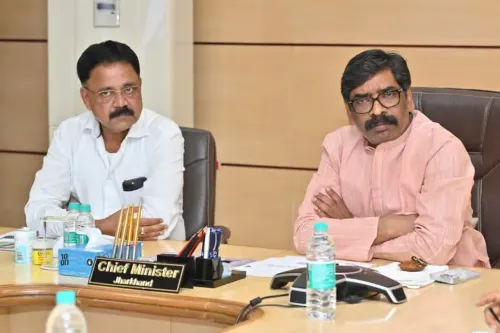
The Jharkhand government on Thursday, 14 May 2025, formally launched an online portal to regularise houses and buildings constructed without approved maps across urban areas of the state. Urban Development Minister Sudivya Sonu inaugurated the portal under the Jharkhand Unauthorised Constructed Building Regularisation Rules-2026, opening a pathway for nearly seven lakh residents to legalise their properties.
What the Scheme Covers
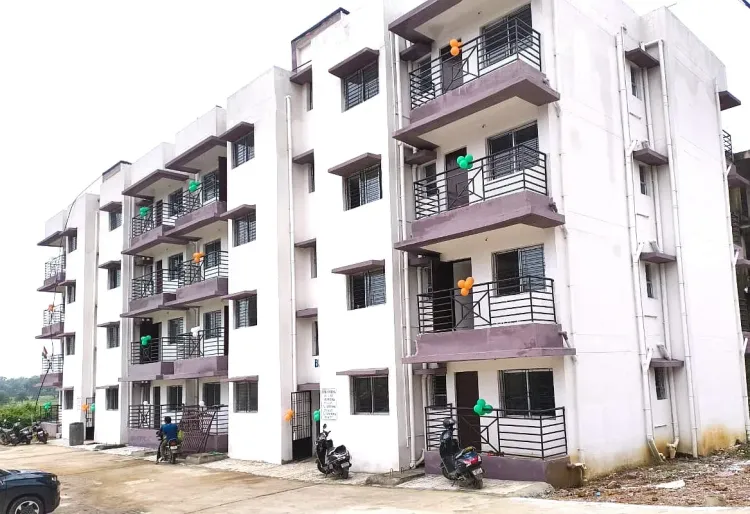
Under the new rules, buildings with a floor area of up to 300 square metres and a height of up to 10 metres are eligible for regularisation. Residential structures up to G+2 (ground plus two floors) are also included. The scheme is designed to provide relief to property owners who, for various reasons, were unable to get building plans approved at the time of construction.
Fees and Application Process
A minimum fee of ₹10,000 has been fixed for residential buildings and ₹20,000 for commercial buildings, payable in three instalments. Urban Development Secretary Sunil Kumar stated that the online portal has significantly simplified the application process compared to earlier drives. The Jharkhand Cabinet had approved the regularisation rules on 15 April 2025, paving the way for Thursday's launch.
Why Earlier Drives Failed
Minister Sonu noted that several attempts had been made over the past 25 to 26 years to regularise unauthorised constructions, but public participation remained limited each time. He described the current policy as a 'liberal' approach aimed at ensuring maximum uptake, and urged residents to apply through the portal without delay. Secretary Kumar echoed the concern, saying previous regularisation drives did not achieve the desired success, and that this initiative aims to promote planned urban development and maintain proper building records.
What Will Not Be Regularised
The government has drawn clear exclusions. Constructions on government land, water bodies (including tank beds), and parking spaces will not be covered. Buildings that violate the CNT-SPT Act are also excluded, as are properties involved in pending court disputes. Officials have made it clear these exclusions are non-negotiable under the scheme.
What Comes Next
With nearly seven lakh potential applicants across Jharkhand's urban areas, the scale of the regularisation exercise is among the largest the state has attempted. Whether the simplified online process and the liberal fee structure succeed where past efforts fell short will be the true measure of this initiative. The government's focus on planned urban development signals a broader push to bring informal constructions within a formal regulatory framework ahead of future urban expansion.
Point of View
But the real question is whether the fee structure and eligibility criteria are genuinely accessible to low-income urban households — the very group most likely to have built without approvals. Past drives spanning 25 years failed not because of intent but because of friction and exclusion anxiety. A portal alone does not remove that anxiety. The CNT-SPT Act carve-out is also significant: in a tribal-majority state, a large share of contested constructions may fall precisely within that grey zone, potentially limiting actual uptake well below the seven-lakh headline figure.
NationPress
19 Sept 2026
Frequently Asked Questions
What is the Jharkhand Unauthorised Constructed Building Regularisation Rules-2026?
It is a state government scheme that allows residents to legally regularise buildings constructed without approved maps in urban areas of Jharkhand. The Cabinet approved the rules on 15 April 2025, and the online portal was launched on 14 May 2025.
Who can apply under the Jharkhand building regularisation scheme?
Residents whose buildings have a floor area of up to 300 square metres and a height of up to 10 metres can apply. Residential structures up to G+2 are also eligible. Nearly seven lakh people across the state are expected to be covered.
What are the fees for regularising a building in Jharkhand?
The minimum fee is ₹10,000 for residential buildings and ₹20,000 for commercial buildings. Both can be paid in three instalments through the online portal.
Which buildings are excluded from the Jharkhand regularisation scheme?
Constructions on government land, water bodies such as tank beds, and parking spaces are excluded. Buildings violating the CNT-SPT Act and properties involved in pending court disputes are also not eligible.
Why did earlier regularisation drives in Jharkhand fail?
According to Urban Development Minister Sudivya Sonu, several attempts over the past 25 to 26 years saw limited public participation. The government says it has introduced a more liberal policy and an online portal this time to improve uptake and simplify the process.