Trump hush money conviction: Federal judge rejects removal bid again
Synopsis
For the third time, a federal judge has shut down Donald Trump's attempt to move his hush money case out of New York state court — ruling that paying an adult film actress and covering it up is not a presidential act shielded by immunity. With an appeal confirmed, the constitutional question of where personal conduct ends and executive privilege begins is heading to a higher court.
Key Takeaways
Judge Alvin Hellerstein rejected Donald Trump's third bid to transfer his hush money case to federal court on 29 August .
Trump was convicted in May 2024 on 34 felony counts of falsifying business records linked to a $130,000 payment to Stormy Daniels .
Hellerstein ruled that hush money payments are personal conduct and not protected by presidential immunity.
New York Judge Juan Merchan granted Trump an unconditional discharge in January 2025 — no fine or probation — but the felony conviction stands pending appeals.
Trump's legal team has confirmed it will appeal Friday's ruling, calling it 'baseless and lawless.'
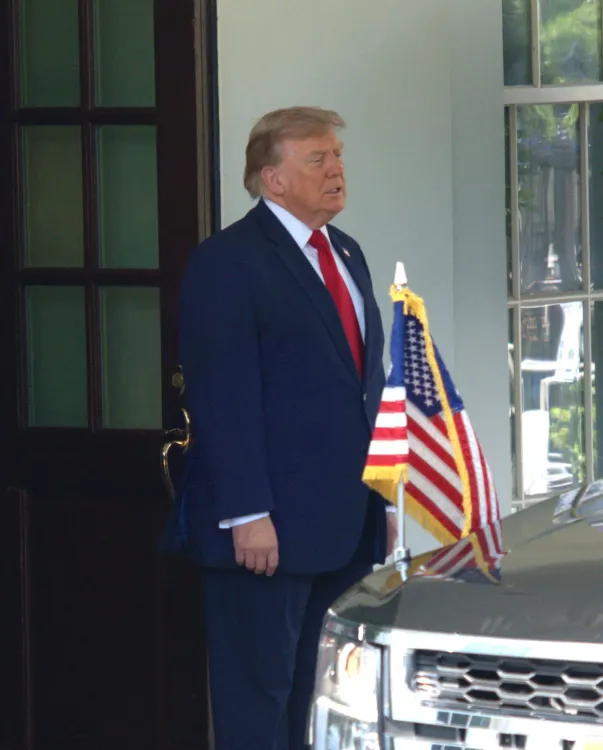
A federal judge has rejected US President Donald Trump's latest attempt to transfer his hush money case from New York state court to federal court, dealing a fresh blow to his ongoing efforts to overturn a criminal conviction that formally designates him a felon.
What the Court Ruled
Judge Alvin Hellerstein of the US District Court for the Southern District of New York dismissed Trump's renewed removal request, stating that his grounds were 'neither new nor legally sufficient.' In his ruling, Hellerstein maintained that the case centres on Trump's personal conduct — not actions taken in his official capacity as President.
'Paying hush money to an adult film star or engaging in a cover-up of an embarrassment are not subsumed in presidential immunity,' Hellerstein wrote in the ruling.
Background: A Conviction Built on 34 Counts
In May 2024, Trump was convicted on 34 felony counts of falsifying business records connected to a $130,000 hush money payment made to adult film actress Stormy Daniels. The case was overseen by New York Judge Juan Merchan, who in January 2025 granted Trump an unconditional discharge — meaning no fine or probation — but the sentencing nonetheless formally records Trump as a convicted felon, pending the outcome of his appeals.
A Pattern of Rejections
This is the third time Hellerstein has rejected Trump's removal request. Trump first sought to shift the case to federal court on 4 May 2023. Hellerstein denied that bid on 19 July 2023, ruling the alleged conduct was personal rather than presidential. A second rejection followed in September 2024, after Trump's conviction and after the US Supreme Court's July 2024 ruling that former presidents enjoy immunity from federal criminal prosecution for certain official acts performed while in office. Trump's legal team argued that ruling warranted a fresh look; Hellerstein disagreed.
Trump's Legal Team Responds
Following Friday's ruling, Trump's legal team said it would appeal the decision. A spokesperson for the team called the ruling 'baseless and lawless,' signalling that the legal battle is far from over. The appeal will likely test whether higher courts interpret the Supreme Court's presidential immunity doctrine more broadly than Hellerstein has.
What Happens Next
With an appeal now confirmed, the case moves toward a higher federal court, where the scope of presidential immunity — already a live constitutional question — will again be scrutinised. The outcome could have significant implications not only for Trump personally but for the boundaries of executive privilege in American law.
Point of View
Hellerstein's reasoning has been consistent: personal embarrassment is not presidential duty. What is notable is that Trump's legal team keeps returning to the same federal court with the same argument, banking on the Supreme Court's immunity ruling opening a new door — a door Hellerstein has now closed three times. The real contest will be at the appellate level, where a broader reading of presidential immunity could reshape how future administrations insulate personal conduct from state prosecution. The unconditional discharge already means Trump faces no practical punishment, making this appeal less about consequence and more about erasing the conviction itself — a distinction that matters enormously for political optics heading into any future electoral cycle.
NationPress
13 Oct 2026
Frequently Asked Questions
Why did the federal judge reject Trump's hush money removal request?
Judge Alvin Hellerstein ruled that Trump's grounds for renewing the request were 'neither new nor legally sufficient.' He maintained that the hush money payment to Stormy Daniels constituted personal conduct, not an official presidential act, and therefore falls outside the scope of presidential immunity.
What was Trump convicted of in the hush money case?
Trump was convicted in May 2024 on 34 felony counts of falsifying business records related to a $130,000 hush money payment made to adult film actress Stormy Daniels. The case was prosecuted in New York state court.
What sentence did Trump receive?
New York Judge Juan Merchan granted Trump an unconditional discharge in January 2025, meaning he faces no fine or probation. However, the sentencing formally designates Trump as a convicted felon, which stands unless overturned on appeal.
How does the Supreme Court's presidential immunity ruling affect this case?
The US Supreme Court ruled in July 2024 that former presidents have immunity from federal criminal prosecution for certain official acts performed while in office. Trump's legal team argued this warranted a new removal attempt, but Judge Hellerstein disagreed, ruling that paying hush money is not an official act covered by that immunity.
What happens next in the Trump hush money case?
Trump's legal team has confirmed it will appeal Friday's ruling. The appeal will be heard by a higher federal court, where the scope of presidential immunity and its application to state prosecutions is expected to be a central question.