One-Third of SIR Cases in West Bengal Adjudicated, Says CEO
Synopsis
The Chief Electoral Officer of West Bengal announced that nearly one-third of the judicial adjudication process for electoral roll discrepancies has been completed. With over 60 lakh cases referred, the pace of adjudication suggests a swift resolution is on the horizon.
Key Takeaways
The judicial adjudication process has completed for approximately one-third of cases.
Over 60 lakh cases were submitted for review under the SIR.
The final electoral roll was published excluding around 63 lakh names.
732 judicial officers are involved in the adjudication process.
The two-phase Assembly elections will occur on April 23 and April 29.
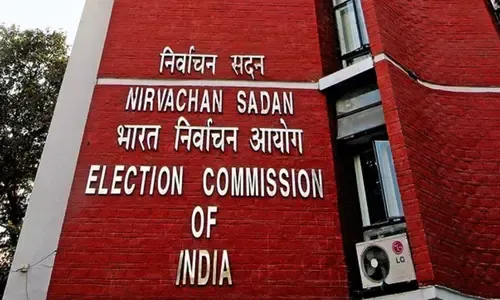
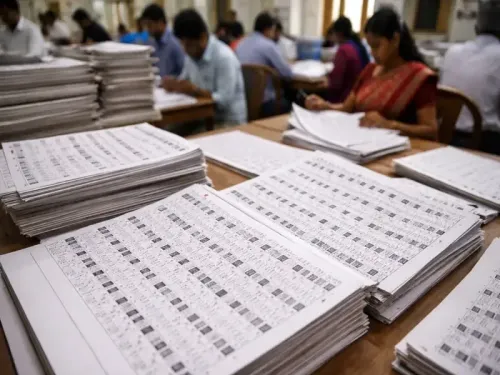
Kolkata, March 16 (NationPress) The process of judicial adjudication has been finalized for approximately one-third of the cases categorized under 'logical discrepancy' during the Special Intensive Revision (SIR) of electoral rolls in West Bengal, as stated by Chief Electoral Officer (CEO) Manoj Kumar Agarwal on Monday.
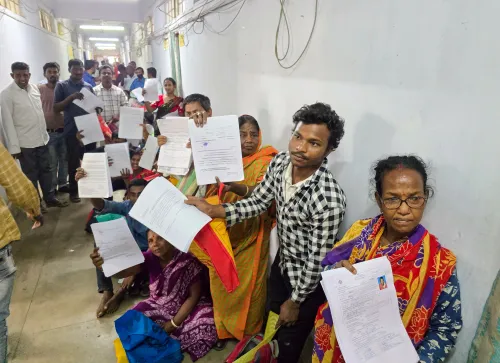
During a media briefing in Kolkata, Agarwal disclosed that just over 60 lakh cases were forwarded for judicial adjudication, with around 20 lakh cases having been processed so far.
He expressed optimism that, at the current rate of adjudication, the entire procedure is anticipated to conclude shortly.
Nonetheless, the CEO did not clarify how many of the 20 lakh cases adjudicated to date were deemed eligible for removal from the electoral rolls.
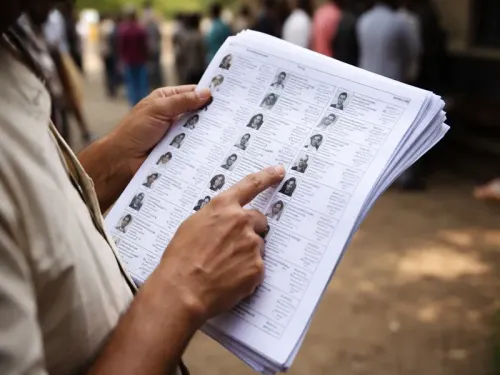
The final voters’ list for West Bengal was made public on February 28, omitting the cases that were under judicial review.
Supplementary lists will be generated based on the adjudication progress.
The initial supplementary list is expected to be released within the current month.
Officials noted that the final electoral roll published on February 28 excluded approximately 63 lakh names, identified as 'deceased', 'duplicate', 'shifted', or 'missing' voters.
In total, 60,06,675 cases were submitted for judicial adjudication.
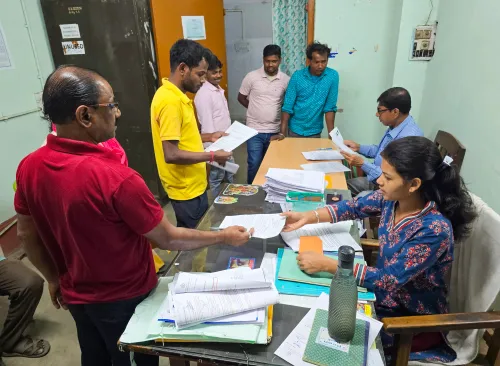
This adjudication is being carried out by 732 judicial officers, including around 100 from the neighboring states of Odisha and Jharkhand.
Officials have stated that these officers are working tirelessly to expedite the completion of this exercise.
The highest number of cases referred for adjudication originated from the minority-dominated districts of Murshidabad and Malda, which also border Bangladesh.
Additionally, significant numbers of cases were noted in North 24 Parganas and South 24 Parganas, which also share international borders with Bangladesh.
The two-phase Assembly elections in West Bengal are scheduled for April 23 and April 29.
Voting will take place for 152 constituencies in the first phase and 142 constituencies in the second phase.
Point of View
The completion of judicial adjudication for one-third of the cases signifies a proactive approach by the electoral authorities in West Bengal. This transparency is essential for maintaining the integrity of the electoral process, particularly ahead of crucial assembly elections.
NationPress
29 Sept 2026
Frequently Asked Questions
What is the Special Intensive Revision (SIR)?
The Special Intensive Revision (SIR) is a process undertaken for the thorough review and updating of electoral rolls to ensure their accuracy and integrity.
How many cases were referred for judicial adjudication?
A total of over 60 lakh cases were referred for judicial adjudication in West Bengal.
When will the supplementary lists be published?
The first supplementary list is expected to be released within the current month.
What are the main reasons for cases being referred for adjudication?
Cases are typically referred for adjudication due to discrepancies such as being identified as deceased, duplicate entries, or voters who have moved.
When are the Assembly elections scheduled in West Bengal?
The Assembly elections in West Bengal are scheduled for April 23 and April 29.