Is New Zealand's Critically Endangered Kakapo Ready for Its First Breeding Season in Four Years?
Synopsis
Excitement surrounds New Zealand's critically endangered kakapo as it approaches its first breeding season in four years. With hopes for record hatchings and innovative recovery strategies, this event marks a significant milestone for conservation efforts.
Key Takeaways
Kakapos are critically endangered and are entering their first breeding season since 2022.
There are hopes for the largest hatching in history.
The current kakapo population is 236, with 83 breeding-age females.
Innovative recovery strategies are being applied.
Initial chicks are expected to hatch by mid-February.
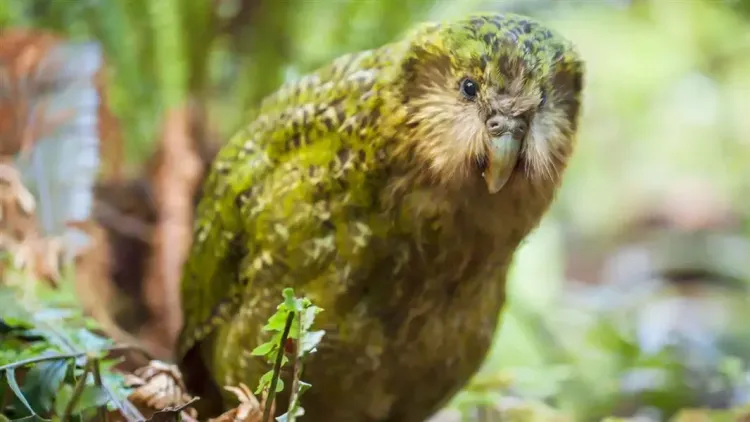
Wellington, Jan 6 (NationPress) New Zealand's critically endangered kakapo is set to begin its inaugural breeding season in four years, stirring optimism for what could become the largest hatching on record. Remote monitoring indicated that mating activities commenced on December 29, marking the formal initiation of this rare parrot's breeding period, as reported by the Department of Conservation (DOC).
"This year feels especially anticipated after such a significant hiatus since the last breeding season in 2022," commented DOC Kakapo Recovery Operations Manager Deidre Vercoe. She added that preparations are underway for what may be the most substantial breeding season since the program's inception three decades ago.
The flightless and nocturnal parrots only reproduce every two to four years, which correlates with the fruiting of native rimu trees as stated in the report. With most kakapo mothers typically nurturing a single chick per breeding season, 2026 might witness the highest number of chicks since record-keeping commenced, according to Xinhua news agency.
The total population of kakapo currently stands at 236 ahead of the breeding season, with 83 females of breeding age, as per statistical data.
The DOC, in collaboration with Ngai Tahu, the largest Maori tribe on New Zealand's South Island, has been jointly managing kakapo recovery since 1995, successfully increasing the population from a mere 51 birds. This season marks the 13th breeding event under this initiative.
A variety of lower-intervention strategies will be implemented across New Zealand's three remote southern breeding islands, focusing on the monitoring of genetically significant eggs and chicks, allowing more eggs to hatch in nests instead of incubators, and minimizing supplementary feeding.
The initial chicks are anticipated to hatch around mid-February, as per the DOC's announcement.
Point of View
The kakapo's upcoming breeding season is not just a routine event; it signifies a beacon of hope for conservation efforts in New Zealand. Our commitment to protecting this unique species reflects broader environmental stewardship. As the kakapo population rises from the brink of extinction, it serves as an example of what can be achieved when dedicated efforts converge.
NationPress
3 Oct 2026
Frequently Asked Questions
What is the current population of kakapo?
The current kakapo population stands at 236, including 83 breeding-age females.
Why do kakapos breed every two to four years?
Kakapos only breed when native rimu trees produce fruit, which occurs every two to four years.
How has the kakapo population been managed?
The Department of Conservation and Ngai Tahu have jointly managed kakapo recovery since 1995, rebuilding the population from just 51 birds.