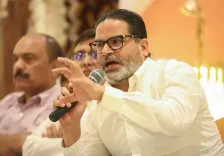
Kapil Mishra at Swanath Sammelan 2026: Every orphaned child deserves family, dignity
Synopsis
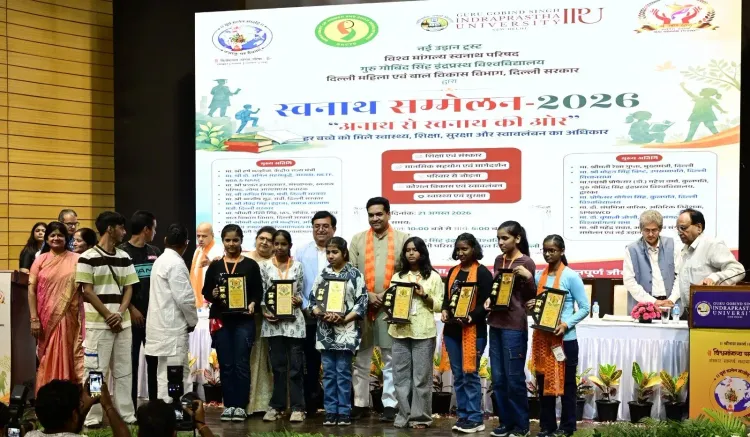
At the Swanath Sammelan-2026 in New Delhi, Delhi minister Kapil Mishra reframed the national development debate — arguing that roads and airports are not enough, and that bringing every orphaned child into the mainstream is a true measure of a society's progress. The call for capable families to step forward as caregivers adds a civic-action dimension rarely heard at government-backed child welfare events.
Key Takeaways
Delhi Cabinet Minister Kapil Mishra addressed the Swanath Sammelan-2026 in New Delhi on 21 August 2026 .
He called on capable families to come forward and provide Swanath (orphaned) children with family love, education, and values.
The event was jointly organised by Vishva Manav Sahayata Parishad , Guru Gobind Singh Indraprastha University , and the Delhi Government's Department of Women and Child Development .
Mishra linked child welfare to the Developed India by 2047 vision, saying infrastructure alone cannot achieve it.
He said the initiative is being driven under the leadership of PM Narendra Modi and CM Rekha Gupta .
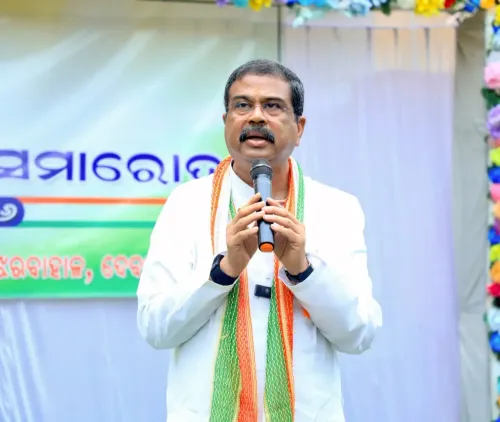
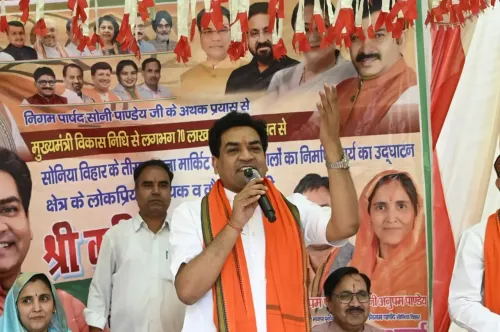
Delhi Cabinet Minister Kapil Mishra on Friday, 21 August 2026, called on society to collectively embrace orphaned and destitute children — referred to as Swanath children — by providing them family love, protection, education, and a sense of belonging. Speaking at the Swanath Sammelan-2026 in New Delhi, Mishra argued that true national progress cannot be measured by infrastructure alone, but by how many vulnerable children are brought into the mainstream.
Key Remarks at the Sammelan
Mishra stressed that every child must have the right to protection, education, security, and self-reliance, regardless of their background or circumstances. He said that if any section of society is being left behind, 'we still have a distance to cover.' He urged capable families to come forward and take responsibility for the education, upbringing, and values of children who lack parental support.
The minister also linked the cause to the national vision of a Developed India by 2047, asserting that large-scale infrastructure projects alone cannot achieve that goal. 'A developed India will emerge when every son and daughter of society becomes a part of the mainstream, and their capabilities can be utilised for the development of the country,' he said.
About the Swanath Sammelan
The conference — themed 'From Orphanhood to Swanath' — was organised by the Vishva Manav Sahayata Parishad in collaboration with Guru Gobind Singh Indraprastha University and the Delhi Government's Department of Women and Child Development. Discussions at the event covered child protection, family integration, education, security, and self-reliance for orphaned children.
Government's Stated Commitment
Mishra said the resolve to protect and mainstream Swanath children is being translated into reality under the leadership of Prime Minister Narendra Modi and Delhi Chief Minister Rekha Gupta. He framed the responsibility as not belonging to any single individual or organisation, but to society as a whole.
What This Signals
The Swanath Sammelan reflects a growing policy conversation around child welfare and family-based care as alternatives to institutional housing for orphaned children. Notably, the event brings together civil society, a central university, and a state government department — signalling an intent to build cross-institutional frameworks for child protection in the capital. The push aligns with the Centre's broader Mission Vatsalya framework, which emphasises family-based rehabilitation for children in need of care and protection.
Point of View
Not just GDP or infrastructure — is a rhetorically sharp pivot, but the Swanath Sammelan stops short of announcing any concrete policy instrument or budget allocation. The call for 'capable families' to step forward is meaningful only if backed by a structured foster care or sponsorship mechanism; without that, it risks remaining an aspirational appeal. India's child protection architecture, governed by the Juvenile Justice Act, already provides for foster care and sponsorship — the real question is why uptake remains low, and whether this event advances a measurable answer.
NationPress
6 Oct 2026
Frequently Asked Questions
What is the Swanath Sammelan-2026?
The Swanath Sammelan-2026 is a conference held in New Delhi focused on child protection, family integration, education, and self-reliance for orphaned and destitute children, referred to as Swanath children. It was organised by the Vishva Manav Sahayata Parishad in collaboration with Guru Gobind Singh Indraprastha University and the Delhi Government's Department of Women and Child Development.
What did Kapil Mishra say at the Swanath Sammelan?
Delhi Cabinet Minister Kapil Mishra said that every Swanath child deserves the right to protection, education, security, and self-reliance, and that bringing such children into the mainstream is a true measure of social development. He urged capable families in society to come forward and take responsibility for these children's upbringing and education.
Who organised the Swanath Sammelan-2026?
The event was organised by the Vishva Manav Sahayata Parishad in collaboration with Guru Gobind Singh Indraprastha University and the Delhi Government's Department of Women and Child Development.
How does the Swanath initiative connect to India's 2047 vision?
Minister Kapil Mishra argued that the goal of a Developed India by 2047 cannot be achieved through infrastructure projects alone. He said a truly developed India will emerge only when every child — including orphaned and destitute children — is brought into the mainstream and their capabilities are utilised for national development.
Who are Swanath children?
Swanath children refer to orphaned or destitute children who lack parental support, family protection, or a sense of belonging. The term, used in the context of this conference, describes children who need to be integrated into families and society to access education, security, and a dignified life.