How is India Reinforcing Its Commitment to Inclusive, Rights-Based Social Development at the UN?
Synopsis
India has taken a significant step by reaffirming its dedication to inclusive social development at a UN meeting. Minister Savitri Thakur emphasized rights-based approaches and national initiatives aimed at ensuring no one is left behind. This commitment reflects a vision for sustainable social justice and progress in line with India's long-term goals.
Key Takeaways
Commitment to Inclusive Development: India emphasizes a rights-based approach.
Gender Parity in Education: Initiatives to ensure equal participation of girls and boys.
Financial Inclusion: Millions of bank accounts established, focusing on women.
Comprehensive Health Programs: Targeting over 100 million beneficiaries.
Digital Infrastructure: Enhancing public service delivery and transparency.
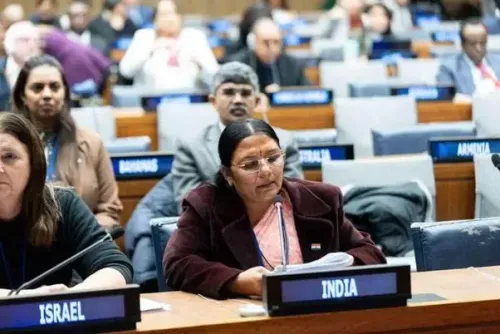
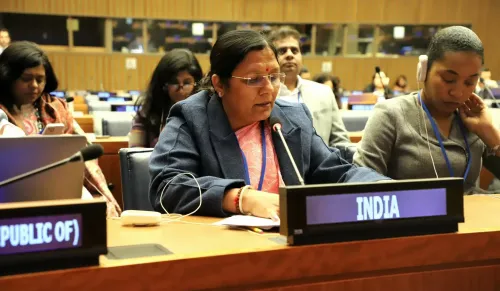
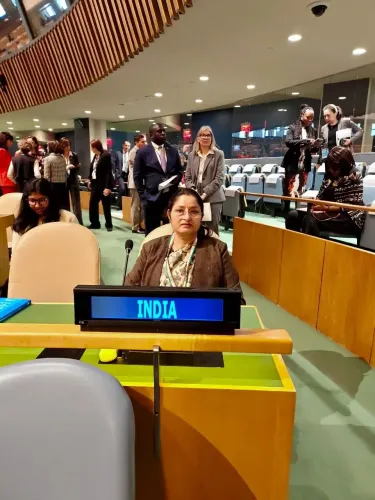
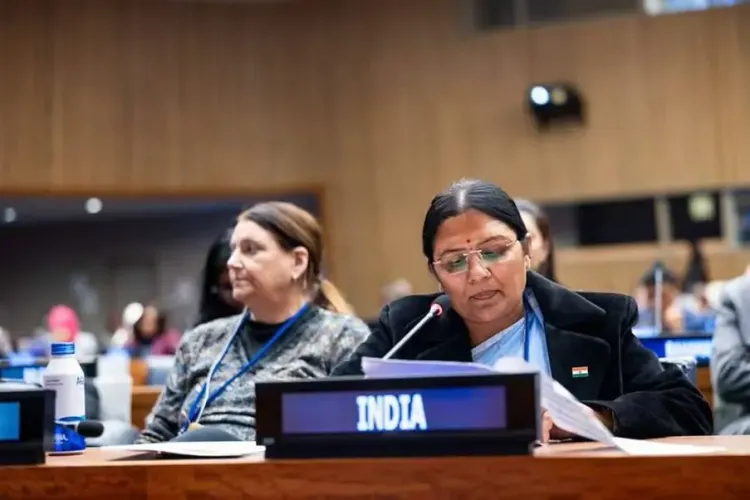
New Delhi, Feb 3 (NationPress) India has reaffirmed its unwavering commitment to inclusive and rights-based social development during the 64th Session of the Commission for Social Development held at the United Nations Headquarters in New York, as stated by the Ministry of Women and Child Development on Tuesday.
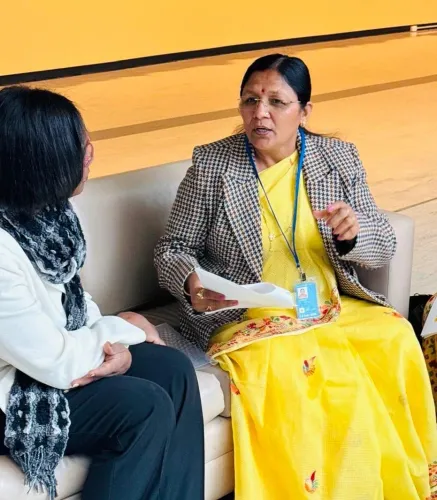
Leading the Indian delegation, Minister of State for Women and Child Development, Savitri Thakur, brought attention to India’s comprehensive rights-based approach that ensures no one is left behind.
She underscored that social justice and social protection in India are fundamentally based on constitutional guarantees and are in harmony with the nation’s long-term vision of “Viksit Bharat 2047”.
Thakur articulated the guiding principle of “Sabka Saath, Sabka Vikas”, which embodies a whole-of-government and whole-of-society strategy to make certain that everyone benefits.
Additionally, she presented a national statement focused on “advancing social developments and social justice through coordinated, equitable, and inclusive policies.”
The MoS highlighted essential national initiatives that demonstrate scale, inclusivity, and effective last-mile delivery, including gender parity in educational participation, bolstered by improved school infrastructure and residential schooling in remote areas.
Other key initiatives comprise the extensive expansion of basic services such as piped drinking water, clean cooking energy, and sanitation facilities, which significantly benefit women and marginalized communities.
Furthermore, Thakur emphasized transformative financial inclusion through the establishment of hundreds of millions of bank accounts, with women being the primary beneficiaries of entrepreneurship and credit schemes. She also elaborated on nationwide protection and support mechanisms for women and children, including dedicated helplines and integrated service centers.
Comprehensive maternal, child health, and nutrition programs have reached over 100 million beneficiaries, alongside expanded social security and targeted schemes for the elderly, persons with disabilities, unorganized workers, and transgender individuals.
The Minister also accentuated the importance of digital public infrastructure and Direct Benefit Transfers (DBT) in enhancing transparency, efficiency, and accountability in public service delivery.
Thakur asserted that global challenges necessitate collective responses and expressed support for enhanced multilateral cooperation, capacity building, and South-South collaboration to expedite progress on social development models.
Point of View
It is imperative to recognize India's ongoing commitment to social development as a holistic approach that integrates rights and inclusivity. The government's initiatives are aligned with constitutional guarantees, showcasing a progressive model that can serve as an inspiration globally.
NationPress
7 Oct 2026
Frequently Asked Questions
What is the significance of India's commitment to social development?
India's commitment to social development emphasizes inclusivity and rights for all citizens, ensuring no one is left behind and aligned with global standards.
Who leads the Indian delegation at the UN meeting?
The Indian delegation is led by Minister of State for Women and Child Development, Savitri Thakur.
What initiatives were highlighted by India at the UN?
Key initiatives include gender parity in education, expanded basic services, financial inclusion for women, and comprehensive health programs.
How does India plan to achieve its long-term vision?
India's long-term vision, 'Viksit Bharat 2047', focuses on social justice, protection, and sustainable development through inclusive policies.
What role does digital infrastructure play in India's social development?
Digital infrastructure enhances transparency and efficiency in public service delivery, particularly through Direct Benefit Transfers (DBT).