Is Social Justice the Key to Achieving Viksit Bharat Goals? India at the UN
Synopsis
During the UN Commission for Social Development, India's Minister Savitri Thakur emphasized that social justice is pivotal to realizing the Viksit Bharat vision by 2047. Highlighting extensive initiatives aimed at inclusion and equity, she reiterated India's commitment to fostering a society where dignity and opportunity are accessible to all.
Key Takeaways
Social justice is vital for India's Viksit Bharat goals.
Over 800 million people benefit from food security programs.
More than 550 million citizens receive free healthcare.
Grassroots democracy is reflected through 1.45 million elected women representatives.
India's approach integrates digital infrastructure for transparency and accountability.
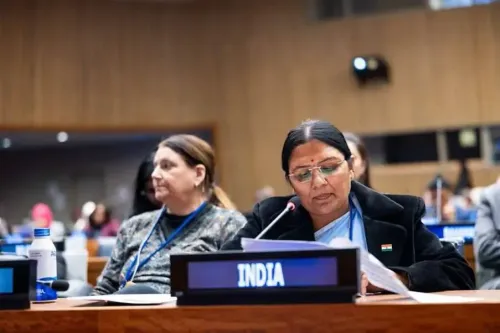
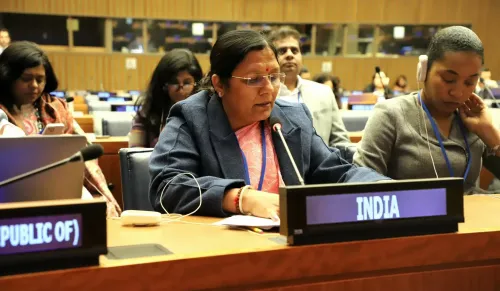
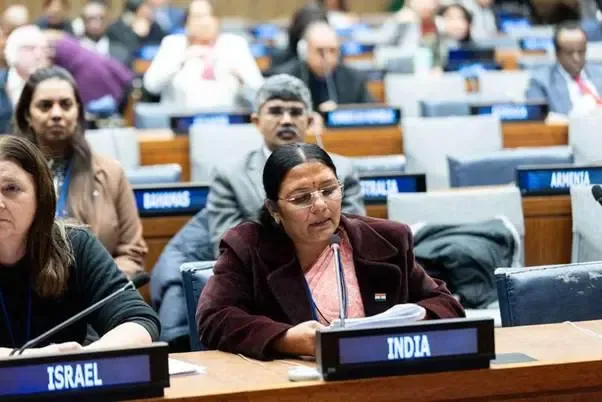
New Delhi, Feb 4 (NationPress) Social justice is integral to India's vision of Viksit Bharat, asserted Minister of State for Women and Child Development Savitri Thakur during the 64th session of the UN Commission for Social Development in New York, USA.
Leading the Indian delegation, Thakur emphasized the country's rights-based, inclusive, and people-centric development approach during the UN discussions.
“Social justice is fundamental to India's national vision of Viksit Bharat@2047,” stated the Minister.
Reflecting on the Copenhagen Declaration, which prioritizes people in development, and the Doha Political Declaration, which reaffirms this commitment amidst global challenges, Thakur highlighted that India's governance philosophy, 'Sabka Saath, Sabka Vikas', embodies a comprehensive approach to ensure dignity, equity, and opportunities for all.
Highlighting extensive social protection and inclusion measures, Thakur noted that over 800 million citizens benefit from food security programs.
Additionally, more than 550 million individuals have access to free healthcare through a broad network of health and wellness centers.
Moreover, affordable medications and medical devices are accessible through 16,000 Jan Arogya Kendras. Over 1.45 million elected women representatives are actively participating in local governance, showcasing India's dedication to grassroots democracy.
Initiatives like Beti Bachao Beti Padhao and Sukanya Samriddhi Yojana are enhancing education and financial security for girls.
Labour reforms are fostering equal pay, safe work environments, and increased participation of women in the workforce.
Furthermore, large-scale, collateral-free loans have empowered millions of women, entrepreneurs, and street vendors to engage in the formal economy.
Targeted programs such as SMILE are aiding in the rehabilitation and inclusion of transgender individuals and other marginalized groups.
“India’s development journey incorporates digital public infrastructure, direct benefit transfers, and citizen engagement, ensuring transparency and effective delivery,” Thakur remarked.
Reinforcing India’s civilizational principle of “Vasudhaiva Kutumbakam” — the world is one family — the Minister conveyed India's eagerness to bolster global partnerships and share its developmental experiences to promote social justice worldwide.
Point of View
It is crucial to recognize the significance of social justice in India's developmental agenda. The government's focus on inclusive policies and grassroots democracy reflects a commitment to address inequalities. By championing social justice, India not only aims for national progress but also positions itself as a leader in global social equity efforts.
NationPress
25 Sept 2026
Frequently Asked Questions
What is the Viksit Bharat initiative?
Viksit Bharat is India's vision aimed at achieving a developed nation status by 2047, focusing on inclusive growth, social justice, and equitable opportunities for all.
How many people are covered under India’s food security programs?
Over 800 million people are covered under India's food security programs, demonstrating the government's commitment to addressing hunger and ensuring food access.
What are some key initiatives mentioned by Savitri Thakur?
Key initiatives include Beti Bachao Beti Padhao, Sukanya Samriddhi Yojana, and the SMILE program, which focus on women's empowerment, education, and support for marginalized communities.
What does 'Sabka Saath, Sabka Vikas' mean?
'Sabka Saath, Sabka Vikas' translates to 'Together with all, development for all,' reflecting India's inclusive approach to governance and development.
What is the significance of the phrase 'Vasudhaiva Kutumbakam'?
'Vasudhaiva Kutumbakam' means 'the world is one family,' highlighting India's ethos of global unity and cooperation in addressing social justice issues.