Virendra Kumar Pushes for Last-Mile Social Justice Delivery at National Chintan Shivir
Synopsis
Union Minister Virendra Kumar wrapped up a 3-day National Chintan Shivir in Chandigarh with a landmark roadmap to fix last-mile delivery of social welfare schemes — targeting scholarships, disability certification, and senior citizen welfare for 300 million+ marginalized Indians under the Viksit Bharat@2047 vision.
Key Takeaways
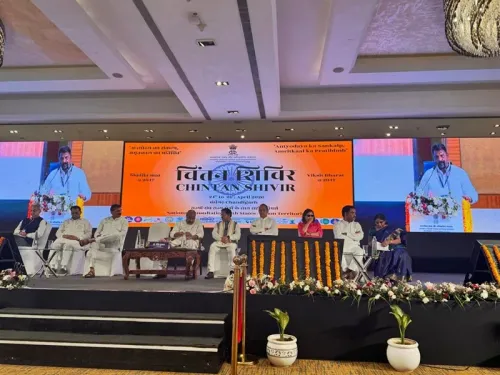
Union Minister Virendra Kumar chaired the three-day National Chintan Shivir in Chandigarh from April 24–26, 2025 on social justice delivery.
The conclave produced time-bound, actionable recommendations covering scholarships, disability certification, de-addiction, and senior citizen welfare.
The event was anchored in the national vision of "Viksit Bharat@2047" with a focus on Antyodaya — welfare of the last person in the queue.
The Ministry of Social Justice and Empowerment (DoSJE) launched new digital platforms and applications during the inaugural session on April 24 .
Participants called for a shift from scheme-centric to rights-based, universal design thinking in public infrastructure and digital services.
The Ministry will implement Shivir outcomes in close partnership with all States and Union Territories , with measurable ground-level benchmarks.
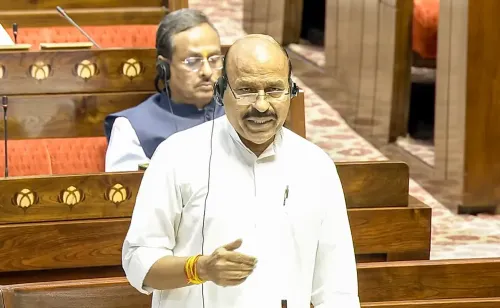
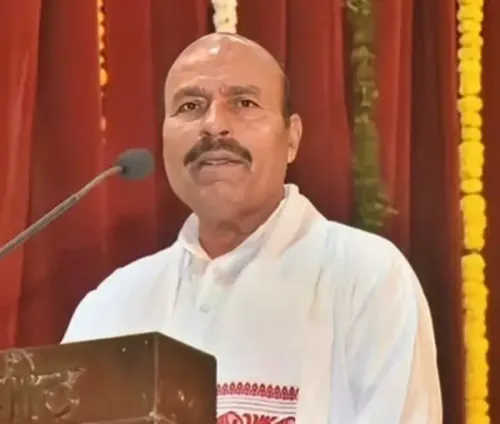
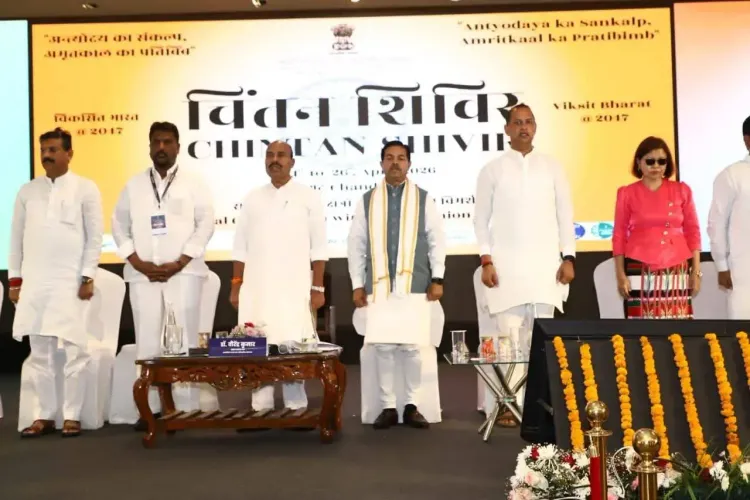
Union Minister for Social Justice and Empowerment Virendra Kumar chaired a landmark three-day National Chintan Shivir in Chandigarh from April 24 to 26, 2025, culminating in a unified set of time-bound, actionable recommendations aimed at strengthening last-mile delivery of social justice schemes across India. The conclave brought together representatives from the Centre, States, and Union Territories to collectively address gaps in social welfare implementation.
Vision Behind the National Chintan Shivir
The Shivir was anchored in the national resolve of "Antyodaya ka Sankalp, Amrit Kaal ka Pratibimb – Viksit Bharat@2047" — a guiding framework that places the welfare of the last person in the queue at the center of governance. Minister Virendra Kumar described the event as a "serious and result-oriented platform" that moved beyond broad policy rhetoric toward practical, ground-level solutions.
He emphasized that social justice delivery must be rooted in dignity, accessibility, and continuity — principles that the Ministry intends to embed into every scheme and implementation mechanism going forward.
Key Deliberations and Thematic Focus Areas
The three-day conclave followed a structured progression: the first day focused on vision, dignity, and accessibility; the second and third days featured intensive, theme-wise deliberations. The final session consolidated all outcomes into a forward-looking implementation roadmap.
Core areas of discussion included scholarship delivery reform, de-addiction programs, senior citizen welfare, disability certification, and inclusion-linked support systems for vulnerable communities. These are sectors where beneficiaries — often from Scheduled Castes, Scheduled Tribes, Other Backward Classes, and persons with disabilities — frequently fall through administrative cracks.
Notably, the third day opened with a yoga session, followed by a thematic breakfast titled "Jagrukta se Sulabhata – Awareness to Accessibility under DoSJE". Participants called for a shift from scheme-centric thinking to a rights-based, universal design approach — one that treats accessibility as integral to all public infrastructure, services, and digital platforms.
Technology-Driven Governance at the Forefront
A significant thrust of the Shivir was the role of technology-enabled governance in bridging delivery gaps. Minister Virendra Kumar highlighted the Ministry of Social Justice and Empowerment's (DoSJE) ongoing digital and institutional initiatives, including new platforms and applications that were formally launched during the inaugural session on April 24.
The Minister underscored the need for process simplification, robust monitoring mechanisms, and stronger Centre-State coordination to ensure that welfare schemes reach intended beneficiaries without leakage or delay. This aligns with the broader Digital India push and the government's emphasis on Direct Benefit Transfer (DBT) as a tool to eliminate middlemen in welfare disbursement.
Why Last-Mile Delivery Remains a Critical Challenge
Despite India allocating significant budgetary resources to social welfare, last-mile delivery has historically been the weakest link. According to government data, a substantial proportion of scholarship beneficiaries face delays due to documentation bottlenecks, banking access issues, and inter-departmental coordination failures — problems that disproportionately affect first-generation learners and rural applicants.
The Ministry of Social Justice and Empowerment oversees schemes covering over 300 million Indians from marginalized communities. Critics have long argued that while scheme design is often robust, implementation at the district and block level remains inconsistent, with states varying widely in absorption capacity and administrative efficiency.
This Shivir represents a structured attempt to institutionalize best practices across states — a model that, if followed through, could reduce the gap between policy intent and on-ground impact.
Road Ahead: Implementation and Accountability
Minister Virendra Kumar confirmed that the Ministry of Social Justice and Empowerment will take forward the Shivir's outcomes in close partnership with States and Union Territories, with a continued emphasis on inclusion, empowerment, and measurable ground-level outcomes for India's poorest and most vulnerable citizens.
The recommendations are expected to feed into revised implementation frameworks for flagship schemes under DoSJE, with monitoring benchmarks likely to be established for each thematic area discussed. The Ministry is expected to release a formal action plan in the coming weeks, with timelines attached to each recommendation emerging from the three-day conclave.
Point of View
But its real test lies not in the eloquence of its resolutions — it lies in execution. India has a long history of well-designed welfare schemes that hemorrhage at the last mile due to bureaucratic inertia, digital exclusion, and inter-departmental turf wars. The Ministry's emphasis on technology and Centre-State coordination is directionally correct, but without legally binding timelines, independent audits, and grievance redressal mechanisms with teeth, this roadmap risks becoming another policy document that gathers dust. The 300 million Indians it targets deserve more than well-intentioned conclaves — they deserve accountability.
NationPress
22 Sept 2026
Frequently Asked Questions
What was the National Chintan Shivir held in Chandigarh about?
The National Chintan Shivir, held from April 24 to 26, 2025 in Chandigarh, was a three-day policy conclave led by Union Minister Virendra Kumar to strengthen last-mile delivery of social justice and welfare schemes. It brought together representatives from the Centre, States, and Union Territories to develop actionable, time-bound recommendations.
Who led the National Chintan Shivir on social justice in April 2025?
Union Minister for Social Justice and Empowerment Virendra Kumar led the National Chintan Shivir. He chaired the deliberations and outlined the Ministry's commitment to dignity, accessibility, and measurable outcomes for marginalized communities.
What are the key outcomes of the Chintan Shivir on social welfare?
The Shivir produced a forward-looking roadmap covering scholarship delivery reform, de-addiction, senior citizen welfare, disability certification, and inclusion-linked support systems. The Ministry of Social Justice and Empowerment plans to implement these recommendations in partnership with States and UTs.
Why is last-mile delivery of social welfare schemes a problem in India?
Last-mile delivery failures in India stem from documentation bottlenecks, poor banking access, inter-departmental coordination gaps, and inconsistent state-level implementation capacity. These issues disproportionately affect rural beneficiaries, first-generation learners, persons with disabilities, and other marginalized groups.
What is the Viksit Bharat 2047 vision linked to the Chintan Shivir?
Viksit Bharat@2047 is India's national development vision targeting a fully developed nation by its centenary of independence. The Chintan Shivir was anchored in this vision under the theme 'Antyodaya ka Sankalp, Amrit Kaal ka Pratibimb', emphasizing that inclusive social justice is foundational to achieving that goal.