Telangana Welfare Model Hailed as National Benchmark at Chintan Shivir 2026
Synopsis
Telangana's welfare minister Adluri Laxman Kumar showcased the state's Rs 31,763 crore SC Sub Plan spending and landmark SC Rationalisation of Reservations Act at Chintan Shivir 2026 in Chandigarh, positioning Telangana as India's leading model for Dalit empowerment and social justice governance.
Key Takeaways
Telangana Welfare Minister Adluri Laxman Kumar presented the state's welfare model as a national benchmark at Chintan Shivir 2026 in Chandigarh on April 26, 2025 .
The state has spent Rs 31,763.63 crore under the SC Sub Plan (SCSDF Act) since December 2023 , with Rs 40,231.62 crore allocated for 2025–26 .
Rs 574.74 crore was spent on Post-Matric Scholarships benefiting 3.39 lakh students ; Rs 628.42 crore allocated for SC hostels covering 2.26 lakh students .
Ambedkar Overseas Education Fund , Rs 103.49 crore supported 564 students studying abroad.
The Telangana SC Rationalisation of Reservations Act, 2025 was enacted to ensure fair distribution of reservation benefits among Dalit sub-communities.
The Social Welfare Department has been renamed the SC Development Department , reflecting a focused institutional shift toward targeted Dalit advancement.
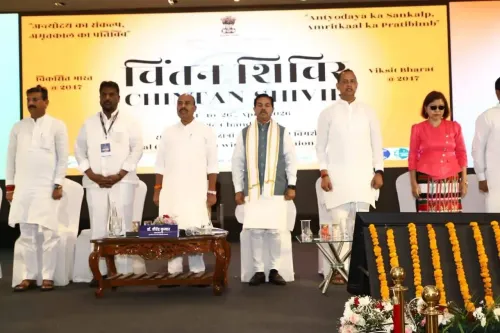
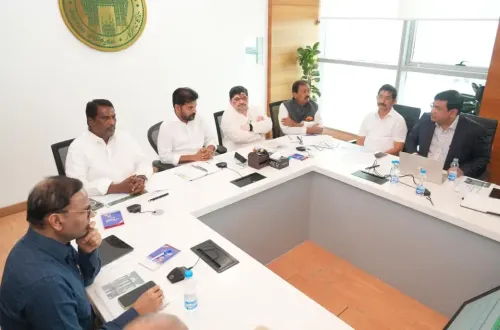
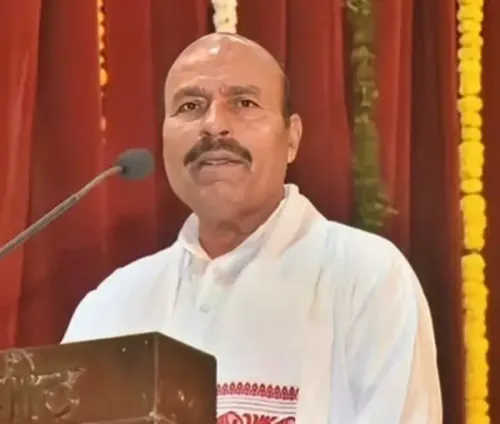
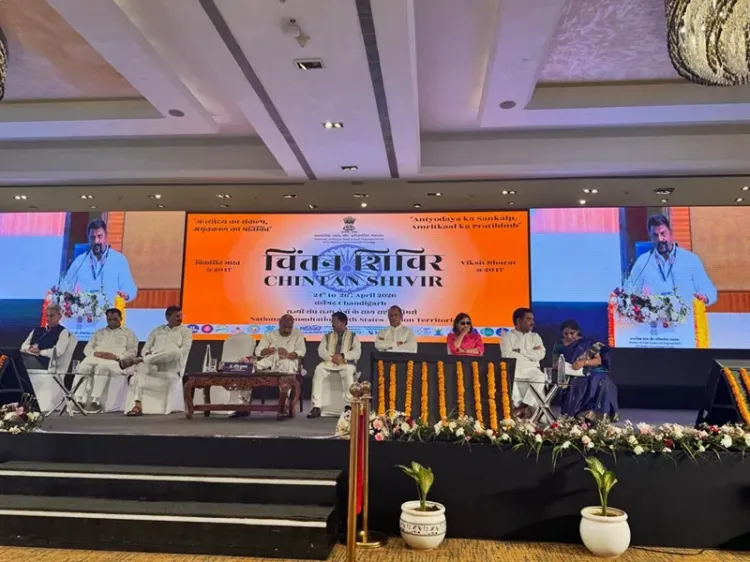
Hyderabad, April 26: Telangana's ambitious and inclusive welfare framework has drawn national recognition at Chintan Shivir–2026, where Welfare Minister Adluri Laxman Kumar presented the state's model as a replicable blueprint for social justice governance across India. Speaking at the conclave organised by the Union Ministry of Social Justice and Empowerment in Chandigarh on Sunday, April 26, the minister outlined a sweeping array of schemes benefiting millions of marginalised citizens — from Dalit students to inter-caste couples to aspiring civil servants.
Chintan Shivir 2026: A National Forum for Social Justice
The Chintan Shivir–2026 brought together ministers and senior officials from across the country to deliberate on critical issues including effective delivery of welfare schemes and the holistic development of Scheduled Castes (SCs), Scheduled Tribes (STs), Backward Classes (BCs), persons with disabilities, senior citizens, and transgender persons.
Minister Laxman Kumar emphasised that under the leadership of Chief Minister A. Revanth Reddy, Telangana is pursuing a governance model anchored in equity, empowerment, and dignity — a framework he described as a long-term investment in human capital rather than a fiscal burden.
He called for stronger coordination between the Centre and States in advancing social justice and advocated for wider adoption of digital governance tools to improve transparency and speed in welfare delivery.
Key Welfare Expenditures and Beneficiary Data
Telangana has made significant financial commitments across multiple welfare verticals. The state spent Rs 574.74 crore on Post-Matric Scholarships, benefiting 3.39 lakh students, and Rs 66.31 crore on Pre-Matric Scholarships covering 73,666 students.
Under the Dr B.R. Ambedkar Overseas Education Fund, Rs 103.49 crore has been disbursed to support 564 students pursuing higher education abroad — a targeted intervention aimed at breaking generational cycles of poverty through global exposure.
The TG SC Study Circles received Rs 24.53 crore, enabling 2,426 aspirants to receive coaching for competitive examinations, including Civil Services. SC hostels received Rs 628.42 crore, providing 2.26 lakh students with free accommodation, food, and allied facilities.
Social Integration and Entrepreneurship Schemes
Under the Kalyana Lakshmi scheme, financial assistance worth Rs 476.15 crore has been extended to 47,539 beneficiaries, easing marriage expenses for economically weaker sections. Additionally, Rs 43.06 crore in incentives were provided to 1,723 inter-caste couples, promoting social integration at the grassroots level.
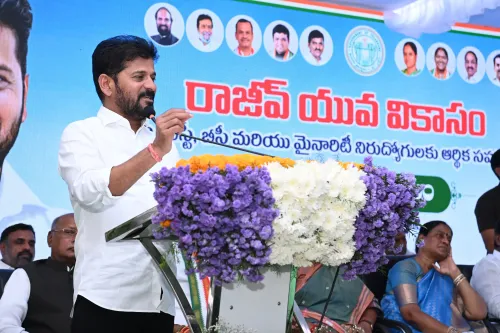
The Rajiv Yuva Vikasam initiative is driving self-employment and entrepreneurship through bank-linked and non-bank subsidy schemes, alongside skill development and enterprise training programmes aimed at fostering financial independence among youth from marginalised communities.
SC Sub Plan and Legal Protections
In a major fiscal commitment, Telangana has spent Rs 31,763.63 crore under the SC Sub Plan (SCSDF Act) since December 2023, with a budget allocation of Rs 40,231.62 crore earmarked for 2025–26. This scale of investment underscores the state's structural approach to Dalit empowerment, going beyond symbolic gestures.
The minister also highlighted strict enforcement of the SC/ST (Prevention of Atrocities) Act and the Protection of Civil Rights Act, supported by special courts and mobile courts — a dual-track approach combining economic upliftment with legal protection.
In a landmark legislative reform, Telangana has enacted the Telangana SC Rationalisation of Reservations Act, 2025, designed to ensure equitable distribution of reservation benefits among diverse Dalit sub-communities — a move that addresses long-standing intra-community disparities.
Renaming SC Department: Symbolic or Substantive?
The state's decision to rename the Social Welfare Department as the SC Development Department signals a sharpened institutional focus on Dalit advancement. Minister Laxman Kumar noted this nomenclature shift reflects the government's intent to move from generic welfare delivery to targeted, community-specific development outcomes.
This comes amid growing national debate on the efficacy of welfare schemes reaching their intended beneficiaries — a challenge that Telangana claims to be addressing through digital governance and direct benefit transfers. As other states benchmark their own models against Telangana's framework, the outcomes of the Chintan Shivir–2026 deliberations are expected to shape the Union Ministry's policy roadmap for social justice delivery heading into the next financial year.
Point of View
231 crore SC Sub Plan allocation for 2025–26 is one of the largest state-level commitments to Dalit welfare in recent memory, but the real test lies in ground-level delivery and leakage prevention. The SC Rationalisation of Reservations Act 2025 is particularly significant — it directly addresses intra-Dalit inequities that mainstream political discourse has long avoided. If implemented transparently, Telangana could set a constitutional and legislative precedent that forces other states to confront uncomfortable questions about who reservation benefits actually reach.
NationPress
2 Oct 2026
Frequently Asked Questions
What is Chintan Shivir 2026 and why was it held?
Chintan Shivir 2026 is a national conclave organised by the Union Ministry of Social Justice and Empowerment in Chandigarh to deliberate on welfare delivery, social justice, and development of SCs, STs, BCs, and other marginalised groups. Ministers and senior officials from across India participated to exchange best practices and align policy frameworks.
How much has Telangana spent on SC welfare since December 2023?
Telangana has spent Rs 31,763.63 crore under the SC Sub Plan (SCSDF Act) since December 2023. The state has further allocated Rs 40,231.62 crore for the financial year 2025–26.
What is the Telangana SC Rationalisation of Reservations Act 2025?
The Telangana SC Rationalisation of Reservations Act, 2025 is a landmark legislation aimed at ensuring equitable distribution of reservation benefits among different Dalit sub-communities within the state. It addresses long-standing disparities in how reservation advantages are accessed across diverse SC groups.
What is the Dr B.R. Ambedkar Overseas Education Fund in Telangana?
The Dr B.R. Ambedkar Overseas Education Fund supports SC students pursuing higher education abroad. Telangana has spent Rs 103.49 crore under this scheme, benefiting 564 students who are studying at international institutions.
What is the Kalyana Lakshmi scheme in Telangana?
The Kalyana Lakshmi scheme provides financial assistance to economically weaker SC families to meet marriage expenses. Telangana has extended Rs 476.15 crore in benefits to 47,539 beneficiaries under this scheme, alongside Rs 43.06 crore in incentives for 1,723 inter-caste couples.