Karnataka Apartment Ownership Bill 2026: Key rights for residents explained
Synopsis
Karnataka's new Apartment Ownership Bill doesn't just tweak existing rules — it scraps a framework unchanged since 1972 and rebuilds it from scratch. One RWA per complex, developers locked out of common areas, and a 75% owner vote required for redevelopment — with dissenters compensated at twice market value. For millions of flat owners in Bengaluru and beyond, this is the most consequential housing legislation the state has seen in a generation.
Key Takeaways
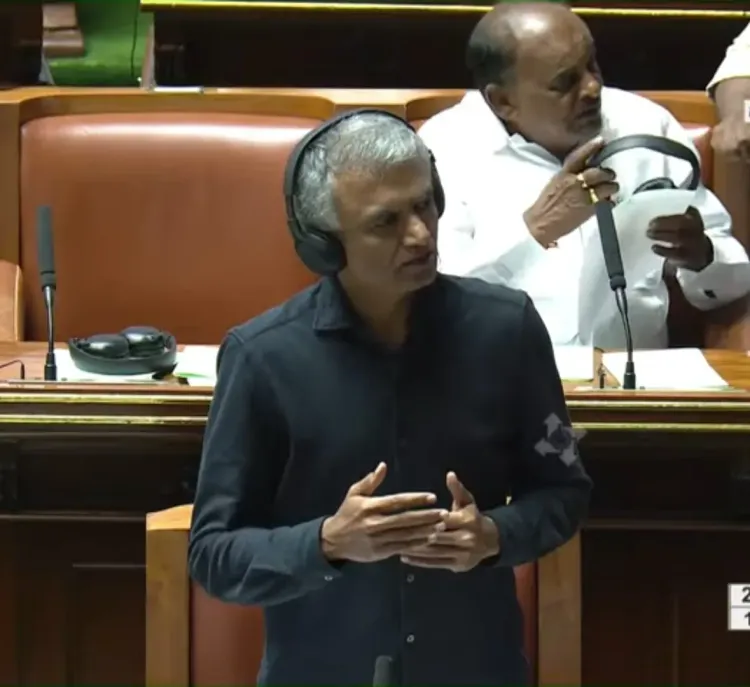
The Karnataka Apartment (Ownership and Management) Bill, 2026 was introduced in the Legislative Assembly on 21 August 2026 by Bengaluru Development Minister Krishna Byre Gowda .
Every apartment project must have exactly one registered Residents' Welfare Association (RWA) ; parallel associations under other laws are prohibited.
Developers are barred from selling, transferring, or altering common areas, roads, and open spaces , which must be handed over to the RWA.
Redevelopment of old buildings requires consent of at least 75 per cent of apartment owners; dissenting owners are entitled to twice the prevailing market value .
Competent Authorities and Appellate Authorities with Civil Court powers will be appointed at Gram Panchayat , municipality, and corporation levels for dispute resolution.
The Bill replaces laws dating to 1972–73 and was drafted after multiple rounds of public and stakeholder consultation.
The Karnataka government on Friday, 21 August 2026 introduced the Karnataka Apartment (Ownership and Management) Bill, 2026 in the Legislative Assembly, aiming to establish clearly defined statutory rights for apartment residents and resolve long-standing disputes between owners, associations, and developers. Bengaluru Development Minister Krishna Byre Gowda presented the legislation, calling it a comprehensive overhaul of a legal framework that has remained largely unchanged since 1972–73.
Why the Existing Law Falls Short
Minister Byre Gowda argued that rapid urbanisation has rendered older statutes inadequate. 'As our cities grow, land has become an increasingly scarce and valuable resource. As a result, apartment living has become the preferred choice for a large number of citizens. However, the existing laws, some of which date back to 1972–73, along with the regulatory framework under RERA, have not been adequate to address many of the complex issues that have emerged in today's rapidly expanding apartment sector,' he said.
The absence of a unified legal mechanism had, according to the Minister, led to multiple competing residents' associations within single complexes, unresolved disputes over common areas, and no clear pathway for redeveloping ageing buildings.
Key Provisions of the Bill
Every apartment project will be required to have exactly one registered Residents' Welfare Association (RWA), governed exclusively under the new legislation. The Bill explicitly prohibits the formation of parallel associations under any other law — a direct response to disputes caused by the coexistence of two or three associations in certain complexes.
Developers will be barred from privately selling, transferring, or altering common areas, roads, and open spaces. Management and maintenance of these shared assets must be handed over to the residents' association, giving flat owners greater legal clarity and control.
For dispute resolution, the Bill proposes the appointment of Competent Authorities and Appellate Authorities at the local level — spanning Gram Panchayats, municipalities, and municipal corporations — vested with powers equivalent to those of a Civil Court.
Redevelopment Framework
The legislation introduces, for the first time, a definitive legal framework for the redevelopment of structurally deteriorated apartment buildings. Redevelopment will require the consent of at least 75 per cent of apartment owners. Where an owner withholds consent, the Bill provides for acquisition of their property at twice the prevailing market value, based on an independent valuation — ensuring enhanced compensation for dissenting owners while allowing redevelopment to proceed.
How the Bill Was Drafted
Minister Byre Gowda noted that the legislation emerged from an extensive multi-stage consultation process. An initial meeting with apartment residents was held when D.K. Shivakumar served as Deputy Chief Minister, followed by a second round of stakeholder consultations approximately two months before the Bill's introduction. The draft was subsequently placed in the public domain for wider feedback before being finalised. 'After considering the feedback received from the public, a comprehensive and mature Bill has now been prepared and introduced in the Assembly,' he said.
What Comes Next
The Bill must clear both Houses of the Karnataka Legislature before receiving gubernatorial assent. If passed, it is expected to reshape the governance of apartment complexes across the state — from Bengaluru's high-rise corridors to smaller urban centres — bringing greater accountability to a sector that has grown rapidly but operated under fragmented oversight for decades.
Point of View
Yet residents have operated under a 1972-era patchwork. The single-RWA mandate and the developer lockout on common areas address the two most exploited grey zones in the sector. The redevelopment clause is the real test: a 75% consent threshold is workable, but the 'twice market value' acquisition mechanism for dissenters will face legal challenge, and its enforceability remains untested. If the Bill passes without dilution, it could become a template for other high-density states — Maharashtra and Tamil Nadu face near-identical apartment governance failures.
NationPress
5 Oct 2026
Frequently Asked Questions
What is the Karnataka Apartment (Ownership and Management) Bill, 2026?
It is a legislation introduced in the Karnataka Legislative Assembly on 21 August 2026 to establish statutory rights for apartment residents, mandate a single Residents' Welfare Association per complex, restrict developer control over common areas, and provide a legal framework for redevelopment of old buildings. It replaces a legal framework largely unchanged since 1972–73.
Why does Karnataka need a new apartment law?
The existing laws, some dating to 1972–73, and the RERA framework have not kept pace with rapid urbanisation, leading to multiple competing associations within single complexes, unresolved disputes over common areas, and no clear mechanism for redeveloping ageing buildings. The new Bill aims to close these gaps.
What are the rules for redeveloping old apartment buildings under the Bill?
Redevelopment requires the consent of at least 75 per cent of apartment owners. If an owner does not consent, the Bill provides for acquisition of their property at twice the prevailing market value based on an independent valuation, allowing redevelopment to proceed while compensating dissenters.
How will apartment disputes be resolved under the new law?
The Bill proposes Competent Authorities and Appellate Authorities at the local level — covering Gram Panchayats, municipalities, and municipal corporations — with powers equivalent to those of a Civil Court, giving residents an accessible institutional mechanism for dispute resolution.
Who is affected by the Karnataka Apartment Ownership Bill?
All apartment owners, residents, and developers operating in Karnataka are affected. The Bill governs the formation of Residents' Welfare Associations, the management of common areas, and the process for redevelopment, applying to apartment projects across Bengaluru and other urban centres in the state.