Karnataka's Bold Plan to Alleviate Bengaluru's Traffic Crisis
Synopsis
Deputy Chief Minister D.K. Shivakumar reveals a transformative plan to tackle Bengaluru's traffic woes, including the development of a township in Bidadi, enhanced Metro services, and innovative infrastructure solutions.
Key Takeaways
Ambitious roadmap aims to decongest Bengaluru.
New township development in Bidadi is a key focus.
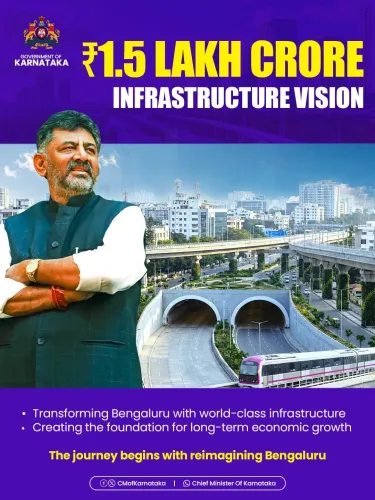
Infrastructure investment projected at Rs 1.5 lakh crore.
Plans to enhance Metro services and construct elevated corridors.
Waste management contracts streamlined for better efficiency.
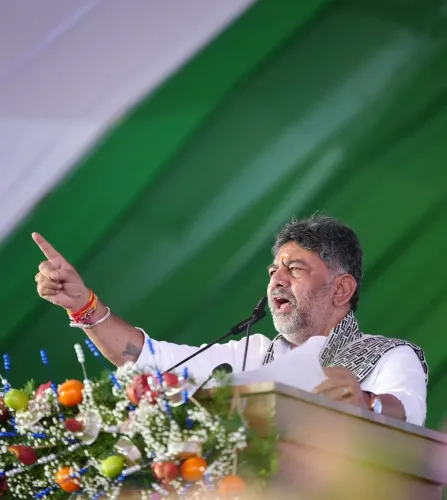
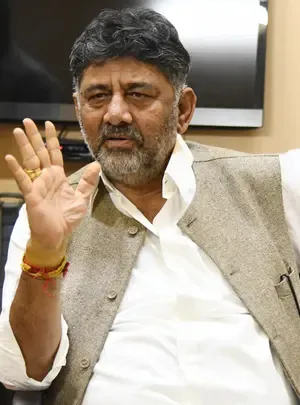
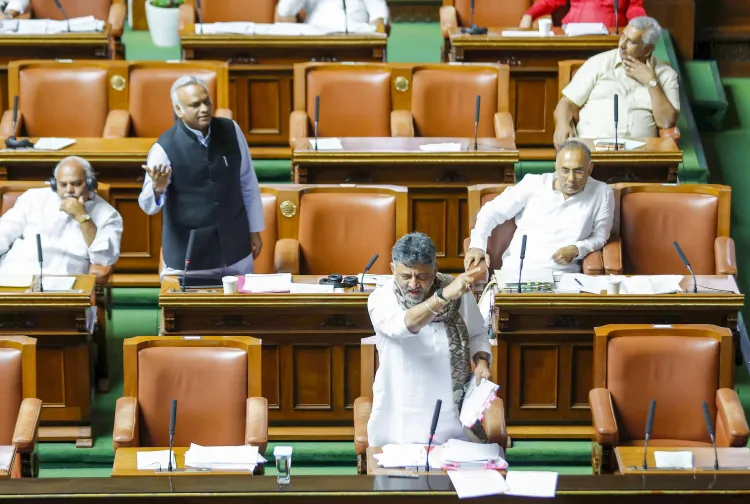
Bengaluru, March 26 (NationPress) Deputy Chief Minister D.K. Shivakumar, who also holds the position of Bengaluru Development Minister, unveiled an ambitious strategy on Thursday aimed at alleviating congestion in Bengaluru. This plan includes the creation of a township in Bidadi, the construction of elevated corridors and tunnel roads, as well as the enhancement of Metro services, during a discussion in the Legislative Assembly about Greater Bengaluru.
In response to BJP MLA S. Suresh Kumar’s proposal for developing alternative cities beyond Bengaluru, Shivakumar confirmed that the government has revived plans to establish a township at Bidadi to relieve the city's burden.
He mentioned that proposals for Nandagudi, Solur, and Bidadi were previously shelved but have now been reinstated. Bidadi was chosen due to its sufficient water resources, and discussions regarding an AI City on 8,000 acres will be held in the Cabinet.
Shivakumar reiterated the necessity of establishing a second airport in the southern part of Bengaluru.
On the topic of waste management, he criticized the former government for its inability to effectively combat the 'garbage mafia.' He noted that the current administration has streamlined waste management contracts from 89 packages down to 33, now approaching completion.
Initially, four sites were earmarked for waste disposal; however, due to land constraints, the plan has been narrowed down to two locations: NICE land and an existing site in Doddaballapura.
In terms of infrastructure, Shivakumar announced the imminent launch of a 109 km elevated corridor project. He also unveiled plans to construct 300 km of buffer roads alongside stormwater drains, with partial land support from the Defence Ministry.
A double-decker road model, already in operation in Jayanagar, is set to be expanded to 40 km, with costs shared between Bengaluru Metro Rail Corporation Limited and the city's civic body.
Emphasizing the scale of planned investments, he stated that projects valued at Rs 1.5 lakh crore are being prepared to elevate Bengaluru to a world-class city status. The Metro network is projected to extend to 350 km in the near future.
Shivakumar recognized that traffic congestion is a significant challenge, yet argued that Bengaluru is often unfairly targeted despite facing worse conditions in cities such as Mumbai, Hyderabad, and Delhi.
He highlighted that roads only make up 8 percent of the city’s land area, complicating expansion efforts, especially after the 2013 land acquisition law that imposed higher compensation.
To tackle this issue, the government is advancing the Bengaluru Business Corridor project, with 80 percent of land acquisition for the first phase already approved. Tenders will be issued soon, and this project is anticipated to drastically reduce congestion.
He also expressed gratitude to HUDCO for providing Rs 26,000 crore in funding.
Furthermore, Shivakumar stressed the importance of tunnel roads, describing them as the only feasible solution within the city. He estimated construction costs to be around Rs 700-800 crore per km, significantly lower than costs in other states, and highlighted their potential role in alleviating traffic in the long run.
Shivakumar noted that when he previously served as Minister, Bengaluru's population was 7 million; it has now surged to 10.4 million, with 13 million vehicles currently on the roads. He acknowledged that traffic congestion is a serious concern.
He pointed out that in most major cities, roads constitute about 16 percent of the total area and are relatively wider. However, Bengaluru, being an unplanned city, has only 8 percent of its area dedicated to roads. Within this limited space, an astonishing 13 million vehicles are competing for passage, leading to severe congestion.
Point of View
The approach taken by Deputy Chief Minister D.K. Shivakumar reflects a proactive strategy that prioritizes the well-being of residents while aiming to elevate Bengaluru's status as a global city.
NationPress
26 Sept 2026
Frequently Asked Questions
What are the main components of Bengaluru's decongestion plan?
The plan includes developing a township in Bidadi, constructing elevated corridors and tunnel roads, and expanding Metro services.
How will waste management be improved in Bengaluru?
The government has streamlined waste management contracts from 89 packages to 33 and finalized plans for two waste disposal sites due to land constraints.
What is the projected cost of the new infrastructure projects?
The planned investments for transforming Bengaluru amount to Rs 1.5 lakh crore.
When will the new elevated corridor project be launched?
The 109 km elevated corridor project is set to be launched soon.
What population growth has Bengaluru experienced recently?
Bengaluru's population has grown from 7 million to 10.4 million, leading to increased traffic congestion.