Raghav Chadha Raises Alarm on Traffic Congestion; Proposes National Urban Decongestion Mission
Synopsis
Raghav Chadha, an AAP MP, warns of the severe economic impacts of traffic congestion in major Indian cities and advocates for a National Urban Decongestion Mission to address the crisis. His insights highlight the urgent need for action to improve urban mobility and productivity.
Key Takeaways
Traffic congestion is a growing crisis affecting major Indian cities.
Raghav Chadha advocates for a National Urban Decongestion Mission.
Commuters lose significant hours annually stuck in traffic.
Economic growth is threatened by persistent traffic issues.
Immediate action is needed to improve urban mobility.
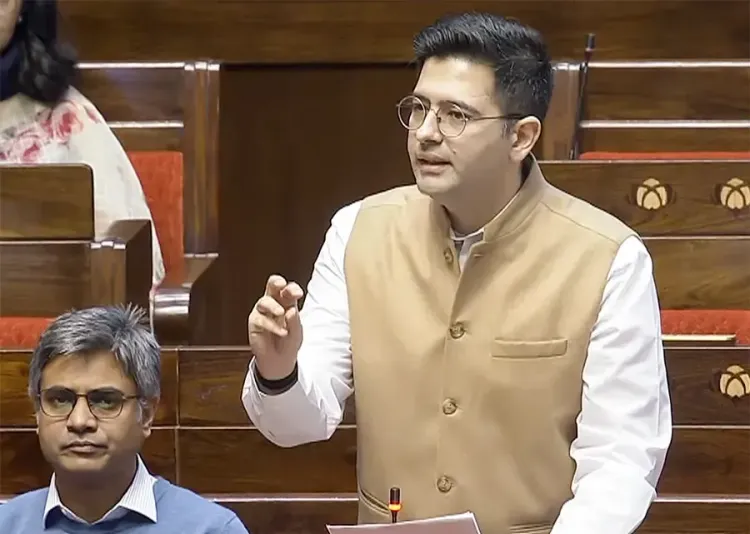
New Delhi, March 27 (NationPress) Aam Aadmi Party (AAP) Member of Parliament Raghav Chadha expressed grave concerns on Friday regarding the escalating issue of traffic congestion in India's bustling metropolitan areas, advocating for the establishment of a National Urban Decongestion Mission to tackle this pressing dilemma.
During his address in the upper house of Parliament focusing on urban challenges, Chadha remarked that traffic congestion has effectively transformed major cities into "massive parking lots," where commuters often find themselves spending extensive amounts of their lives ensnared in traffic rather than reaching their desired locations.
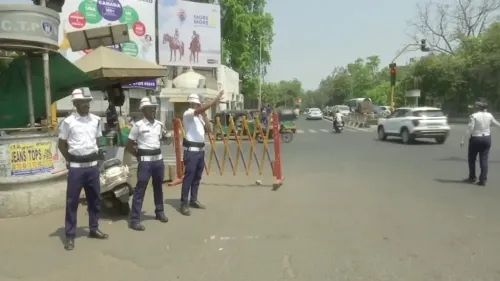
He emphasized the severity of the problem, citing critical congestion hotspots in cities like Delhi, Kolkata, Bengaluru, Mumbai, Pune, and Chennai. In Delhi, he pinpointed areas such as the Ring Road, Ashram Chowk, Dhaula Kuan, and the NH-8 stretch from Delhi to Gurgaon. For Kolkata, he highlighted A.J.C. Bose Road and Chowringhee Road as significant traffic bottlenecks. In Bengaluru, the Silk Board Junction and Outer Ring Road were flagged, while in Mumbai, areas like Andheri, Bandra, and Fort were identified as chronic congestion zones.
"When caught in such places, it doesn’t feel like driving; it feels more like being in a prolonged parking lot," Chadha stated, adding that many commuters are now compelled to work from their cars, participating in virtual office meetings due to enduring traffic jams.
He stressed that traffic congestion extends beyond mere inconvenience, posing a substantial economic threat. Chadha referenced statistics indicating that an average commuter in Bengaluru spends around 168 hours a year in traffic, followed by Pune with 152 hours, Mumbai with 126 hours, Kolkata with about 110 hours, Delhi with approximately 104 hours, and Chennai nearing 100 hours.
"On average, individuals are losing 100 to 168 hours annually stuck in traffic—not commuting, just waiting. Every hour lost is an hour that India cannot reclaim," he remarked.
The AAP leader underscored that the repercussions go far beyond time wastage, encompassing decreased productivity, fuel wastage, heightened air pollution, and a decline in life quality due to increased stress and frustration.
He cautioned that the situation is poised to worsen, noting that around 2.5 crore new vehicles were registered last year, with a substantial portion being private vehicles.
Chadha called for immediate action, urging the government to initiate a National Urban Decongestion Mission aimed at enhancing public transport systems, implementing intelligent traffic management strategies, and introducing a systematic parking policy.
He also advocated for a thorough and targeted action plan to combat congestion in major urban centers, asserting that without addressing this issue, India’s economic progress could be impeded.
"If our cities remain paralyzed by traffic jams, our economy cannot accelerate into the fast lane," Chadha concluded.
Point of View
Raghav Chadha's call for a National Urban Decongestion Mission highlights the critical intersection of urban planning and economic development. As traffic congestion worsens, it poses significant challenges to productivity and quality of life, necessitating a concerted governmental response.
NationPress
12 Oct 2026
Frequently Asked Questions
What is the primary concern raised by Raghav Chadha?
Raghav Chadha has raised concerns about the increasing traffic congestion in India's metropolitan cities, advocating for a National Urban Decongestion Mission.
What are the economic implications of traffic congestion?
Traffic congestion leads to reduced productivity, fuel wastage, increased air pollution, and negatively impacts the quality of life.
Which cities are identified as major congestion hotspots?
Significant congestion hotspots include Delhi, Kolkata, Bengaluru, Mumbai, Pune, and Chennai.
How much time do commuters spend in traffic according to Chadha's data?
Commuters in cities like Bengaluru can spend up to 168 hours annually stuck in traffic.
What solutions does Chadha propose to tackle congestion?
Chadha suggests improving public transport systems, implementing smarter traffic management, and establishing a scientific parking policy.