Kashmir autumn 2026: Migratory birds, Chinar gold and a record October heat
Synopsis
Kashmir's autumn has arrived with its full cast of signals — turtle doves in paddy fields, migratory geese in the night sky, Chinar trees turning gold — but this year carries an asterisk: Srinagar just logged its second-highest October temperature ever at 31.2°C, edging past an 18-year-old record and raising questions about how long the valley's most celebrated season can stay true to form.
Key Takeaways
Srinagar recorded 31.2°C on 5 October 2026 — the city's second-highest October temperature on record , surpassing a mark set on 2 October 2008 .
Thousands of migratory waterfowl — including bar-headed geese, mallards, pochards, and teals — have begun arriving from Siberia , China , Japan , and Eastern Europe .
Bakarwal families are descending from highland meadows to winter districts of Poonch , Rajouri , Kathua , and Reasi .
Seasonal labourers from Bihar , West Bengal , and Uttar Pradesh are heading home as temperatures drop.
Chinar trees have begun their colour shift from green to yellow, amber, gold, orange, and blood-red.
Local vegetables are paradoxically priced higher than produce brought in from outside the valley despite a bumper harvest season.
Kashmir's autumn season has arrived in full force, heralded by turtle doves descending to paddy fields, cicada bugs chirping on willow trees, and the unmistakable cackle of migratory birds crossing the night sky over Srinagar. The valley's storied golden season brings with it a harvest of apples, grapes, lotus stems, sweet chestnuts, and fresh vegetables — even as an unprecedented warm spell has delayed the usual autumn chill.
A Record-Breaking October Warmth
Srinagar recorded a maximum temperature of 31.2 degrees Celsius on Sunday, 5 October 2026, making it the city's second-highest October temperature on record. The reading surpassed the previous October high of 31.1 degrees Celsius set on 2 October 2008 — 18 years ago. Despite the warm afternoons, mornings and evenings have turned noticeably cold, with locals layering up after sunset. Days are shortening, and markets, streets and workplaces have begun winding down earlier in the evenings.
Wildlife Signals the Season's Turn
Turtle doves have descended from the higher mountain slopes to feed on fallen grain in harvested paddy fields, building body weight before their onward migration to the warmer plains. Cicada bugs cling to willow branches, their natural camouflage rendering them virtually invisible against the bark. Overhead, thousands of migratory waterfowl — including bar-headed geese, mallards, pochards, shovelers, pintails, wigeons, sheldrake ducks, and teals — are making their first flights into the valley. These birds travel from their summer homes in Russian Siberia, China, Japan, the Philippines, and Eastern Europe to spend the winter in Kashmir's wetlands.
The Bakarwals Begin Their Descent
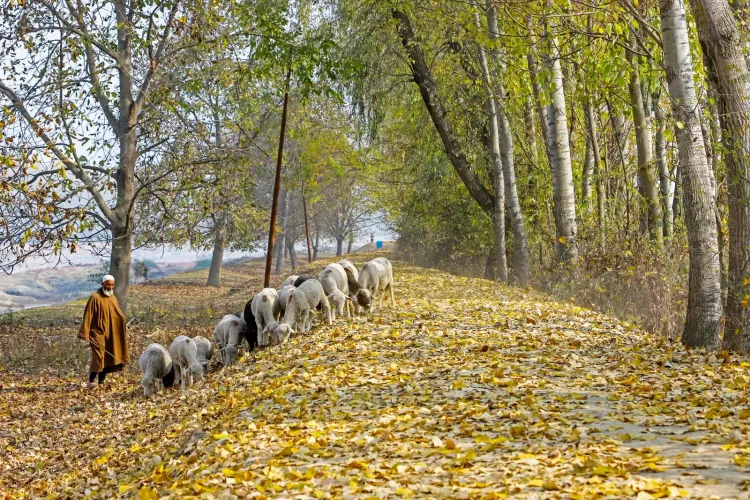
The seasonal migration of the Bakarwals — the hardy nomadic goatherds of the valley — is underway. Families are moving down from the highland meadows with their flocks of sheep, goats, watchdogs, and load-bearing horses, heading for their winter homes in the warmer districts of Poonch, Rajouri, Kathua, and Reasi in Jammu division. Women carrying infants and household essentials on horseback make up the long columns descending through the passes. The Bakarwal lifestyle — centred on milk, cheese, and ghee, combined with strenuous physical activity — is noted for producing lean, resilient individuals. Concurrently, hundreds of seasonal labourers from Bihar, West Bengal, Uttar Pradesh, and other states, who worked as bricklayers, masons, carpenters, electricians, and orchard hands over the summer, have begun returning home as temperatures drop.
Markets Full, Yet Prices Paradoxical
Vegetable markets across the valley are brimming with locally grown turnips, spinach, tomatoes, brinjals, and potatoes. Notably, despite this local abundance, prices of homegrown produce remain higher than vegetables brought in from outside the valley — a pricing paradox that continues to puzzle ordinary Kashmiris. Apples are being picked across orchards, and grapes, lotus stems ('Nadrus'), and sweet chestnuts are in plentiful supply.
Chinar Gold and the Tourist Window
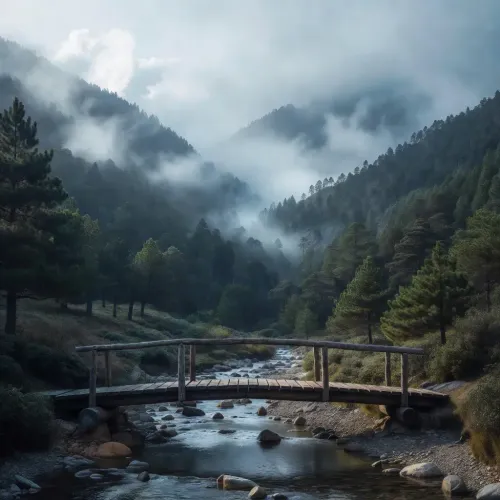
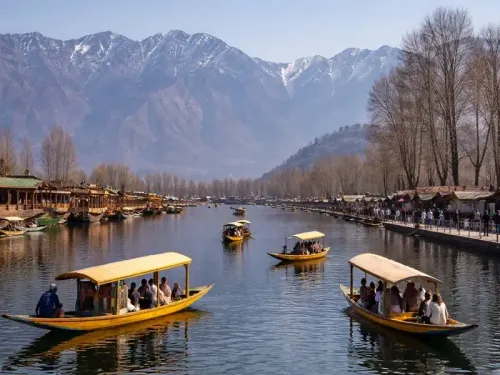
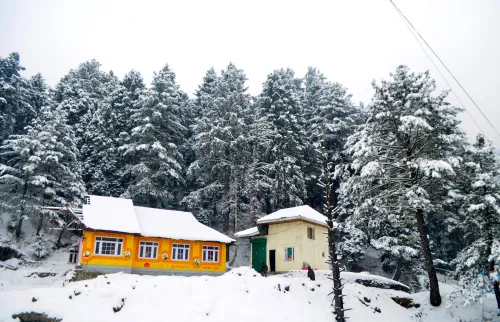
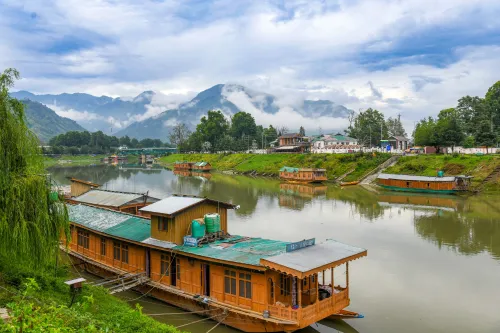
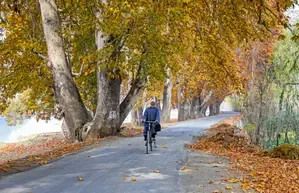
The iconic Chinar trees have begun their annual colour transformation, their leaves shifting from deep green toward brilliant shades of yellow, amber, gold, orange, and eventually a striking blood-red before the winter fall. Rivers, mountain streams, and springs run crystal clear, and distant peaks have acquired an early dusting of white from the season's first snowfall. For nature-seeking tourists and residents alike, this window — before the cold sets in fully — is widely regarded as the finest time to witness Kashmir's landscape in its most vivid form.
Point of View
But the 31.2°C October reading is the detail that demands attention. Kashmir's autumn identity — its Chinar colours, its migratory rhythms, its harvest cadence — is built on predictable thermal cues, and an unprecedented heatwave late into the season disrupts all of them. The Bakarwal migration, the weight-building of turtle doves, the arrival timing of migratory birds: each is temperature-sensitive. If anomalous October heat becomes a pattern rather than a one-off, the valley's ecology and its tourism economy — both built around autumn's reliability — face a slow but compounding risk that a picturesque news feature rarely surfaces.
NationPress
5 Oct 2026
Frequently Asked Questions
What signals mark the arrival of autumn in Kashmir?
Autumn in Kashmir is announced by turtle doves descending to harvested paddy fields, cicada bugs chirping on willow trees, and the first flights of migratory waterfowl across the night sky. The harvest of apples, grapes, lotus stems, and sweet chestnuts, along with the Chinar trees beginning to turn yellow, are also classic markers of the season.
What temperature record did Srinagar set in October 2026?
Srinagar recorded a maximum of 31.2 degrees Celsius on 5 October 2026, the city's second-highest October temperature ever. It edged past the previous October high of 31.1 degrees Celsius, which was set on 2 October 2008 — 18 years earlier.
Which migratory birds visit Kashmir in autumn and winter?
Thousands of waterfowl arrive each year, including bar-headed geese, mallards, pochards, shovelers, pintails, wigeons, sheldrake ducks, and teals. They travel from summer habitats in Russian Siberia, China, Japan, the Philippines, and Eastern Europe to spend the colder months in Kashmir's wetlands and water bodies.
Who are the Bakarwals and why do they migrate in autumn?
The Bakarwals are nomadic goatherds indigenous to the Jammu and Kashmir region who spend summers grazing their flocks in high-altitude meadows. Each autumn, they migrate with their families, livestock, and horses to warmer districts in Jammu division — Poonch, Rajouri, Kathua, and Reasi — to escape the harsh mountain winter.
Is autumn the best time to visit Kashmir?
Autumn is widely considered the most spectacular season to visit Kashmir, offering Chinar trees in vivid shades of yellow, amber, gold, orange, and blood-red, clear blue skies, and crystal-clear rivers. The season typically runs through October and into November before winter cold sets in fully.