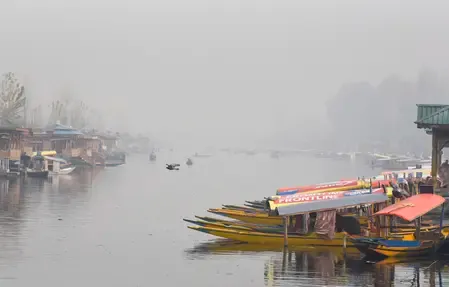
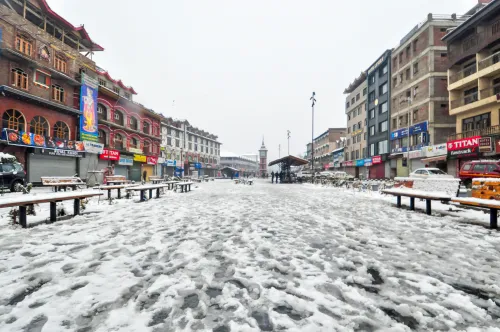
Omar Abdullah Notes Unusually Cool June in Srinagar
Synopsis
J&K Chief Minister Omar Abdullah flagged an unusual April-like chill in Srinagar on June 13, 2026, suggesting hill stations Gulmarg and Pahalgam were feeling even colder — a notable departure from seasonal norms during peak tourist season.
Key Takeaways
Omar Abdullah posted on June 13, 2026 that Srinagar felt more like early April than mid-June.
He noted that Gulmarg and Pahalgam were likely experiencing even colder conditions.
The remark came during the peak summer tourist season in the Kashmir Valley .
Unseasonal temperature dips in the Valley are linked to western disturbances and broader Himalayan climate variability .
Key stakeholders include tourists , tourism operators , and horticulturists dependent on the Valley's seasonal cycle.
The India Meteorological Department may issue advisories if the cold spell continues through the tourist and pilgrimage season.
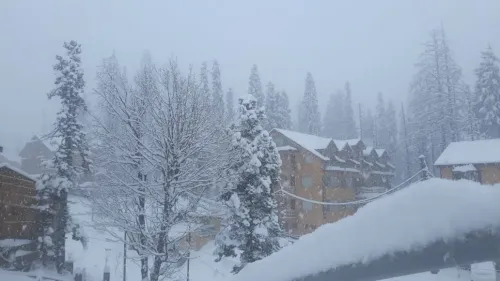
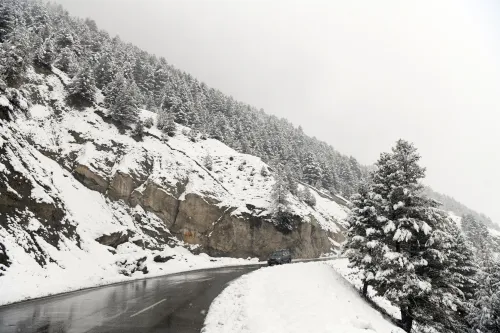
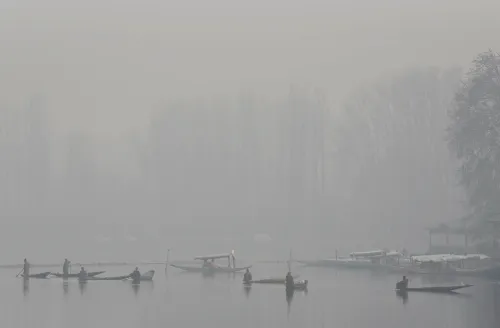
Jammu and Kashmir Chief Minister Omar Abdullah on Saturday, June 13, 2026, remarked that Srinagar was experiencing temperatures more typical of early April than mid-June, noting that hill stations such as Gulmarg and Pahalgam were likely feeling even colder.
Context
In his post, Omar Abdullah wrote: 'Today Srinagar feels more like the beginning of April rather than the middle of June. If this is what it's like here, places like Gulmarg and Pahalgam must be positively chilly.' The observation came in the heart of the summer tourist season, when the Kashmir Valley typically draws visitors seeking relief from the heat of the plains.
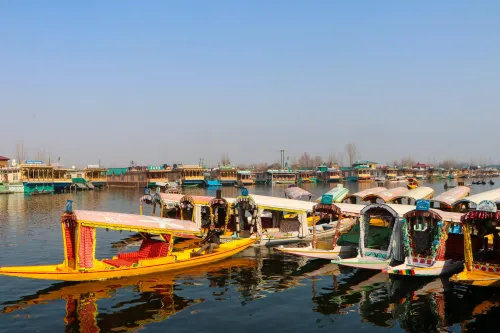
Srinagar, the summer capital of Jammu and Kashmir, sits at an elevation of roughly 1,585 metres above sea level and ordinarily records mild to warm temperatures through June. An April-like chill in the second week of June marks a notable departure from seasonal norms.
Policy Backdrop
The Kashmir Valley has seen periodic unseasonal temperature dips attributed to western disturbances — low-pressure weather systems that track across northern India and the Himalayas and can bring sudden cloud cover, rain, and cold spells even in summer months. Such anomalies have drawn attention in recent years as part of broader discussions on Himalayan climate variability.
The India Meteorological Department regularly issues advisories for the region during active western disturbance episodes, particularly when they coincide with the tourism season or affect the critical apple-growing belt of the Valley.
Stakeholders and Impact
Tourism is a pillar of Jammu and Kashmir's economy. Gulmarg, in Baramulla district, is among India's premier ski and adventure destinations, while Pahalgam, in Anantnag district, serves as the traditional base camp for the annual Amarnath Yatra pilgrimage. Unseasonably cool weather can cut both ways for operators: it may extend the appeal of these destinations into summer but can also disrupt travel plans and logistics.
Horticulturists in the Valley, who depend on a calibrated seasonal cycle for apple and saffron crops, also watch unusual temperature patterns closely. A prolonged cold spell in June can affect fruit development and yields.
What's Next
Attention will turn to whether the India Meteorological Department issues a formal advisory linked to the current western disturbance activity and whether the cool spell extends into the coming days. Tourism operators and pilgrimage administrators managing the Amarnath Yatra corridor through Pahalgam will be monitoring conditions on the ground.
If the pattern persists, it could prompt official weather-related advisories for the 2026 tourist season — and add fresh data points to the ongoing conversation about climate variability across the Himalayan region.
Point of View
He signals awareness of the economic stakes for two of J&K's most visitor-dependent destinations. The remark fits a broader pattern of regional leaders using social media to surface climate and environmental concerns without formally demanding policy action. It may also serve as a soft prompt to central meteorological and tourism authorities to stay alert during a critical season.
NationPress
17 Sept 2026
Frequently Asked Questions
Why is Srinagar cold in June 2026?
Omar Abdullah noted on June 13, 2026 that Srinagar felt unusually cold, more like early April. Such unseasonal chills in the Kashmir Valley are typically linked to active western disturbances — weather systems that can bring cloud cover and cold spells even during summer months.
How cold is Gulmarg in June?
Gulmarg , situated at over 2,600 metres in Baramulla district , is generally cooler than Srinagar in any season. In June 2026, CM Omar Abdullah suggested it was 'positively chilly,' implying temperatures well below typical summer levels for the hill station.
Does weather affect the Amarnath Yatra?
Yes. Pahalgam , one of the key base camps for the Amarnath Yatra pilgrimage, is sensitive to weather conditions. Unseasonal cold or precipitation can affect trekking routes, pilgrim safety, and the overall logistics of the annual yatra.
What is a western disturbance and how does it affect Kashmir?
A western disturbance is an extratropical storm system originating over the Mediterranean region that brings moisture to northern India and the Himalayas. When active in summer, it can cause unexpected cold spells, rain, and cloud cover across the Kashmir Valley , affecting tourism and agriculture.
How important is tourism to Jammu and Kashmir's economy?
Tourism is one of the most significant contributors to Jammu and Kashmir's economy. Destinations like Gulmarg and Pahalgam attract hundreds of thousands of visitors annually, and the summer season is peak time for both domestic and international tourists, making weather anomalies economically consequential.