Kerala CM race: Congress faces open leadership contest after decade-long wait
Synopsis
Kerala's Congress, back in power after a decade, is caught in a rare open contest for the Chief Minister's post. The unexpected emergence of national-level leader K.C. Venugopal as a contender has upended state-level calculations and drawn the high command directly into a succession battle that past transitions never required.
Key Takeaways
Indian National Congress won the Kerala Assembly elections , ending over a decade in opposition against the Left Democratic Front .
The CM selection has turned into an open contest — a sharp break from past consensus-driven transitions under K.
Antony , and Oommen Chandy .
Venugopal , a key national-level Congress organiser, has unexpectedly emerged as a contender, bringing the high command directly into the race.
A Congress high command meeting in New Delhi on Tuesday is expected to appoint observers to consult 63 Congress legislators and coalition allies in Kerala.
The outcome will need to balance seniority, political acceptability, and coalition arithmetic to ensure a stable government.
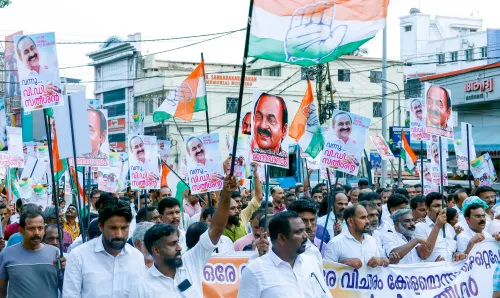
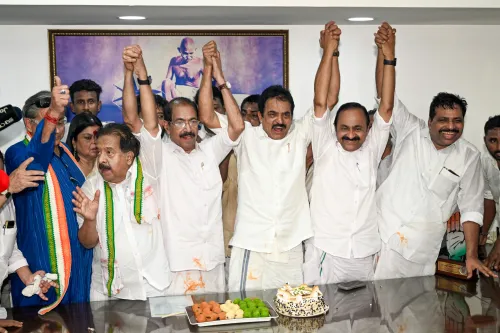
The Indian National Congress in Kerala, fresh off an emphatic Assembly election victory over the Left Democratic Front (LDF), now finds itself navigating an unusually open and contested race for the Chief Minister's post — a sharp departure from the consensus-driven transitions that defined the party's past tenures in the state.
A Break From the Old Template
For much of Kerala's post-Independence political history, Congress leadership transitions were settled affairs. Stalwarts like K. Karunakaran, A.K. Antony, and Oommen Chandy each ascended to the Chief Minister's office through largely predictable paths. Karunakaran held the post four times, Antony three times, and Chandy twice — each succession marked more by inner-party consensus than open rivalry. That template, according to party insiders, has now shifted decisively.
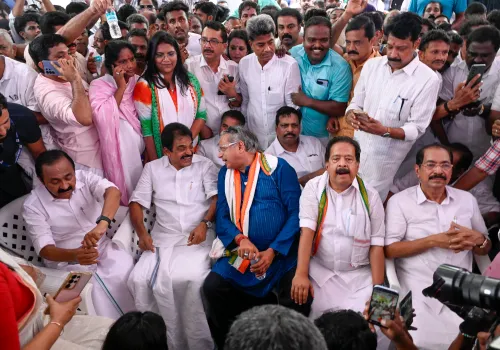
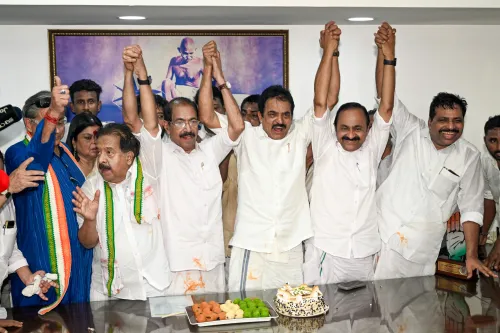
The Congress's return to power after a decade in opposition has triggered an intense internal churn, with multiple power centres simultaneously asserting their claim. What would ordinarily have been a moment of unalloyed celebration has instead opened up a complex negotiation over leadership.
The K.C. Venugopal Factor
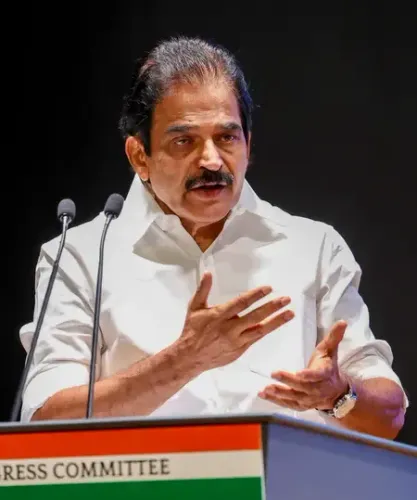
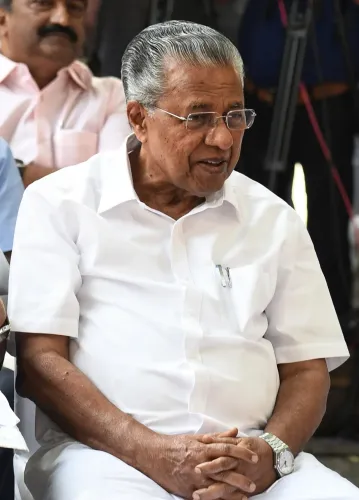
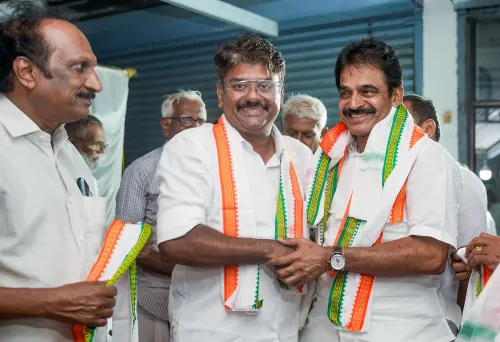
At the heart of the current flux is the unexpected entry of K.C. Venugopal, a trusted national-level organiser and a key figure in the Congress's central leadership. His name gaining traction within the leadership race has raised eyebrows inside the Kerala state unit. His candidature introduces a new dynamic — one that goes beyond the traditional state-level contest and brings the weight of the Congress high command more directly into play, reportedly unsettling established hierarchies within the state party.
High Command Steps In
A crucial meeting in New Delhi, led by the central leadership, is scheduled for Tuesday to chart the next steps. The meeting is expected to result in the appointment of observers, who will travel to Thiruvananthapuram to gauge the mood among the 63 Congress legislators and hold consultations with coalition allies. The support of these allies remains vital in shaping a stable government, and their preferences are expected to weigh significantly in the final decision.
Notably, unlike past leadership selections — often settled through quiet back-channel consultations — this process is unfolding in full public view. Camps are forming, signals are being sent, and the balancing act between seniority, acceptability, and political arithmetic is becoming increasingly intricate.
What Is at Stake
For the Congress, the challenge lies not merely in selecting a Chief Minister, but in ensuring that the decision strengthens rather than strains the coalition it leads. Kerala's political landscape is particularly sensitive to perceptions of internal discord, and a prolonged or fractious succession could hand the Left Democratic Front an early narrative advantage in opposition. The party's bench strength — often cited as one of its core assets — is now also its most immediate complication. How the Congress manages this rare internal race could well define the tone and durability of its return to power in the state.
Point of View
A pattern seen in other Congress-governed states. The risk is real: prolonged public contestation can erode the goodwill of a fresh mandate faster than any opposition can. Kerala voters have historically punished parties that prioritise internal power over governance momentum. The Congress's ability to close ranks quickly will be as telling as the name it eventually picks.
NationPress
6 Oct 2026
Frequently Asked Questions
Why is the Kerala Congress CM selection contested this time?
The Congress's emphatic return to power after a decade in opposition has energised multiple internal factions, each asserting a claim to the Chief Minister's post. Unlike past transitions — where leaders like K. Karunakaran, A.K. Antony, and Oommen Chandy were elevated through inner-party consensus — this time competing power centres and the unexpected entry of national-level leader K.C. Venugopal have made the process openly contested.
Who is K.C. Venugopal and why does his entry matter?
K.C. Venugopal is a senior Congress leader who serves as a key national-level organiser and is closely aligned with the party's central leadership. His emergence as a contender for the Kerala CM post is significant because it introduces the high command's direct influence into what has traditionally been a state-level decision, altering the usual dynamics of the race.
What is the Congress high command doing to resolve the leadership question?
A meeting of the central Congress leadership is scheduled in New Delhi on Tuesday to chart the next steps. It is expected to result in the appointment of observers who will travel to Kerala to consult the 63 Congress legislators and coalition allies before a final decision is made.
How did past Kerala Congress leadership transitions work?
Historically, Kerala Congress CM transitions were largely consensus-driven. K. Karunakaran served as Chief Minister four times, A.K. Antony three times, and Oommen Chandy twice — each succession settled through quiet internal consultations rather than open factional competition.
Why does the CM selection matter beyond just picking a leader?
The Congress leads a coalition in Kerala, and the CM choice must be acceptable not just to internal factions but also to alliance partners whose support is essential for a stable majority. A fractious or prolonged selection process risks straining coalition ties and handing the Left Democratic Front an early opposition narrative.