Kerala Verdict: Congress CM Race Rattles UDF Alliance Before May 4 Count
Synopsis
Before a single vote is counted in Kerala, Congress has already ignited a public CM race — rattling ally IUML and risking the very comeback the UDF has waited a decade for. With results due May 4, the party's oldest disease — factionalism — is flaring at the worst possible moment.
Key Takeaways
Congress supporters of Ramesh Chennithala , V.D.
Satheesan , and K.C.
Venugopal are publicly lobbying for the Kerala Chief Minister post before May 4 results .
Abdul Hameed issued a public rebuke, warning the CM debate demoralises UDF workers and disappoints voters who backed the alliance.
Veteran media critic M.N.
Karassery called the open display of leadership ambition " shameless " and warned it risks eroding voter patience.
The CPI(M)-led LDF has maintained studied silence on leadership, creating a sharp contrast with Congress's public infighting.
A near-identical crisis unfolded after Congress's 2001 Kerala win, when the Karunakaran-Antony feud destabilised the government from its earliest days.
Kerala election results are due on May 4, 2025 ; polling concluded on April 9, 2025 .
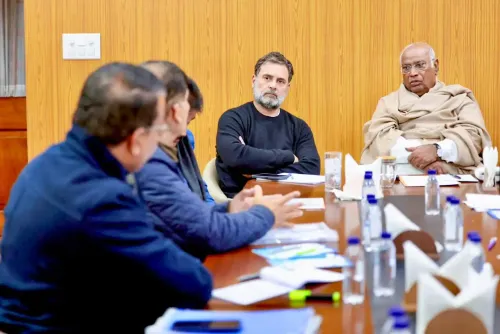
Thiruvananthapuram, April 24 — With Kerala election results still days away, the Congress-led United Democratic Front (UDF) is already embroiled in a damaging internal contest over who will become Chief Minister if the alliance wins on May 4. The public posturing has rattled alliance partners and grassroots workers, raising questions about whether the UDF can hold together even before it crosses the finish line.
CM Speculation Erupts Before Counting Day
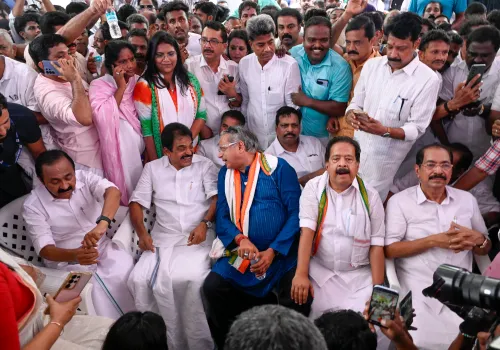
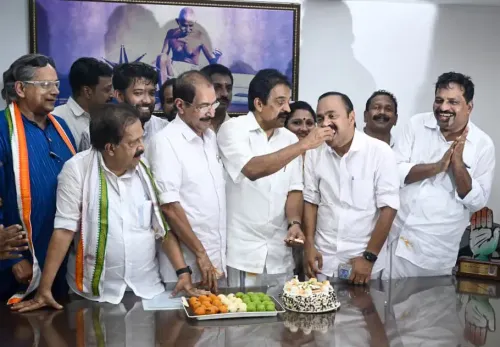
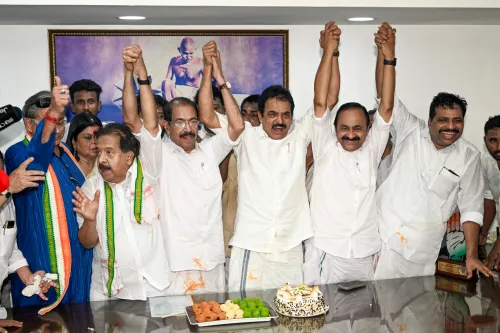
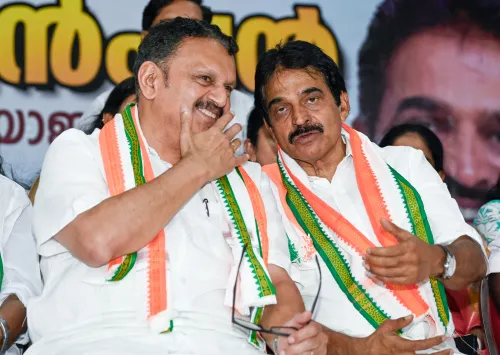
Polling in Kerala concluded on April 9, but the political drama has shifted entirely within the Indian National Congress. Supporters of three senior leaders — Ramesh Chennithala, V.D. Satheesan, and K.C. Venugopal — have begun openly projecting their preferred candidates for the top post, turning what should be a period of disciplined silence into a public spectacle of ambition.
The UDF enters this election cycle with unusually high expectations. Kerala has historically alternated between the Congress-led UDF and the CPI(M)-led Left Democratic Front (LDF) every five years. When the Left Front broke that pattern by retaining power in 2021, it raised the stakes considerably for Congress, making the anticipated 2025 comeback feel almost existential for the party's Kerala unit.
That sense of inevitability, paradoxically, appears to have accelerated internal fault lines rather than suppressed them.
Alliance Partner IUML Delivers Sharp Warning
P. Abdul Hameed, Malappuram district general secretary of the Indian Union Muslim League (IUML) and a sitting MLA, has emerged as the most pointed critic of the Congress leadership's behaviour. He stated unequivocally that the debate over the Chief Minister's post should never have been allowed to enter the public domain.
"Leaders at the national level are engaging in such discussions, and when they arise, it is the responsibility of senior leaders to contain them, not amplify them," Abdul Hameed said. He warned that the ongoing controversy is demoralising the very grassroots workers who spent a gruelling decade in opposition, sustaining the party through its most difficult period.
He added that the IUML would abide by whatever decision the Congress high command takes, noting that Rahul Gandhi is fully aware of Kerala's political realities — a statement that reads less as reassurance and more as a pointed reminder that the national leadership needs to intervene.
Veteran media critic M.N. Karassery was equally blunt, describing the public posturing as "shameless" and cautioning that open displays of ambition risk eroding the patience of voters who backed the UDF in good faith.
The CPI(M) Contrast: Silence as Political Strategy
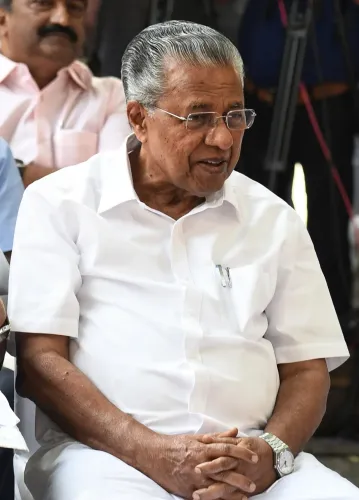
The CPI(M) and the Left Democratic Front have maintained a studied silence on all leadership questions ahead of the results, projecting an image of unity and institutional discipline. This contrast with the Congress is not accidental — the Left has historically used post-result leadership decisions as a tool to project stability, regardless of internal disagreements that may exist.
For Congress, however, factionalism is not a new ailment. It is a chronic condition. The Kerala Pradesh Congress Committee has long been defined by competing power centres, and the current episode is a continuation of a pattern that stretches back decades.
History Repeating: The Karunakaran-Antony Shadow
The most instructive parallel lies in the aftermath of the Congress party's landslide victory in 2001. Even after a commanding win, the party descended into a bitter leadership dispute between veteran K. Karunakaran and A.K. Antony. When Antony became Chief Minister, Karunakaran's son K. Muraleedharan was installed as state party president — but only after the incumbent president, Thennala Balakrishna Pillai, was unceremoniously removed. The episode left deep scars and set a precedent for how victory in Kerala can quickly transform into internal warfare for Congress.
The current situation echoes that dynamic almost precisely: a sense of impending power, multiple claimants, and a high command that has so far failed to impose discipline before the results are even declared.
What This Means for the UDF and Kerala's Political Future
The deeper risk is structural. The UDF is a coalition that depends on the goodwill of partners like the IUML, the Kerala Congress factions, and smaller allies. Public infighting within the dominant partner sends a destabilising signal to the entire alliance ecosystem. If the UDF does win on May 4, the first test of governance will not be policy — it will be whether Congress can negotiate a Chief Minister without fracturing the coalition.
Historically, parties that enter government already weakened by internal discord tend to govern less effectively, are more vulnerable to defections, and find it harder to maintain alliance cohesion through a full five-year term.
With counting scheduled for May 4, all eyes will be on whether the Congress high command steps in decisively to silence the CM chatter — or whether the silence itself becomes the story.
Point of View
Yet the moment that return appears imminent, it reverts to its most self-destructive instinct — public factionalism. What makes this particularly damaging is not the ambition itself, which is normal, but the failure of national leadership to impose even basic message discipline before results are declared. The IUML's public rebuke is a warning shot: coalition partners are watching, and they will extract a price for this embarrassment at the negotiating table when power is actually distributed.
NationPress
13 Oct 2026
Frequently Asked Questions
Who are the Congress CM candidates being discussed for Kerala 2025?
The three names being publicly projected are Ramesh Chennithala , V.D. Satheesan , and K.C. Venugopal . Their respective supporters have begun publicly lobbying for their preferred candidate even before the May 4 results.
When are Kerala election 2025 results declared?
Kerala election results are scheduled to be declared on May 4, 2025 . Polling in the state concluded on April 9, 2025 .
Why is the IUML unhappy with Congress over the CM debate?
IUML MLA P. Abdul Hameed warned that the public CM debate is demoralising UDF grassroots workers and disappointing voters. He criticised senior Congress leaders for amplifying rather than containing the speculation.
Has Congress faced similar internal conflict after Kerala wins before?
Yes. After Congress's landslide in 2001 , a bitter feud between K. Karunakaran and A.K. Antony erupted over leadership, resulting in the removal of state president Thennala Balakrishna Pillai to accommodate Karunakaran's son K. Muraleedharan .
How is CPI(M) handling leadership questions ahead of Kerala results?
The CPI(M)-led Left Democratic Front has maintained complete silence on leadership questions, projecting unity and institutional discipline — a stark contrast to the public infighting within the Congress-led UDF .