PM SHRI scheme: Kerala forms 4-member cabinet sub-committee on way forward
Synopsis
Kerala has taken ₹99 crore under PM SHRI and has ₹106 crore more sanctioned — yet ideologically opposes the Centre's role in curriculum and school selection. CM Satheesan's four-member sub-committee must now find a way to keep the money without surrendering the state's education autonomy, a tightrope that reflects a broader tension between fiscal pragmatism and federal principle.
Key Takeaways
Satheesan announced a four-member ministerial sub-committee on 17 June to chart the state's path on the PM SHRI scheme .
The state has already utilised ₹99 crore in Central funds under the scheme, with another ₹106 crore sanctioned.
Kerala's stated position: the Centre should not decide curriculum or select schools — that must remain a state prerogative.
Satheesan alleged the previous LDF government signed the PM SHRI agreement without informing the Cabinet .
Discussions are underway with Chief Ministers of non- BJP -ruled states for a possible joint approach.
The government's first 100-day programme is set to begin on 1 July .
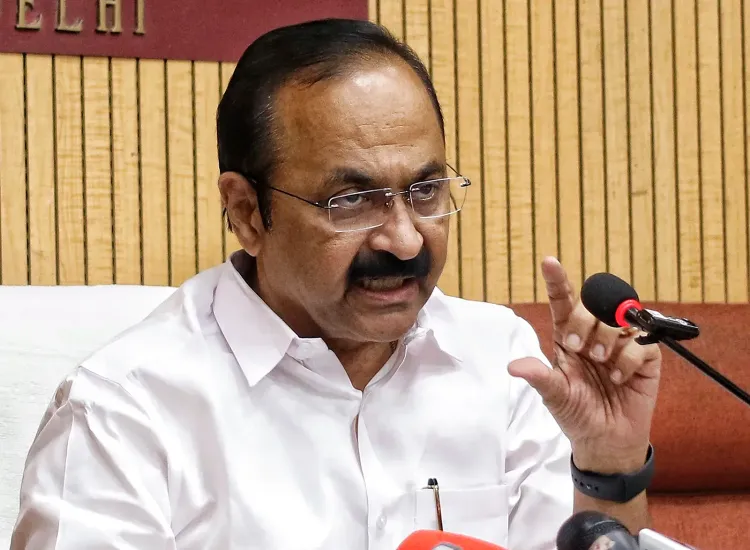
Kerala Chief Minister V.D. Satheesan on Wednesday, 17 June announced that the state government has constituted a four-member ministerial sub-committee to determine how to proceed with the PM SHRI scheme without compromising Kerala's stand on education policy. The decision came after deliberations at the weekly Cabinet meeting in Thiruvananthapuram.
Kerala's Position on PM SHRI
Satheesan acknowledged that Kerala is already a participant in the PM SHRI scheme, having been enrolled after the previous Left Democratic Front (LDF) government signed the agreement. The state has since received and utilised ₹99 crore in Central funds, with an additional ₹106 crore sanctioned by the Centre.
'Our ideological position is that the Centre should not decide the curriculum or select the schools. That should remain the prerogative of the state,' Satheesan said.
The Sub-Committee Mandate
The newly formed ministerial sub-committee will study the scheme in depth and chart the state's future course of action. Satheesan framed the core challenge plainly: 'Kerala is now part of PM SHRI because we have already taken the funds. The question before us is how to move forward without making compromises.'
He also disclosed that discussions have been held with Chief Ministers of non-Bharatiya Janata Party (BJP)-ruled states to explore the possibility of a coordinated, joint approach to the scheme's implementation.
Controversy Over Previous Government's Role
Satheesan alleged that the previous LDF government had publicly maintained it would not sign the PM SHRI agreement, yet the then Chief Minister and Education Minister eventually signed it without keeping the Cabinet informed. The allegation adds a layer of political accountability to what is primarily a policy dispute.
Notably, this is not the first time opposition-ruled states have found themselves navigating Central education schemes while contesting the policy architecture that underpins them.
Administrative Reforms and Other Cabinet Decisions
On the administrative front, Satheesan said the government had identified a backlog of files in the Finance Department causing decision-making delays. To address this, an integrated financial adviser of Joint Secretary rank will be appointed in every department to determine which files require Finance Department clearance.
A separate Cabinet sub-committee will review the state's outdated procurement manual. The government's first 100-day programme is set to commence from 1 July.
Political Flashpoints
Satheesan also responded to criticism over three Vice-Chancellors attending an RSS-related meeting, accusing the Left Opposition of spreading 'false narratives'. He pointed out that the previous Chief Minister had remained silent when four Vice-Chancellors attended a similar programme under the earlier administration.
He dismissed as 'baseless' allegations related to increased cooperative department fees, removal of buses ahead of the free travel scheme, and disruption of ration distribution.
With the sub-committee's report expected to shape Kerala's formal stance, the PM SHRI question — balancing Central funds already received against state autonomy over curriculum — is set to remain a defining tension for the new government in the weeks ahead.
Point of View
The state cannot simply walk away — yet accepting the scheme in full means conceding ground on curriculum autonomy, which is the ideological core of the Congress government's education pitch. The allegation that the previous LDF administration signed the agreement without Cabinet approval is politically convenient but also raises a legitimate governance question about executive accountability. The real test will be whether the sub-committee produces a legally and fiscally defensible exit or modification strategy, or whether it becomes a vehicle for indefinite deferral while the funds keep flowing.
NationPress
17 Sept 2026
Frequently Asked Questions
What is the PM SHRI scheme and why is Kerala reviewing it?
PM SHRI (PM Schools for Rising India) is a Central government scheme to upgrade selected schools into model institutions, with the Centre playing a role in school selection and curriculum framing. Kerala is reviewing its participation because CM Satheesan's government holds that curriculum decisions and school selection must remain a state prerogative, not a Central one.
How much Central funding has Kerala received under PM SHRI?
Kerala has utilised ₹99 crore in Central assistance under the PM SHRI scheme, with an additional ₹106 crore sanctioned by the Centre. The fact that funds have already been drawn complicates any move to exit or renegotiate the scheme.
Who is on the four-member ministerial sub-committee and what will it do?
The sub-committee comprises four ministers and has been tasked with studying the PM SHRI scheme and recommending the state's future position. Its findings are expected to determine whether Kerala seeks a modified arrangement, a joint approach with other non-BJP states, or another course of action.
What did CM Satheesan allege about the previous Left government and PM SHRI?
Satheesan alleged that the previous LDF government publicly maintained it would not sign the PM SHRI agreement, but the then Chief Minister and Education Minister eventually signed it without informing the Cabinet. The allegation adds a political dimension to what is otherwise a policy and federal-autonomy dispute.
Are other states also pushing back on PM SHRI?
According to CM Satheesan, discussions have been held with Chief Ministers of non-BJP-ruled states to explore a possible joint approach to the scheme. A coordinated stance among opposition-governed states could give individual governments more leverage in negotiations with the Centre.